
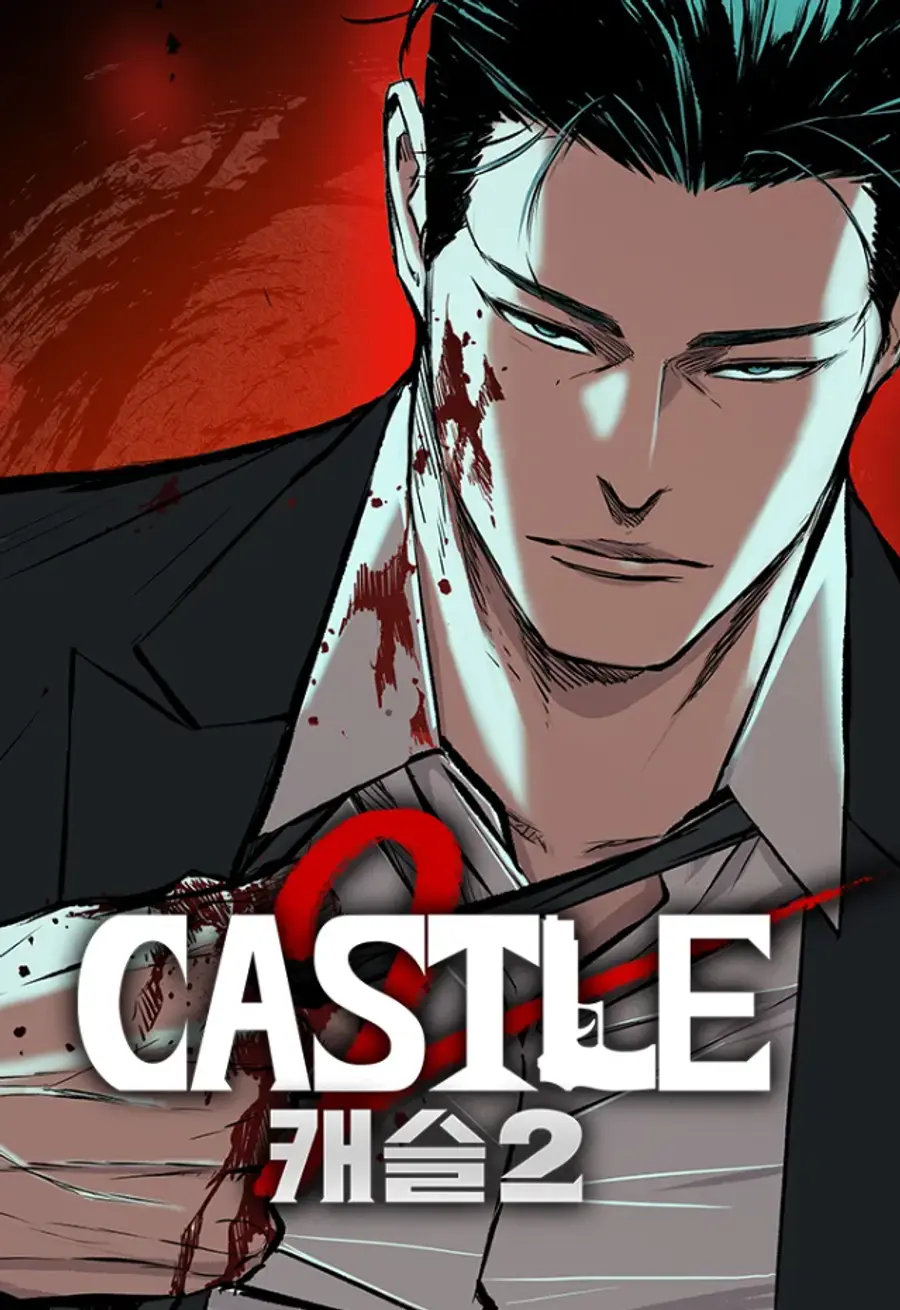
[KAVE=Reporter Lee Tae-rim] In the early dawn, the city alley is drenched in rain, with only the flickering light of a shabby inn sign. The legendary killer Kim Shin, who has even received the title 'Amur' from the Russian killer organization Iskra, boards a flight to Korea with a cigarette in one hand. Just like John Wick returns from retirement for revenge, but not for a puppy, but for his father. The destination is not Seoul or Busan, but the fictional city of Hwaeum, which is laid out like the infrastructure of the underworld. This place is the base of the massive crime cartel 'Castle', where all interests are intertwined, including gangsters, police, politicians, and chaebols, and it is the starting point of the tragedy that completely shattered Kim Shin's life.
Kim Shin's past is tragic. As a child, he lived with his ordinary police father, witnessing the scene where his father was futilely killed after getting entangled in Castle's conspiracy. Even his master, who was digging into the truth, is eliminated by the organization, and a boy falls to the bottom in an instant. What he chooses is not the law, but revenge. Just like Batman decides to fight crime, but fueled by hatred rather than justice. Leaving Korea for Russia, he learns the murder techniques of the Iskra organization with his whole body, surviving with the determination to completely destroy Castle someday. When he is recognized for his abilities and becomes a legend, he finally buys a ticket to Korea. As if to say, "It's time to turn the tables now."
However, the Hwaeum that Kim Shin returns to is not only a den of evil that becomes the target of his revenge but also the city where the people he must protect live. The city is under the influence of Castle everywhere. Construction workers, room salon madams, street thugs, loan sharks, and even high-ranking police, entertainment agencies, and the media. All the money and violence of the underworld ultimately flow into a building called 'Castle Hotel'. Just like all crime in Gotham City leads back to the Falcone family, but without Batman. Instead of a head-on confrontation, Kim Shin decides to dig into the foundations step by step. He plans to take over the slums of Hwaeum, the lowest of the low, and use it as a forward base to dismantle Castle from its feet. A strategy of medieval siege warfare, filling the moat to bring down the castle.
From a Lonely Wolf in 'Team Building' to the Leader of a Legion
In the process, Kim Shin gets entangled with various characters. Initially as enemies, later joining as allies, Castle's subordinate Kim Dae-gun, Lee Seul, who clenches her fists to protect her family, Madam Lisa, who practically manages Hwaeum, and Seo Jin-tae, the conscience of Hwaeum's police. The process of these individuals, who live with their own stories, colliding with Kim Shin, getting beaten, being persuaded, and eventually looking in the same direction together is depicted quite extensively. The 'Hwaeum Arc' that continues until the middle of the webtoon is essentially a grand team-building narrative. Just like Ocean's Eleven gathers a team, but not for a casino heist, but to overthrow a crime empire.
The organization called Castle is like a massive fortress. It is an absolute power that has joined hands with the triads, yakuza, Russian mafia, and domestic gangsters. If money is needed, it shakes the financial sector, and if people are needed, it turns to the entertainment and sports industries. At the top of this private power that reigns above the law are shadowy bosses who have joined hands with chaebols, politicians, and intelligence agencies. Just like Hydra infiltrated S.H.I.E.L.D., but in a reality without superheroes. No matter how excellent a killer Kim Shin is, he cannot possibly contend with such a scale alone. So he decides to create an organization called 'White Clothes'. Gathering fists from across the country, those abandoned by Castle, and people who owe him debts, he forms a legion in white clothes, blending into Castle and beginning to sleep with the enemy. This structure leads to a larger-scale war in the sequel 'Castle 2: The Man Above All'.
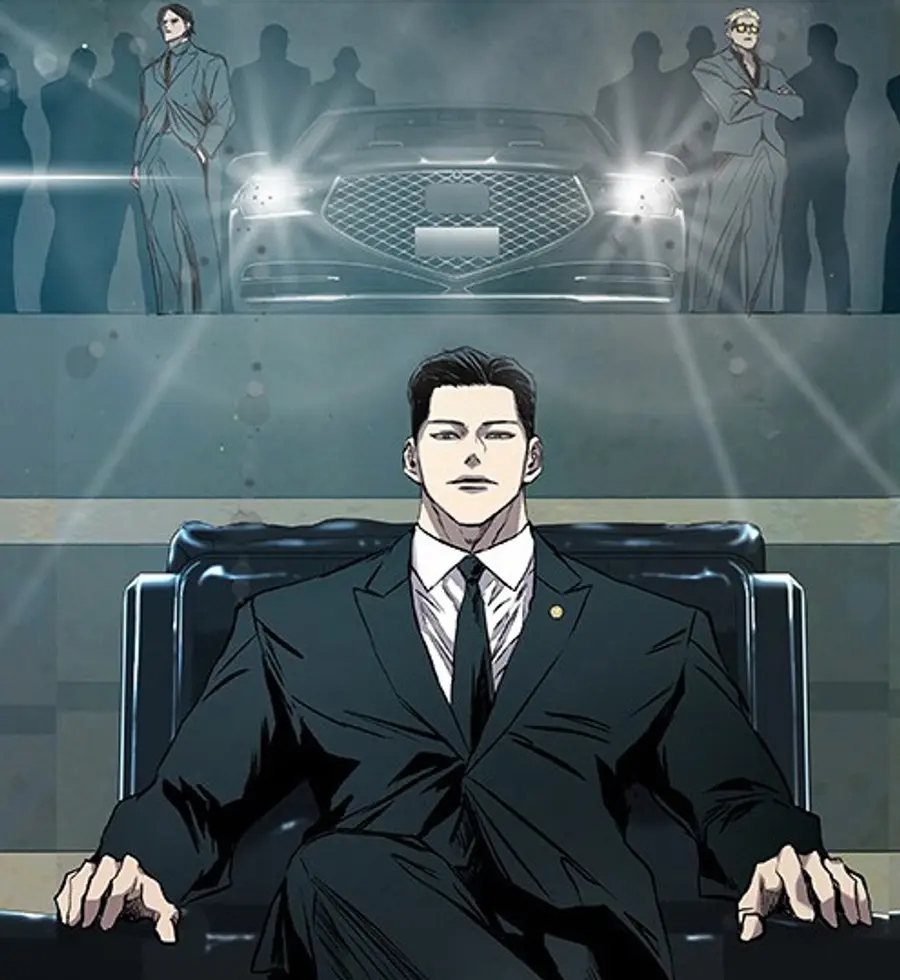
The story does not stop at a simple revenge drama. In a structure that moves between the past and present, Korea and Russia, the slums of Hwaeum and luxury hotels in Gangnam, it persistently shows how the lives of surrounding characters twist every time Kim Shin makes a choice. His journey towards revenge is built upon an increasing number of corpses, betrayals, and sacrifices of comrades. Just like Michael Corleone in The Godfather loses his family while trying to protect it. And at some point, the reader begins to waver between the question of whether this revenge is truly 'justifiable' and the feeling that "this game must be stopped." It is best to read through to the conclusion to see how this emotional line converges. The weight of the final choice is something the reader must face fully to appreciate.
Viewing Evil Through Structure, A Sophisticated Dissection of the System
What sets 'Castle' apart from common killer action stories is that it shows the underworld fantasy through a very concrete 'structure'. While most noir puts emotions like organization, betrayal, and bloody revenge at the forefront, 'Castle' intricately designs the system that supports all those emotions. Hwaeum is not just a background city. It is a massive circuit where police, prosecutors, politicians, media, unions, entertainment, and construction industries are intricately connected. Just like The Wire dissected Baltimore's corrupt structure layer by layer. It persistently shows that it is not just one bad person who has caused the downfall, but rather a hell created by everyone compromising a little bit.
Within this structure, Kim Shin's revenge becomes a personal emotion while simultaneously rebelling against the system. Instead of killing someone, he calculates which line to cut, which organization to extract, and where to start collapsing to gradually bring it down. This process feels like watching an engineer designing a massive domino setup. If Walter White from Breaking Bad built an empire with chemistry, Kim Shin dismantles an empire with violence. The way he builds up the narrative of the targeted bosses or mid-level executives only to bring them down in an instant is also impressive. It is not that the villain dies easily because he is a villain, but rather the way he has built up his power comes back to stab him. A visualization of karma.
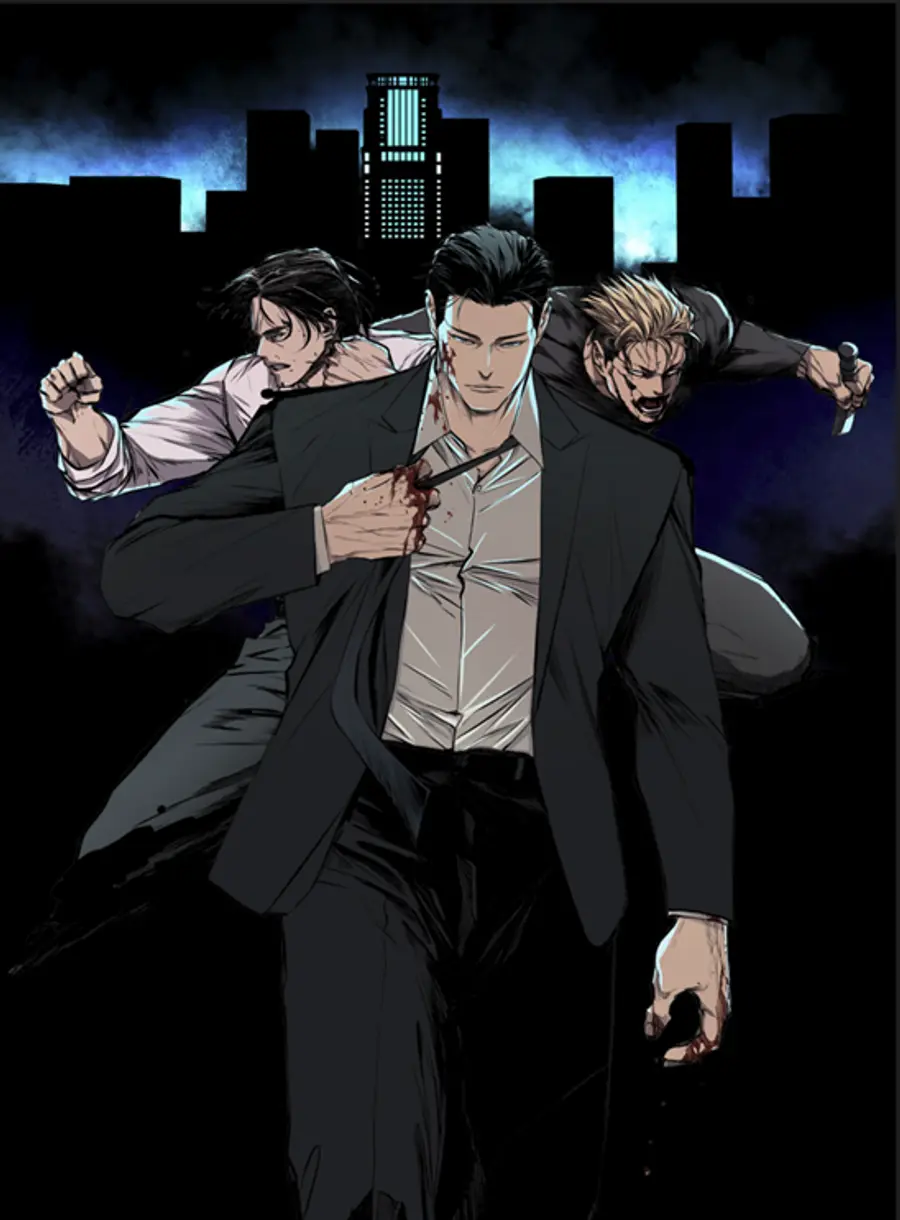
The artwork is heavy and rough, fitting the genre. Close combat, knife fights, and shootouts appear frequently, but the composition does not flow excessively. Each cut shows a lot of care in the movement and gaze handling. Especially in closed spaces like narrow alleys, indoor pubs, and construction sites, the group brawls that occur have excellent panel division and pacing. It feels like the hallway action from Oldboy has been translated into a comic. It is clear where and how the characters' bodies fly, and at what moment a decisive blow lands. For this to be possible, the action sequences themselves must be meticulously designed beyond just being 'well-drawn'.
The unique use of color in 'Castle' is also noteworthy. Overall, it has a low-saturation gray tone, but elements like blood, neon, and the chandelier lights of hotels pop out intensely at times. Just like a red dress stands out against the black-and-white screen of Sin City. When red blood and yellow lights flash over the dark gray city, the reader visually senses how prominent the violence and desire of this world are. This brutal mise-en-scène could potentially lead to fatigue, but dialogue, humor, and everyday scenes cushion that point.
Three-Dimensional Characters: 'Both Villains and Protagonists are Gray'
The character drama is also a significant reason why 'Castle' is beloved. Kim Shin is a munchkin killer, but emotionally quite clumsy. Unable to express anger and sadness properly, he always leans on cigarettes and alcohol, muttering, "It's a loss to get attached for no reason" while thinking of his comrades. Like Spike Spiegel from Cowboy Bebop, he pretends to be cool but is actually trapped in the past. Nevertheless, at crucial moments, he prioritizes the safety of his comrades over his own life. At this point, the author never goes sentimental. Even in moments of sacrifice, he coldly places the question of "what this choice means in this game". This makes the character of Kim Shin more three-dimensional.
Supporting characters like Kim Dae-gun, Lee Seul, Lisa, and Seo Jin-tae are deep enough to create their own spin-offs. For example, Kim Dae-gun initially appears as Castle's attack dog, but gradually cracks as he confronts his past and family. Even while being defeated by Kim Shin, he sees the possibility of the 'different order' that Kim Shin pursues. It is like the reversal of Harvey Dent's process of believing in justice and then falling from grace in The Dark Knight. Lee Seul is a character balancing between violence and family, twisting the cliché of the "righteous gangster". Lisa has the face of a practical politician in this city, not just a madam of the underworld. Like Cersei from Game of Thrones, she wields power not through force but through information and connections. With sufficient depth allocated to each of them, the reader gains the opportunity to empathize with characters other than Kim Shin at any time.
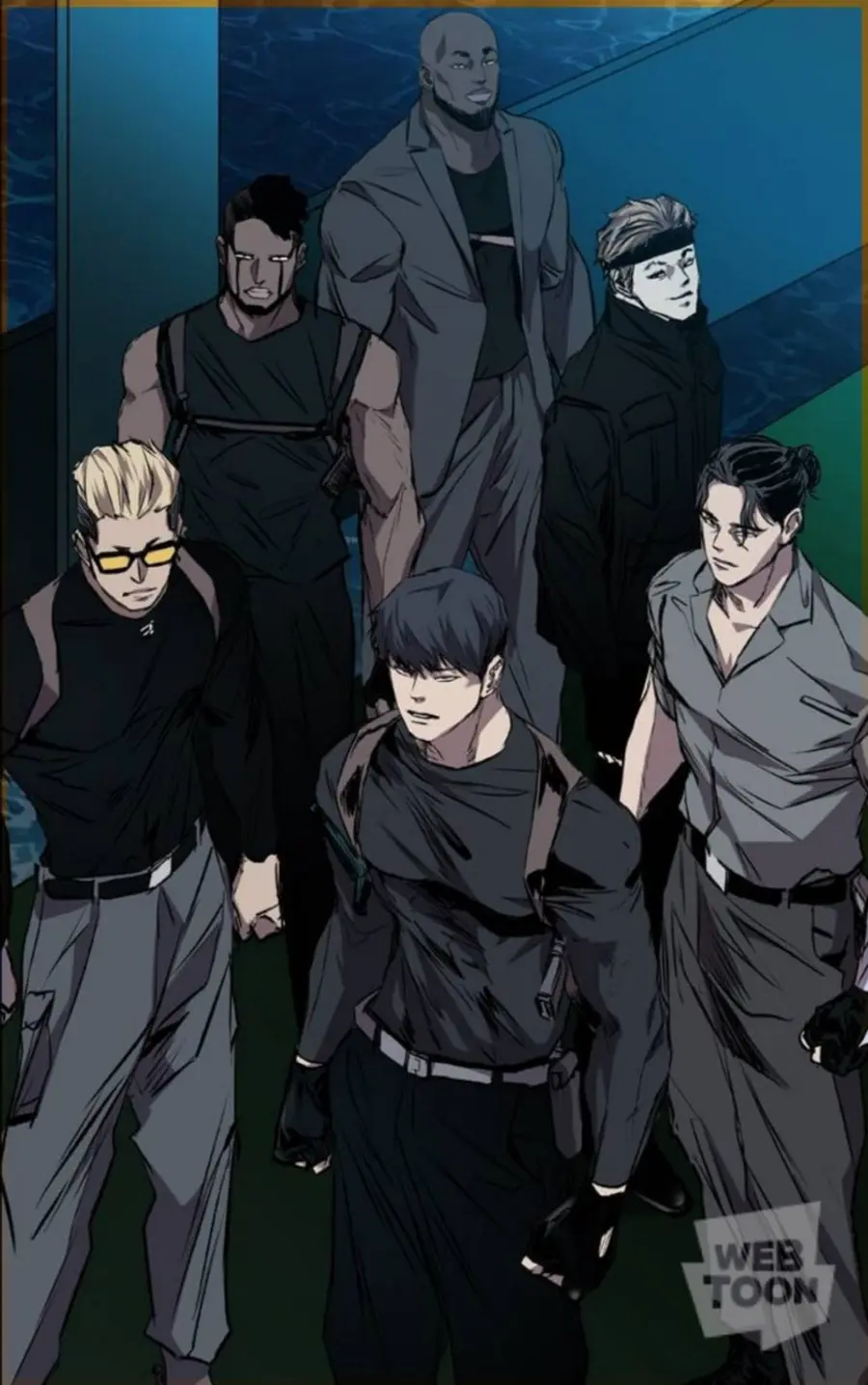
In terms of plot structure, 'Castle' combines the boy's comic-style gathering of comrades with the catastrophic nature of noir. While following a typical growth narrative where the protagonist becomes stronger and the organization grows by gathering comrades, it makes it uncertain whether the end will be a happy ending. Gaining comrades means increasing weaknesses, and the work constantly reminds us that the scope of revenge is widening. It is like gathering comrades in One Piece, but in a reality where the ship could sink. Therefore, the reader feels both joy and anxiety as Kim Shin's team grows stronger. The premonition that "someone among these people will surely be lost" follows like a shadow.
The expansion of the worldview is also an interesting point. 'Castle' forms the so-called 'Castle Universe' along with the sequel 'Castle 2: The Man Above All' and prequel spin-offs. The Castle cartel, which has allied with the triads, yakuza, Russian killers, and domestic gangsters, the dangerous killers moving within it, and the expansion of the White Clothes organization, each work fills in the gaps of the others, creating a massive map of the underworld. Like the Marvel Cinematic Universe, but instead of superheroes, with killers and gangsters. This universe strategy has the power to keep readers lingering in this world even after the conclusion.
The box office success and buzz cannot be overlooked. With a Naver Webtoon rating in the high 9s, it has secured a loyal readership by consistently ranking high in the action and noir genres and continuing serialization on overseas platforms. It has even been evaluated as 'a new standard for Korean organized crime stories' among overseas fandoms. Due to the nature of the action genre, the level of violence is high, and the morality of the characters is placed in a gray area, which can lead to mixed opinions, but once readers are hooked, they share reactions like, "Once you get past the slow parts, it becomes incredibly immersive." That 'slow part' refers to the early episodes of Hwaeum, and thanks to this long introduction, where characters and structures are sufficiently built up, the subsequent developments become much heavier, making a certain level of patience well rewarded. It is like enduring the first season of The Wire only to be overwhelmed from the second season onward.
For readers who have a thirst for traditional organized crime and noir stories, this is almost a must-read. It can fulfill the desire for 'organized crime' that could not be satisfied by a few movies, with a narrative spanning hundreds of episodes. If you want to see a well-structured world of characters and systems, it is not easy to find a webtoon that is designed in such detail. If you loved The Godfather, Goodfellas, and The New World, Castle is for you.
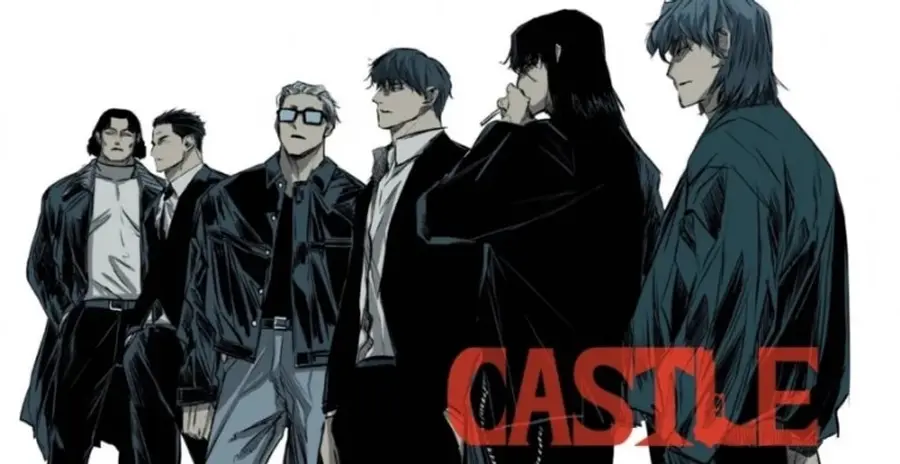
I would also strongly recommend it to those curious about how far the impact of action can be elevated in the medium of webtoons. The close combat, shootouts, and psychological warfare in 'Castle' go beyond just a level where knives and guns are rampant. The ability to convey how the gaze moves within a single scene and how characters change emotional states through just the artwork is outstanding. It feels like action scenes unfold like a movie when reading a Jack Reacher novel.
For readers who enjoy revenge narratives but are tired of stories that end in simple catharsis, they will likely appreciate the lingering discomfort this work provides. 'Castle' never lets go of the question, "What remains after revenge?" Because every time Kim Shin takes a step forward, it consistently shows who falls behind those footsteps. It feels like the Count of Monte Cristo's revenge has been transported to modern Korean crime organizations.
After reading this webtoon, you will likely recall the chandelier of Castle Hotel and the back view of Kim Shin smoking a cigarette in the alleys of Hwaeum every time you see neon signs in the night streets. And at some point, you may find yourself muttering, "The real fear is not the monster, but the castle that raised the monster itself." For those who feel that realization weighing on their hearts, it is worth investing time in the webtoon named 'Castle'.
However, I must warn that once you step in, it is hard to get out. Just like Kim Shin cannot escape from the war with Castle. And that is the magic of this webtoon.