

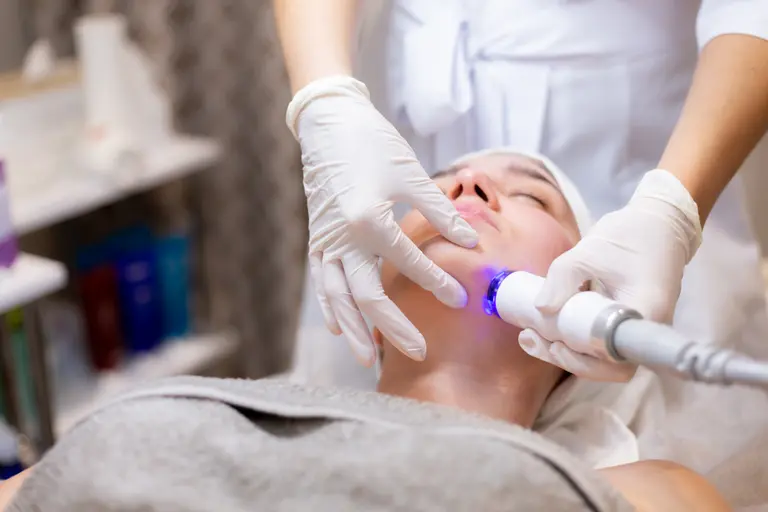
[KAVE=Lee Tae-rim Reporter] * This article is written for the purpose of introducing various medical procedures and does not endorse any specific hospital or take responsibility for side effects from procedures.
For Koreans and foreigners who come for 'medical tourism', 'Ulthera' has established itself as a reliable lifting device. This device utilizes high-intensity focused ultrasound, or 'HIFU (High-Intensity Focused Ultrasound)', which focuses ultrasound energy to a desired depth, selectively heating only specific layers of the skin without damaging the epidermis.
The reason Ulthera has gained attention is that it can reach not only the dermis layer, which determines skin elasticity, but also the 'SMAS (Superficial Musculo-Aponeurotic System)' layer, known for being pulled during surgical facelift procedures. Normally, ultrasound energy is dispersed and difficult to feel, but when concentrated at one point, it creates high heat around 60-70 degrees, leading to protein coagulation and promoting collagen regeneration. Immediate contraction and improved elasticity over time are observed simultaneously.
This principle has been introduced as a stable option for those looking to refine their facial lines without surgery. However, as ultrasound energy is delivered to deeper layers, it is consistently pointed out in the medical community that the perceived effects may vary depending on individual skin thickness, fat distribution, and elasticity. In particular, there is a saying that 'even with the same equipment, results can vary greatly', highlighting the importance of understanding energy intensity, irradiation intervals, and skin structure, making it difficult to generalize the effects of the procedure.
Target Layer Treatment Through Real-Time Monitoring
The Ulthera procedure consists of a relatively simple process, but due to its characteristic of delivering ultrasound energy deep into the skin, preparation and safety measures are necessary. During the pre-treatment consultation, the thickness of the fat layer, elasticity, and wrinkle patterns of the entire face are assessed to evaluate the target layer that needs to be reached. Then, a thin layer of ultrasound gel is applied to the skin, and the cartridge attached to the device is selected according to the desired depth. Typically, depths of 1.5mm, 3.0mm, and 4.5mm are used, and multiple depths may be combined depending on the area.
One of the features of Ulthera is its real-time monitoring function. The device screen displays ultrasound images, allowing confirmation that the irradiation energy accurately reaches the target layer. This has been recognized as a differentiating factor for Ulthera compared to similar devices. The practitioner uses this screen to irradiate each area of the face in a consistent pattern, but the degree of pain varies as individuals may feel sensitivity differently. Pain control options or anesthetic cream can be used if necessary.
A single treatment usually takes about 30 minutes to 1 hour, and the time increases with larger areas. Some people report feeling a slight pulling sensation immediately after the treatment, but generally, the changes in skin protein and collagen regeneration occur over weeks, so the 'perception of change' varies from person to person. The medical community typically observes changes over 3 to 6 months and then decides on additional treatments as needed.
Although Ulthera is a non-invasive procedure, there are ongoing concerns about the importance of the practitioner's experience and anatomical understanding due to the strong irradiation energy. Excessive energy irradiation in areas with thin fat layers can lead to unwanted volume loss, or the side effect of appearing 'thinner'. Therefore, even though the procedure itself may seem simple, it is often mentioned that careful consideration of the target skin's thickness, sensitivity, and facial nerve locations is necessary.

Improvement of Skin Elasticity and Effects on Sagging Areas
One of the main reasons Ulthera is widely known is its image as 'the symbol of non-invasive lifting'. The ability to expect lifting effects through ultrasound energy without incisions has attracted consumers and has maintained high recognition in the market. The areas where the effects are most significantly felt can be broadly categorized into three.
The most attractive aspect of the Ulthera effect is the improvement in elasticity. In areas where high-intensity ultrasound energy reaches, changes in protein structure and minor thermal damage occur, initiating the self-healing process of the tissue and promoting collagen production. As a result, the skin often feels firmer and the sagging sensation is alleviated. This effect is separate from the immediate visible tightening and tends to gradually increase over time, leading to responses like 'looking better in a few months'.
Additionally, many people expect effects in the jawline (V-line) or areas of sagging cheeks. When there is an adequate amount of fat and some remaining skin elasticity, ultrasound energy is said to create a 'pulling sensation'. However, if the fat layer is very thin or sagging is already severe, satisfaction may be lower. In other words, reactions vary depending on facial structure and aging stages.
Treatments are also received to improve elasticity in the neck and under the jaw. Many people considering surgical methods for neck wrinkles or sagging under the chin find Ulthera appealing as it offers a relatively non-invasive way to improve these areas. However, the medical community repeatedly mentions that energy control must be very delicate in the neck area due to the presence of many nerves and blood vessels.
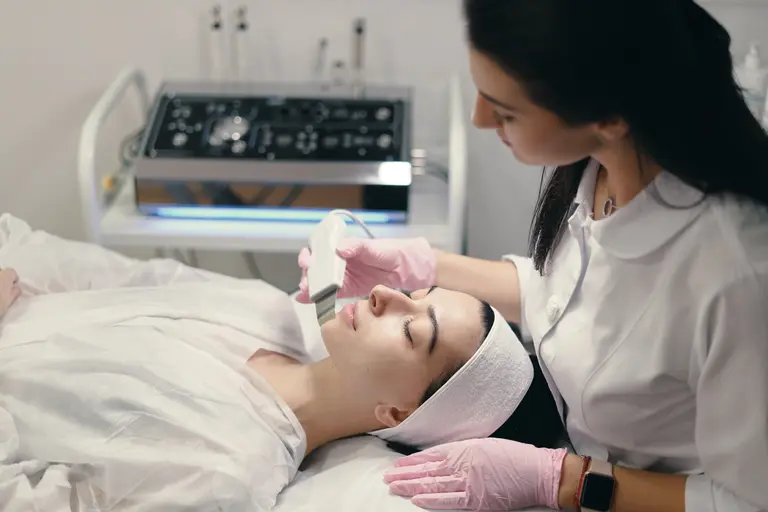
The duration of the effects varies greatly among individuals, but it is generally known to last about 6 months to 1 year. Various factors such as collagen production speed, daily lifestyle, and age influence this. Therefore, it is difficult to definitively state that the effects of Ulthera will be maintained for a specific period. Some users may not feel as much change as expected, so it is important to clarify realistic expectations about 'what results are possible' during the pre-treatment consultation.
In conclusion, the advantage of Ulthera is that it allows for a certain level of elasticity improvement without incisions, while the limitation is that satisfaction can vary greatly depending on individual skin conditions. Many specialists commonly mention that the key to results lies more in the depth settings and energy distribution suited to the skin structure than in the performance of the equipment itself.
Consideration of Side Effects Such as Numbness and Sensory Abnormalities
Although Ulthera is classified as a non-invasive procedure, there is a possibility of side effects due to its equipment delivering high-intensity ultrasound to deep layers of the skin. The most commonly reported side effects are temporary pain, bruising, and swelling. These usually subside within a few days, but those who are sensitive may experience prolonged pain due to the energy reaching deeper layers. Occasionally, if energy is irradiated close to nerves, symptoms such as numbness and sensory abnormalities may occur. Rarely, side effects such as 'cheek hollowness' due to excessive reduction of the fat layer are also mentioned.
Most side effects recover, but the risk can increase if strong energy is irradiated without considering individual skin thickness, bone structure, and fat location beforehand. Therefore, even though Ulthera is a widely known procedure, it is often advised to thoroughly review its suitability for each individual before treatment.