


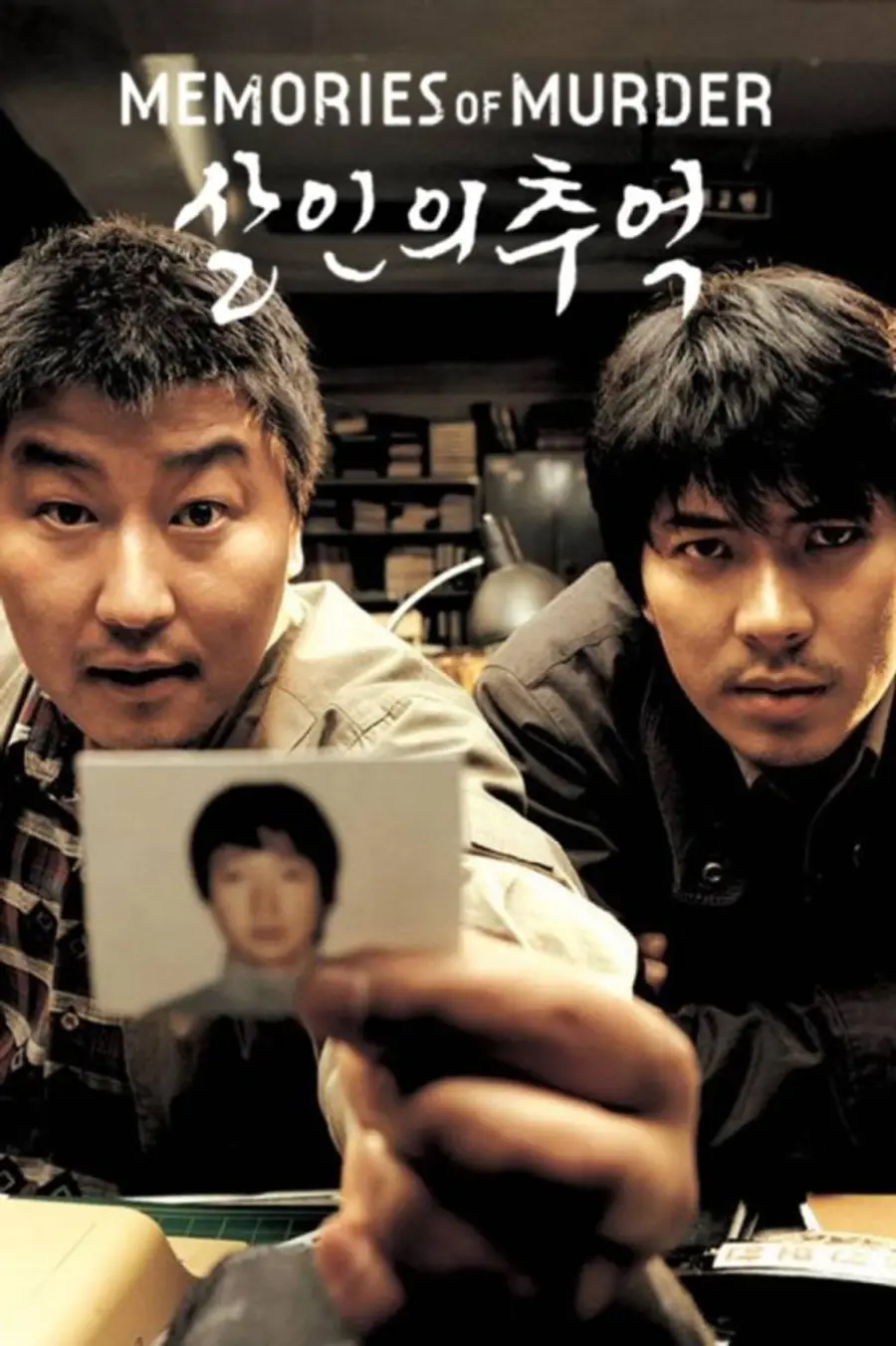
Next to a rice paddy where rain pours endlessly, police and villagers are entangled. Bong Joon-ho's 'Memories of Murder' begins right in that muddy field. While Hollywood serial killer thrillers like 'Zodiac' or 'Se7en' start in the darkness of the city, 'Memories of Murder' begins under the bright sunlight of rural Korea, yet covered in unremovable mud.
Rural detective Park Du-man (Song Kang-ho) faces the first corpse in an atmosphere resembling a market where children play and onlookers wander, even though it is a crime scene. If it were a scientific investigation team from 'CSI' or 'Criminal Minds', they would be horrified. The woman's body is brutally mutilated and discarded in the rice paddy, while detectives trample carelessly over the muddy ground where footprints are left. Instead of scientific investigation, the rural detective is filled with confidence to catch the culprit using 'instinct', 'gaze', and 'local rumors'. Park Du-man stands at the center of this rustic worldview.
Park Du-man shouts at witnesses to 'open your eyes and look' instead of using a profiler's hypnosis, and he resorts to kicking and violence against those he suspects to be the culprit instead of providing evidence. For him, investigation is closer to 'the talent of picking out the ill-mannered' rather than the logical profiling of 'Mindhunter'. It is a bizarre mix of comedy and tragedy, as if Inspector Clouseau from 'The Pink Panther' were handling a real murder case.
By his side is his colleague, detective Jo Yong-gu (Kim Roe-ha), who employs even more primal violence. Torture-like beatings and coercing false confessions are the means they routinely use. If the CIA torture scenes in the 'Bourne' series are cinematic exaggerations, the police violence in 'Memories of Murder' is so realistic that it is even more uncomfortable. Yet, they believe themselves to be on the side of 'justice'. Until a series of murders occur in the small rural village, that belief had never been significantly shaken.
However, on a rainy day, a series of brutal murders targeting women begins to change the atmosphere. On a night when a specific song plays on the radio, a woman in a red dress disappears, and the next day, without fail, a body is discovered. Like the coded letters in 'Zodiac', this pattern is the signature of the culprit. The case gradually reveals its structure, and the village becomes engulfed in fear, reminiscent of the 'Salem witch trials'.
Pressure mounts from above, and the media mocks the incompetent police as if evaluating a film in 'Empire', covering the case extensively. Amidst this, Seo Tae-yoon (Kim Sang-kyung), dispatched from Seoul, appears. His investigative methods are the complete opposite of Park Du-man's, akin to Sherlock Holmes and Watson. He seals off the crime scene with tape, emphasizing hypotheses, logic, and data analysis. As Seoul's 'rationality' and the local 'instinctive investigation' come under one roof, the tension within the investigation team gradually rises.
Du-man and Tae-yoon initially distrust each other thoroughly. To Du-man, Tae-yoon is a city detective like Sheldon from 'The Big Bang Theory', who is just pretending to be smart, while to Tae-yoon, Du-man is merely a rural detective like a zombie exterminator from 'The Walking Dead', who beats people without evidence. However, the serial murders do not allow either of them the luxury of pride.
Bodies continue to be discovered, and the seemingly strong suspects repeatedly come up with alibis, or only mentally unstable individuals like Raymond from 'Rain Man' remain as the case slips away. In the process, the police's violence and incompetence, as well as the atmosphere of the time, are starkly revealed. The dark roads, where even streetlights are insufficient, the railway cutting through factories, and the culture of escorting women home become survival strategies that fill the screen. If New York in 'Taxi Driver' was a city of crime, the Hwaseong in 'Memories of Murder' is a rural area where safety has vanished.
As the serial murders continue, the anxiety within the police reaches a boiling point. Du-man becomes increasingly obsessed with his only weapon, the instinct that says, 'I can tell just by looking at their face', while Tae-yoon struggles to maintain his composure but reveals cracks in the face of contradictory evidence and investigations. It feels as if all the characters in the film are floundering in a massive fog like the black hole in 'Interstellar'.
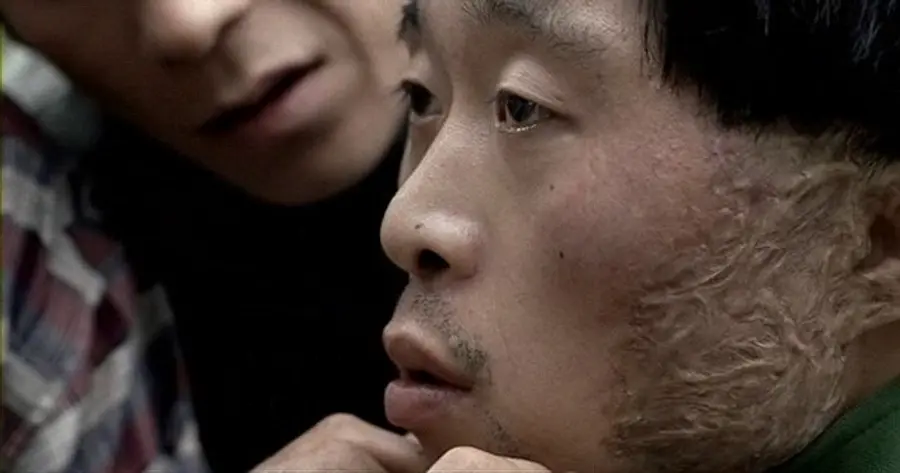
The audience feels as if someone might be the culprit, only to be thrown into confusion again by the next scene revealing a crumbling alibi. There is no clear twist like in 'The Usual Suspects', nor does it push moral dilemmas to the extreme like 'Prisoners'. The investigation seems to keep going in circles, yet within that circle, there are always the tragically discarded bodies of the victims.
As the film progresses into the second half, it focuses on the inner changes of the two detectives, Park Du-man and Seo Tae-yoon. Initially mocking each other, they gradually rush in one direction under the obsession of