
[Magazine Kave=Park Su-nam, Editor-in-chief] The California desert in April is scorching. But compared with the heat that Korean culture is pouring into the world right now, it is nothing.
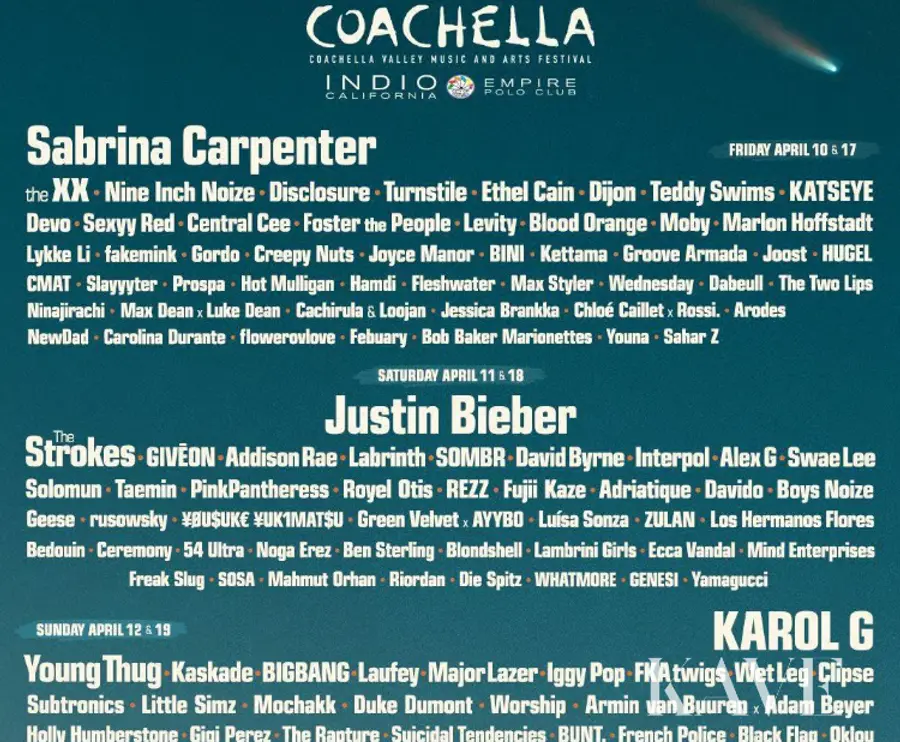
On April 9, BTS opened the prologue of its world tour for the first time in three years at Goyang Stadium with 'ARIRANG'. On April 11, Taemin took the stage at Coachella as the first Korean male solo artist ever, premiering six new songs live. In the same weekend, BIGBANG seized the Coachella main stage to commemorate its 20th debut anniversary. Today, April 13, Tomorrow X Together (TXT) releases its 8th mini album, and PLAVE is back with a comeback.
This is not just a simple “comeback rush.” It is a civilizational moment in which the country called “Korea” simultaneously sweeps over the world in every field—music, food, literature, technology, and lifestyle.
I. BTS World Tour 'ARIRANG': A Cultural Tsunami of $1.8 Billion
Wednesday, April 9—Goyang Stadium. Seven BTS members lifted the curtain on their full-comeback world tour for the first time since completing more than three years of military service. And the scale of this tour is unprecedented.
34 cities, 82 shows, until March 2027. According to Reuters, this is the largest world tour in K-pop history. Starting with Korea and Japan, then the United States, Mexico, Belgium, the UK, Germany, and France—continuing through to Latin America across Colombia, Peru, Chile, Argentina, and Brazil, and finally circling the globe all the way to Thailand, Malaysia, Singapore, Indonesia, the Philippines, Taiwan, Hong Kong, and Australia.
Even before the tour began, records poured in. The 5th album 'ARIRANG' hit No. 1 on Billboard 200 for two straight weeks immediately after its release on March 20, and its first-week on-demand streaming in the U.S. reached 99.10 million plays. That is the best record ever for a K-pop artist. Every seat sold out for concerts in Korea, Japan, North America, and Europe. Claudia Sheinbaum, President of Mexico, sending a friendly letter to South Korean President Lee Jae-myung saying “Please book more BTS performances” has now become a well-known anecdote.
IBK Investment & Securities analyst Kim Yoo-hyeok projects the tour revenue at 2.7 trillion won (about $1.8 billion). That is comparable to—or even surpassing—the Taylor Swift Era(s) Tour ($2.1 billion).
But the tour’s true meaning lies beyond the numbers. The album title “Arirang”. BTS leader RM said this.
“K-pop’s success comes from respecting diversity and embracing the world—without letting go of Korea’s unique identity.”
BTS leader RM
Putting Korea’s traditional folk song at the center as the album title—that is BTS’s declaration to the world. We sing in the language of the world, but the roots are in Korea.
II. Taemin Rattles Coachella’s Desert with 'MOVE'
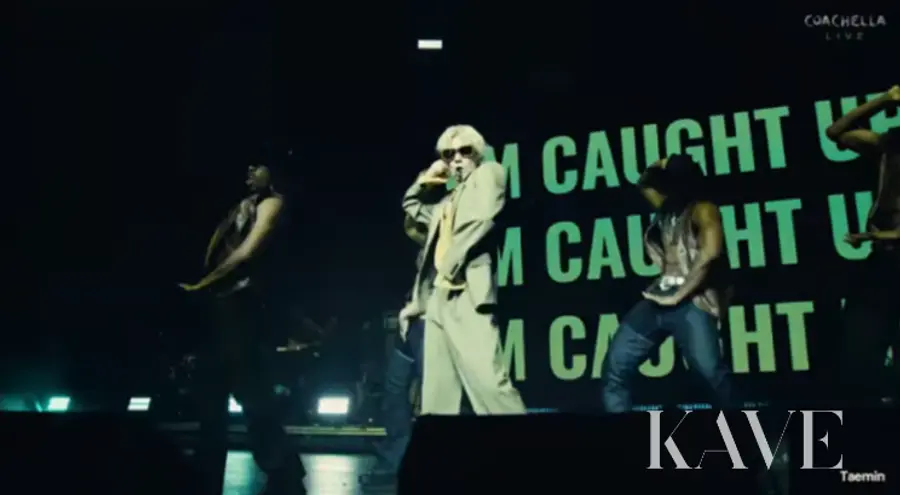
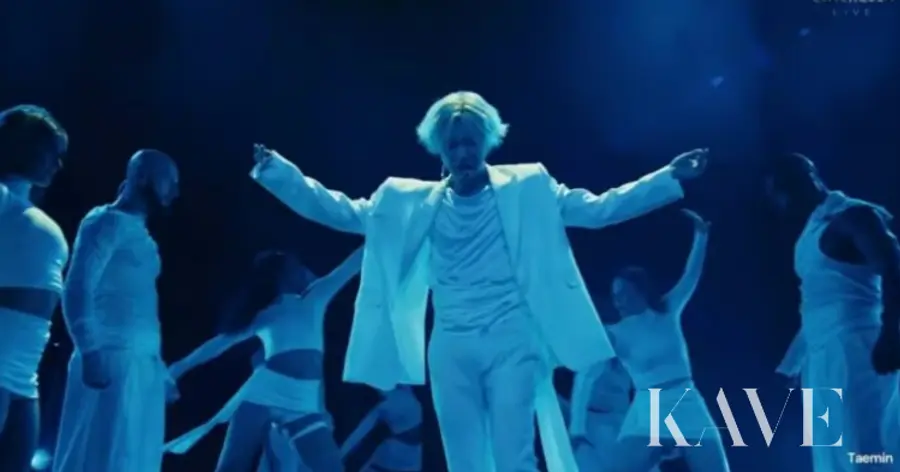
Friday, April 11, 7:00 p.m.—the Coachella Mojave stage. Taemin stepped onto the Coachella stage for the first time ever as the first Korean male solo artist. The 50-minute performance was the time that proved why he is a “living legend” of K-pop.
After the intro video, Taemin began with the 2024 single 'Sexy in the Air', passing through 'WANT' from 2017, and unveiled a bold setlist that premiered six unreleased new songs live. After bringing along a live band and a full dancer team, and presenting fresh live rearrangements of 'MOVE', 'Guilty', 'Advice', and 'IDEA', he then revealed his skill as a pianist by sitting down in front of the grand piano he brought onstage.
“Wassup, Coachella—my name is Taemin!” Taemin shouted to a packed crowd. “I’ve been waiting for this moment for a long time.”
Before appearing at Coachella, on The Jennifer Hudson Show, Taemin said this: “In Korea, there’s a saying that big opportunities in life come three times. This is one of them.” After two decades since debut, a solo artist who had toured only in Asia—backed by the success of his first U.S. solo tour—made it all the way to Coachella. And at the same Coachella, BIGBANG delivered a performance celebrating its 20th debut anniversary, while KATSEYE collaborated onstage with HUNTR/X members from the Netflix animated series 'KPop Demon Hunters'.
Coachella’s desert became K-pop territory.
III. The April K-pop War: Who Will Survive?
Even amid all this, the K-pop industry has no time to catch its breath. This month’s release schedule—what the Korea Times dubbed a “comeback flood in April”—is packed like never before. Korea Times
Date | Artist | Album/Single | Notes |
|---|---|---|---|
4.3 | T.O.P | First full-length solo album | Solo comeback after 13 years |
4.6 | KickFlip | “My First Kick” | JYP’s youngest boy group |
4.6 | KISS OF LIFE | “Who is she” | Domestic comeback in 10 months |
4.7 | AKMU | “FLOWERING” | |
4.7 | WJSN Dayoung | “What’s a girl to do?” | Solo digital single |
4.13 | TXT | Mini album “7TH YEAR” | First “Chapter 2” project after re-contracting |
4.13 | PLAVE | “Caligo Pt.2” | A virtual boy band’s advance |
4.15 | ifeye | “As If” | Debut rookie of 2025 |
4.17 | Xdinary Heroes | New release | JYP band unit |
4.20 | NCT WISH | “Ode to Love” first regular album | First full-length by a new SM act |
4.20 | CORTIS | “GREENGREEN” pre-release | Rookie enters Billboard 200 at #15 |
4.30 | ILLIT | “MAMIHLAPINATAPAI” mini 4th album |
Before the June FIFA World Cup and nationwide local elections, April became K-pop’s 'last runway'. Amid this intense competition, the key question is who can break through the noise and create lasting impact.
IV. Beyond K-pop: A “Second Wave” of the Korean Wave Has Arrived

But if we explain the Korean Wave of 2026 using only K-pop, we can see only half of it.
The results of the 2026 Overseas Korean Wave Status Survey announced by the Ministry of Culture, Sports and Tourism are surprising. In this largest-ever study of 30 countries and 27,400 participants, overseas consumers of Korean cultural content were spending 14.7 hours per month and $16.60 on Korean cultural content on average. Both time and spending increased compared with the previous year.
Even more noteworthy is that the keyword “North Korea’s nuclear threats / war risk” dropped out of the top 10 Korean image keywords for the first time. In its place, “IT products” (4.8%) and “automobiles” (3.6%) took over. Korea’s global image has fully shifted from “geopolitical instability” to “a country of culture and technology.”
The Rise of Hansik
K-Food export value reached a record high in 2025 at $13.62 billion, continuing 10 years of growth. K-Beauty grew by 12.3% to $11.4 billion. These two sectors entered for the first time ever, Korea’s top 10 export categories (ranked 9 and 10 respectively). When you add other cultural-content exports such as games and music, total K-culture exports reach $37.94 billion, making it Korea’s 4th largest export sector.
After Netflix’s 'Black and White Cook (Culinary Class Wars)' and the 'Squid Game' series put Korean food into global spotlight, the government will open this year a Korean cuisine-focused cooking school for foreigners, 'Sura School'. The goal is training experts to globalize traditional Hansik ('hansik').
The Han River Effect: A Korean Wave in Literature
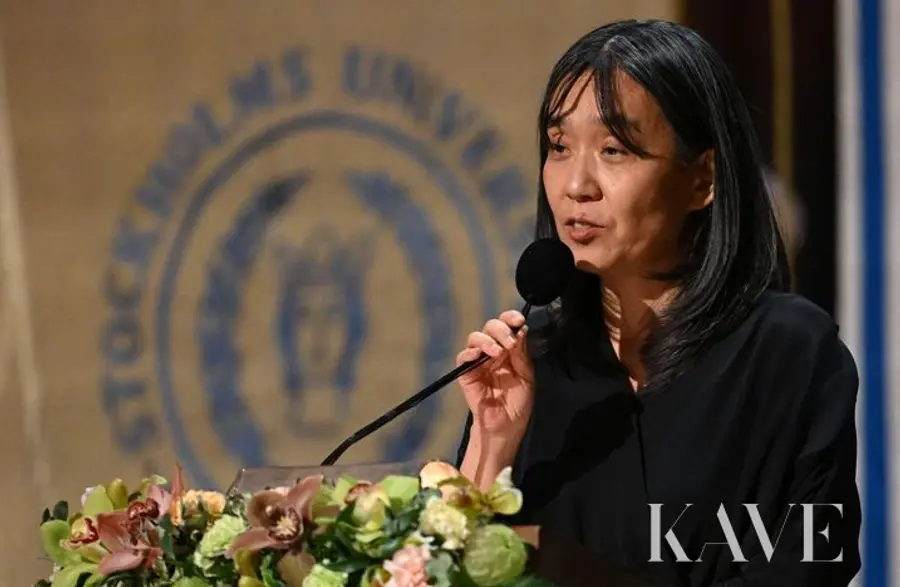
After 2024 writer Han Kang’s Nobel Prize in Literature win, the rate of overseas media coverage of Korean literature surged from 1.2% in the third quarter of 2024 to 32.4% in the fourth quarter—an increase of more than 30 percentage points. Africa shows the highest interest in Korean literature, while Oceania focuses on Korean films, Brazil on films, and Vietnam on dramas—so regional differentiation by content type within the Korean Wave is becoming clearer.
V. “A Cultural Powerhouse Korea” Told by Numbers
Brand Finance Global Soft Power Index 2026 placed Korea at #11 worldwide (59.2/100), rising one step from #12 the previous year. But the detailed categories are even more striking.
Category | World Rank |
|---|---|
🔬 Advanced Technology & Innovation | #5 |
🚀 Space Exploration | #9 |
💼 Brands the World Loves | #7 |
📈 Future Growth Potential | #6 |
🎭 Influence in Arts & Entertainment | #7 |
🍜 Foods the World Loves | #10 |
The Korean government, aiming for a “top 5 soft power country in the world,” is pushing toward $36 billion in cultural exports by 2030, focusing on music, drama, webtoons, beauty, and food. But in 2025 alone, it already surpassed $37.9 billion. The goal has been overtaken by reality.
Meanwhile, in the overseas Korean Wave status survey, the experience rate of Korean content in Western countries jumped by 10 percentage points or more compared with the previous year. In the U.S., the experience rates for Korean films, dramas, and variety shows all rose by more than 10 percentage points. In the UK, fashion, animation, and publishing each recorded up to a maximum of 12.3 percentage points. French music rose by 11.3 percentage points, Italy by 9.7, and Spain by 6.4. Researchers who have conducted this survey for 15 years evaluate it as “a qualitative turning point—an entry into Western mainstream cultural markets.”
VI. But There Are Things We Should Watch Out For
Even in this rosy narrative, there are cracks. To be honest, we have to say it plainly.
First, market concentration risk. More than 40% of K-Food and K-Beauty exports are concentrated in just three countries: the United States, China, and Japan. Over 80% of exporting companies are small and mid-sized businesses, making them extremely vulnerable to tariff hikes or regulatory changes. In a situation where the Trump administration’s trade policies are expected to negatively affect 9 out of Korea’s top 15 export categories, diversifying cultural exports is a matter of survival.
Second, “excessive commercialism.” In the overseas Korean Wave status survey, the #1 negative perception (16.1%) was precisely “excessive commercialism.” When the Korean Wave focuses only on “what sells,” the authenticity of culture is harmed. #2 was the North Korea situation (12.9%), and #3 was inappropriate behavior by Korean celebrities (11.5%).
Third, sustainability. K-culture exports of $3.79 billion depend on the Korean Wave boom itself. If global interest declines, exports can crash just as sharply. A shift to a self-sustaining structure has not yet been fully completed.
A Night When Arirang Became a Song of the World

In 1994, a policy memo was brought to President Kim Young-sam. It compared profits, saying Spielberg’s 'Jurassic Park' made revenue comparable to South Korea’s exports of 1.5 million Hyundai cars. At the time, Korea’s annual car exports were still under 700,000 units. The story was that one Hollywood movie topped two years’ worth of exports.
Thirty years later, in 2026, Korea no longer envies the “Jurassic Park” myth. One BTS 'Arirang' tour brings $1.8 billion, all Korean cultural exports total $37.94 billion, and the money that people around the world spend every month on Korean Wave content is $16.60. Korean cultural industries have become the 4th major export industry following semiconductors, automobiles, and shipbuilding.
Putting 'Arirang' on an album—this expresses the certainty that Korea’s old melody, carrying its sorrow, joy, and history, can now become a song of the world. When Taemin said at Coachella, “Big opportunities in life come three times,” it reflects the humility and determination of an artist who has walked for 20 years. T.O.P’s return with a solo album after 13 years is evidence that K-pop is becoming an art that cuts across generations beyond the “culture of youth”.
Korean culture is no longer just a 'trend.' It is a lifestyle embedded in the global market structurally. The number of people and actions—whether a woman watching “citrus-life” on a subway commute in Paris, or a university student streaming the same drama in São Paulo—adds up to $37.94 billion.
There are risks. Excessive commercialism, market bias, and uncertainty about sustainability. But one thing can be said clearly about this moment.
In April 2026, Arirang became a song of the world.