


[magazine kave=Lee Tae-rim]
Jung Ho-seok's beginning was not on stage but on the floor. The boy who grew up in Gwangju moved his shoulders first when the music played, and after school, he spent more time looking at the practice room floor than the mirror. He learned to dance from a young age and made a name for himself as a member of the underground dance team 'Neuron' that was active in the area. For several years, he steadily built his foundation at a dance academy, developing the sense that his body could speak like a sentence. His record of winning first place in a national dance competition in 2008 is proof that the word 'talent' was not in vain. However, that talent was more evident in his attitude than in technique. His personality, which returns to the beginning after repeating the same move dozens of times, and his habit of sweating more during times without an audience shaped him.
The dream of becoming a singer slowly spread from dance. Many people dance well, but few build the narrative of a song through dance. Jung Ho-seok was closer to the latter. When he joined Big Hit Entertainment in 2010, he expanded the language of the stage to 'rap.' At that time, he started in the vocal position but seriously learned rap to match the team's color and his own tendencies. Amid unfamiliar vocalizations, breaths, and words, he first grasped the 'logic of rhythm' like dance. Before his debut in 2012, he participated as a featured rapper in Jo Kwon's song 'Animal,' leaving the best impression a trainee could make outside the stage.
On June 13, 2013, the day BTS debuted, J-Hope stood before the audience as the energy engine of the team. The early days of BTS were rough and raw. Within that, J-Hope's dance added warmth to the sharpness and created the harmony of 'together' with precise movements without exaggeration. In an idol stage where the spotlight tends to focus on one person, he chose a direction that made the whole team shine brighter. That choice ultimately led J-Hope to the position of 'performance leader.'
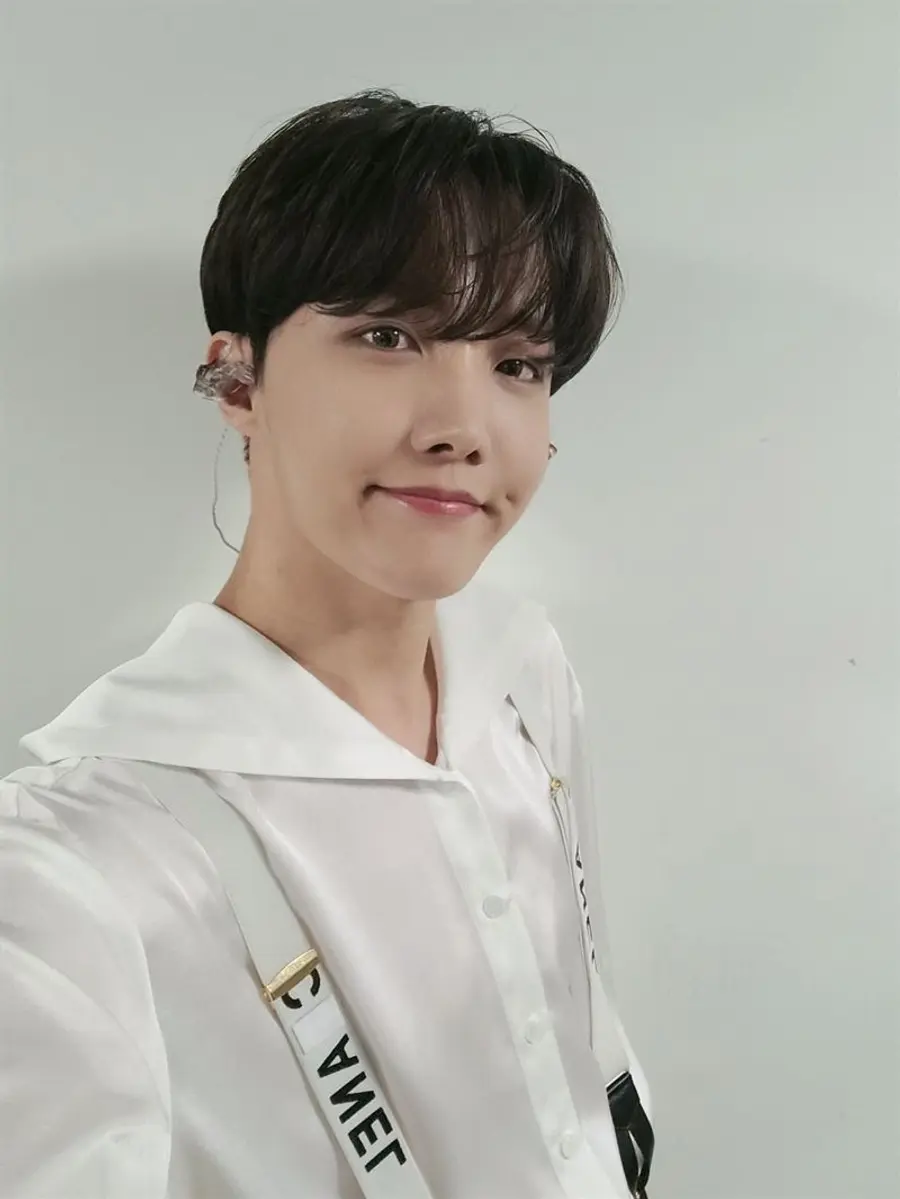
As the public began to recognize BTS's existence more prominently, J-Hope's name also became clearer. As the team's narrative expanded through 2015 and 2016, he translated the highs and lows of emotions into his body on stage. In the intro 'Boy Meets Evil' of the 'Wings' era in 2016, J-Hope designed a performance that depicted temptation and inner conflict, and in the following solo song 'Mama,' he expressed gratitude to his mother through bright and rhythmic rap. His solo parts are often consumed as 'brief personal showcases,' but J-Hope embeds the essence of the concept in that short time.
In 2018, he transformed love into a metaphor of 'dance' with 'Trivia 起: Just Dance,' proving why he is so persuasive on stage. The 'Outro: Ego' from 'Map of the Soul: 7' in 2020 was a song that gazed at his ego, as the name suggests. By honestly revealing the worries behind his bright persona and his real name behind the glamorous nickname, he moved beyond being simply the 'positive one.' His face, often captured in BTS's documentaries and behind-the-scenes footage, always smiles, but that smile is close to the result of effort. When the team is on the verge of collapse, he lifts the atmosphere, while at the same time, he is the one who demands the most detail during rehearsals. J-Hope's leadership is a type that derives from the same root of 'brightness' and 'strictness.'
His solo endeavors expanded alongside BTS's growth curve. The mixtape 'Hope World,' released in 2018, showcased a 'world of hope' as the title suggests. In tracks like 'Daydream' and 'Airplane,' he vividly painted the archetype of the image fans knew while handling the irony of being an idol lightly. The 2019 remake collaboration of 'Chicken Noodle Soup' was an event that put his dance identity front and center. By modernizing the energy of the familiar original, he demonstrated the very way dance and music uplift each other. The fact that a character can exist on stage, completed independently without the description of 'a member of BTS,' was confirmed more widely at that time.
The first official solo album 'Jack in the Box,' released in July 2022, boldly flipped J-Hope's spectrum. The pre-released song 'More' and the title track 'Arson' shook the stereotype of 'bright J-Hope,' confronting anxiety, desire, and the shadow of an artist head-on. In July of the same year, he stood as a headliner on a major festival stage in the United States, creating a symbolic scene as a Korean solo artist. In March 2023, with 'On the Street' featuring J. Cole, he connected the starting point of a dancer and the present of a rapper in one line. Whether on stage or in the song, J-Hope's message is simple. "I’m your hope, you’re my hope, I’m J-Hope." That phrase sounds like a slogan, but in his career, it has been a self-suggestion that has actually worked.
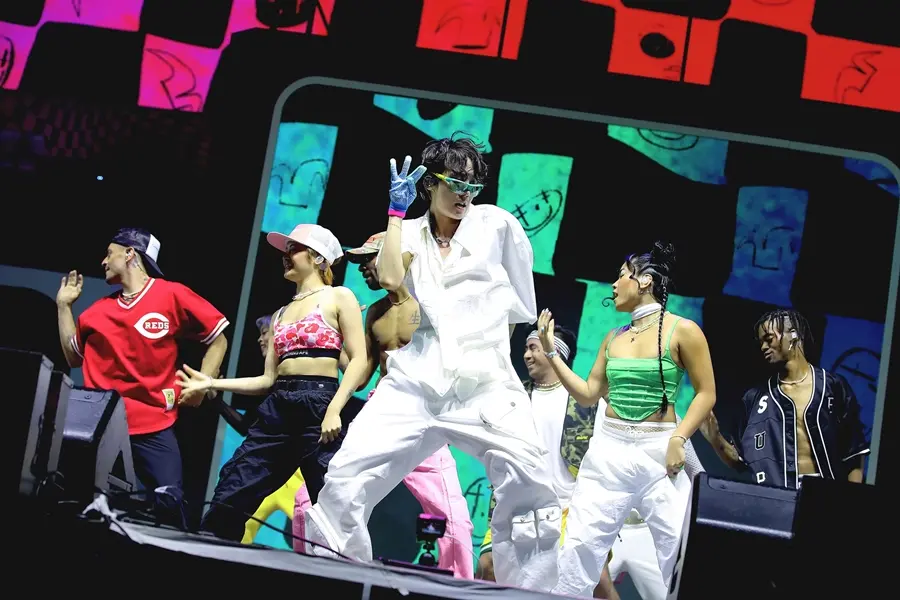
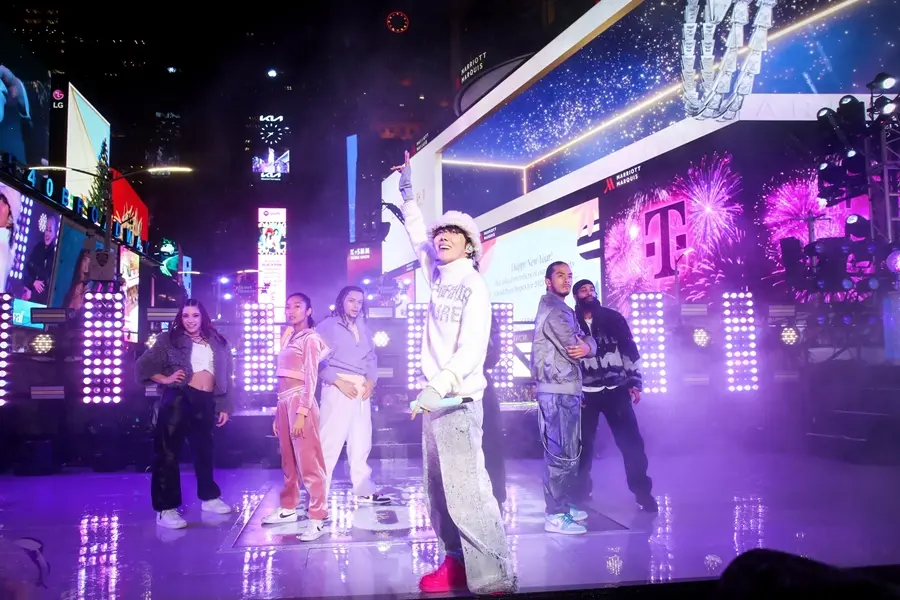
The reason J-Hope is loved by the public cannot be explained by just the image of being a 'pleasant person.' His charm comes from contrast. He is explosively bright on stage, but he self-censors more coldly than anyone else in his work. His performances give excitement, but that excitement has rarely happened by chance. The obsession with aligning angles in choreography, the sense of calculating camera angles even while riding the rhythm, and the ability to design movement and expressions simultaneously combine to create J-Hope's stage. Therefore, his dance remains as 'makes sense' rather than just 'dances well.' Each movement carries the emotional line of the song, and each gaze foreshadows the meaning of the next scene.
In music, he also built love in a similar way. The bright palette of 'Hope World' provided comfort to fans, while the dark tone of 'Jack in the Box' gave the public trust. If a person is only bright, they can quickly appear light, but J-Hope has solidified his image by showing the opposite side of brightness. In particular, the gap between 'Boy Meets Evil' and 'Outro: Ego' compresses his growth narrative. A young man shaken by temptation ultimately embraces the responsibility of choice and returns to 'self.' In that process, J-Hope persuaded emotional changes through performance, and the audience willingly entrusted their hearts to that persuasion.
His humanity outside the stage also drove his love. In variety shows and live broadcasts, he often took on the role of lifting the team's atmosphere, but that cheerfulness was not laughter that belittles others but a way of laughing that lowers himself. The reason fans call J-Hope 'hope' is not just because he always smiles, but because he has chosen to save people with laughter. At the same time, he is a highly responsible artist. His attitude of staying behind to check the stage after performances and being the first to mention his mistakes does not make the word 'pro' feel light.
On April 18, 2023, J-Hope began his military service and was discharged on October 17, 2024. During that time, projects showcasing his roots continued to be released. In March 2024, a series titled 'Hope on the Street,' capturing his love and journey for street dance, was released, and in the same month, the special album 'Hope on the Street Vol. 1' was released, confirming once again where he started. After his discharge, he announced his return by performing at a charity concert in France in January 2025, followed by his first solo tour 'Hope on the Stage,' which started in Seoul and traveled to major cities in Asia and North America. In the summer of 2025, he also made his name known on European festival stages, proving his stamina as a 'world tour artist.'
Looking more closely at his activity timeline, it becomes clear that the 'bright stage' was never a coincidence. Even within team activities, he often expanded the points of collaboration. In songs like 'A Brand New Day,' showcased in a game OST project, he smoothly blended unfamiliar vocals with his rap tone, revealing his essence as a 'recording artist' rather than just a stage performer. In 2020, he was promoted to a full member of the Korean Music Copyright Association, clearly establishing his coordinates as a creator. The description of 'a member who dances well' has become insufficient.
The key to the solo transition was 'proof.' 'Jack in the Box' was bold from the concept. Instead of expectations popping out like a toy box, it showed the self trapped inside the box. That result led to the solo festival headlining in the summer of 2022. On a massive outdoor stage, he captivated the audience with a streamlined movement and completed 'a one-person show' by moving between brightness and darkness within one set. The documentary 'J-Hope in the Box,' released in 2023, recorded the pressure and excitement of that process. Rather than just showing perfect results, his attitude of revealing the anxiety before the results made him more trustworthy.
The 'Hope on the Street' project released before his discharge reflected his starting point as the title suggests. Dance that started on the street, memories of the team 'Neuron,' and the ethics that street dance left him. In the title track 'Neuron' of 'Hope on the Street Vol. 1,' he layered the identities of dancer and rapper while preserving the texture of old-school hip-hop with Gaeko and Yoonmirae. The 'groove' he has learned with his body for a long time has now been returned through language and beats.
His post-discharge activities were not just a simple return but an 'expansion.' In early 2025, he showcased a short set at a large charity concert in Paris, demonstrating that his stage sense was still alive. The subsequent first solo tour was close to a declaration of 'building hope on stage,' as the title suggests. The choice to set the finale of the tour on June 13 and 14 symbolically overlapped the debut date of the team and his solo career on one timeline. The fact that he was named a headliner at a major European festival that summer confirmed once again that J-Hope is no longer 'a solo benefiting from the group's popularity.'
The future he will show from now on is likely to have a similar character but a different scale. The new album and tour of BTS, scheduled for March 20, 2026, will bring back J-Hope's 'team' narrative while adding new colors to the solo narrative he has built. Above all, he is someone who has redefined the word 'performance.' The way dance does not just adorn the song but completes the meaning of the song. As long as that belief continues, J-Hope's stage will once again lift the hearts of the audience.
Ultimately, the core of J-Hope is not 'hope' but 'practice.' Laughter is the result, and obsession is the cause. The light he will show on the next stage will be placed on the repeated movements of today. So when the audience hears his name, they feel relieved. Whether it's a beginning or a return, they know that the temperature of the stage will definitely rise. That belief lasts long.