
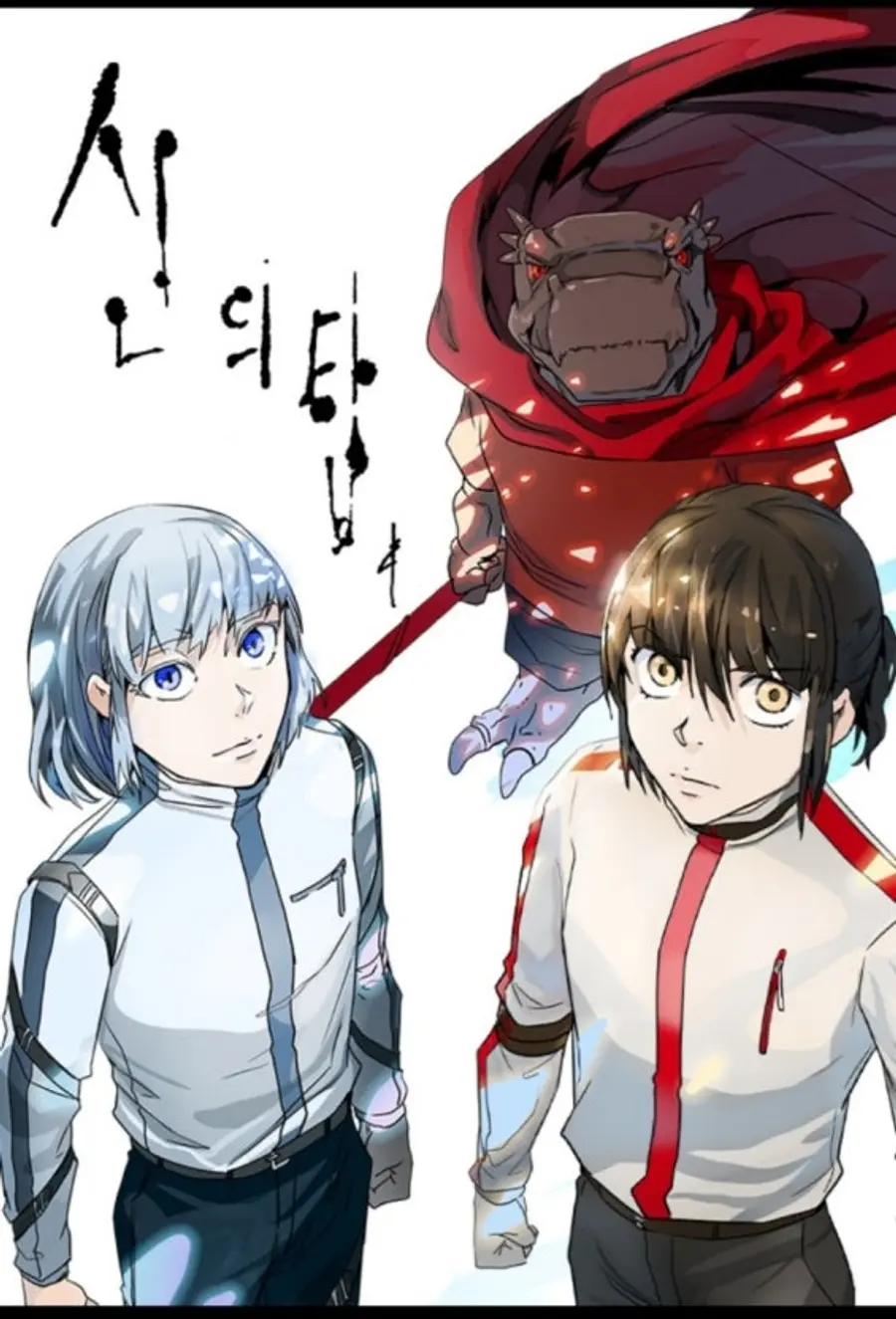
The tower promises everything. It whispers that if you just climb, you can obtain wealth, honor, power, and even become a god. Like the "Run with the Money Bag" mission from Infinite Challenge, this tower is a game that stakes not just hours but a lifetime. Naver Webtoon 'Tower of God' is a story that obsessively, almost obsessively, pushes this simple yet intense premise to the end.
The beginning of the work is surprisingly simple. A boy named Twenty-Fifth Bam, who has lived in a dark cave-like space with nothing, and a girl named Rachel, who was the world itself to him. Rachel's wish is to "see the stars in the sky"—as simple as a country kid wanting to see Myeongdong in Seoul, but in this world, it is a wish that requires risking one's life. The tower seems to be the only exit that can grant that wish. The moment Rachel enters the tower first, Bam has only one choice left: to follow her into the tower. It is difficult to define the emotion that pushes him through the door as love, obsession, or the imprinting effect of a unique existence.
The Architecture of Vertical Desire
On the first floor of the tower, Bam faces the rules of this world head-on. The caretaker, Headon, appears and declares, "Climbing the tower means passing constant tests," and the boy faces a gigantic iron cage monster as his first test. Here, the test is survival. It is a world that takes the saying that the college entrance exam determines life literally. If you can't find the answer, you die, and if you can't trample others, your turn will never come. However, Bam cannot fully internalize this rule from the beginning. He fights not to win, but to reach Rachel. A player whose motivation lies outside the system determines Bam's behavioral pattern, which will be repeated throughout all floors from this misaligned starting point.
On the second floor, a full-fledged 'battle royale' structure unfolds. Strange test-takers gather in one space, and they are given rules to form alliances and betray each other to survive within a limited time. Those who said that 〈Squid Game〉 was "a metaphor for social systems" will feel déjà vu here. However, it is interesting that 'Tower of God' has been unfolding this structure in webtoon form since 2010.
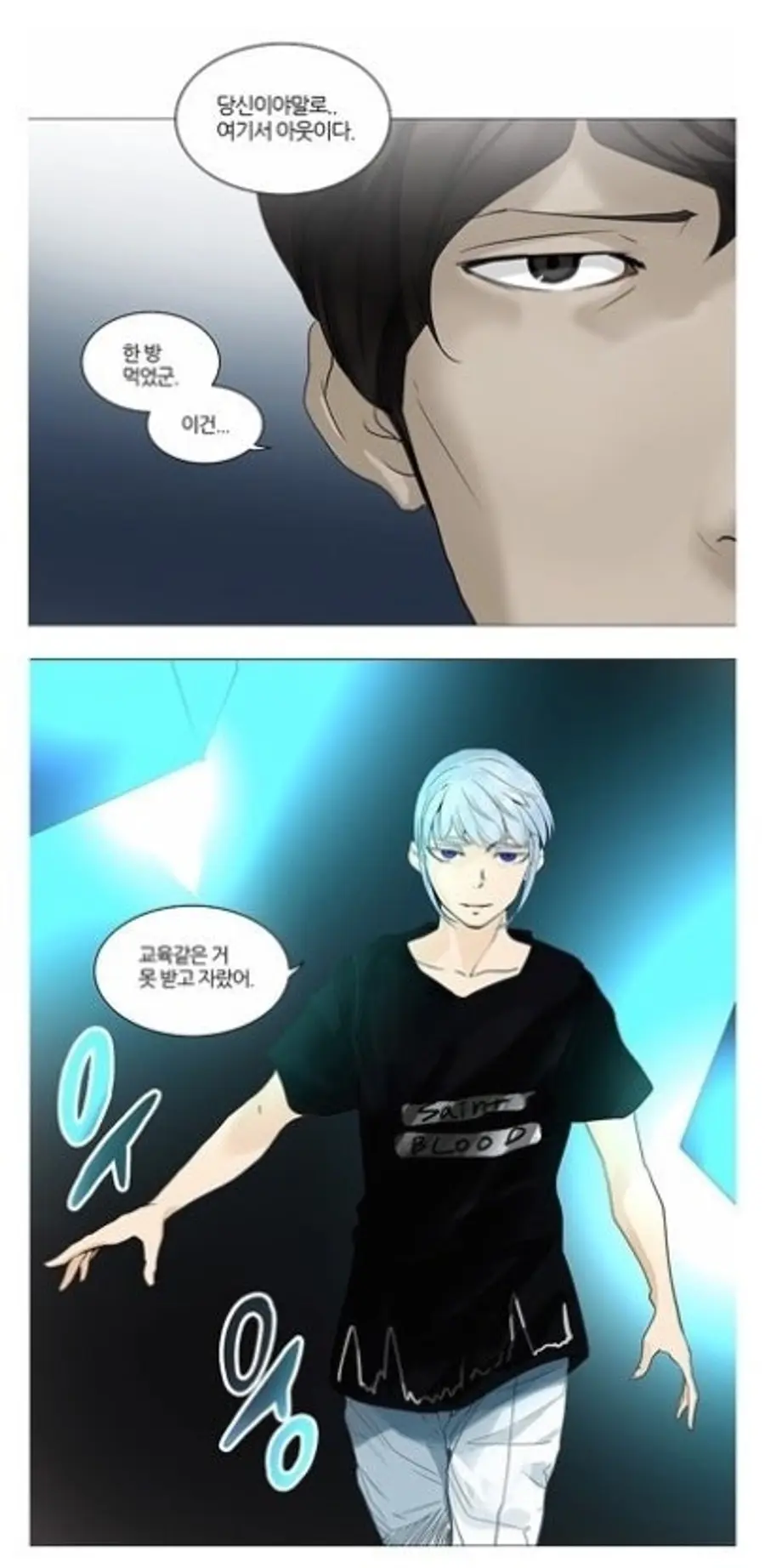
Here, Bam meets two characters. Kun, who has the appearance of an elite from a noble background and a cold intellect, is a typical strategist character but fails to control his emotions only in front of Bam, making him a kind of 'tsundere strategist.' And the warrior Rak, who wields a huge spear and shouts "prey," may seem simple-minded but is actually the most loyal type. The combination of calculation, violence, and innocent obsession among these three characters becomes the core party that climbs the tower. In RPG terms, it's a golden combination of tank-damage dealer-support, but the twist is that the supporter (Bam) actually hides specs worthy of a final boss for a hidden ending.
The tests vary in method on each floor. Team battles, deduction, psychological warfare, territory disputes, and relay races. It's a structure like 〈The Genius〉 that completely changes the rules every season in game broadcasting. In this process, dozens of test-takers drop out one by one, and only those who survive leave their names and stories. The kindness (or excessive setting?) of giving background stories even to extras is a characteristic of this work.
The structure of the tower soon reveals itself as a system of class and desire. Ordinary people are born in the villages and cities inside the tower and live their entire lives without ever leaving a few floors. It is like stacking the semi-basement, first floor, and high-rise mansion structure of 〈Parasite〉 vertically. Only a select few can take the official test as test-takers and ascend. Above them, King Jahad and the princesses who have already reached the peak, along with numerous groups and families managing each floor, establish a massive order.
However, Bam is an 'irregular' being who suddenly falls from outside that order. As an outsider who does not belong to the rules of the tower from birth, his very existence creates a crack in the system. In game terms, he is a player who has access to the source code of the game itself, not just using cheat codes. Some see him as a dangerous variable and try to eliminate him, while others seek to use him for their own purposes.
Rachel, or How to Parasitize Others' Dreams
Rachel's existence is another axis of this story. From Bam's perspective, Rachel is always the light he must chase. However, as the reader climbs the floors, they come to realize that Rachel is also a character with her own fears and desires in this tower. The tower grants wishes but demands a price. Even the simple wish of "wanting to see the stars" becomes a transaction worthy of signing a contract with the devil of Faust in this place.
The relationship between Bam and Rachel transforms into a bizarre and uncomfortable relationship between "a person who risks their life for someone else's dream" and "a person who rides on someone else's devotion" rather than a simple unrequited love or reunion narrative. This is not love but rather a kind of symbiosis, or rather, a parasitic relationship. How the two separate and then intertwine again is a core spoiler of this work, so I will stop here, only hinting at the direction. However, I can say this: Rachel is one of the most controversial characters in webtoon history, and readers are forced to choose between hating or understanding her.
After this, the story branches out diversely as it climbs the floors. A political arena unfolds, entangled with the rulers of each floor, test supervisors, the princesses of Jahad, and dozens of families and organizations. In some floors, survival games occur, in others, team battles like 〈Running Man〉, and in yet another, a war essentially breaks out. In this process, Bam is reconstituted not just as a simple 'Rachel chaser' but as a character with his own purpose and name. It is a textbook development of a growth narrative, but the fact that this process unfolds densely over hundreds of chapters is a distinguishing feature.
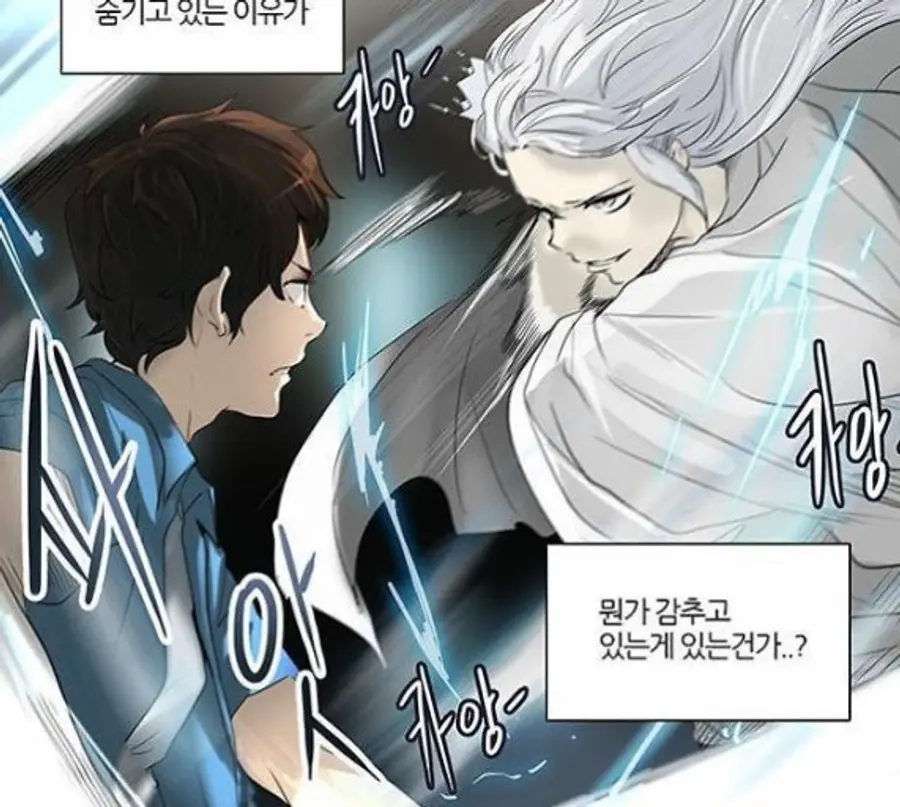
The friends accompanying him also change. Kun transforms from a cold strategist into a comrade who expresses his feelings for Bam, while Rak, despite his constant talk of prey, stands by Bam more tenaciously than anyone else. However, due to the structure of the tower, all relationships exist on the stage of tests and transactions. The tension of possible betrayal at any time and the prioritization of interests is the energy that drives the long narrative of 'Tower of God' to the end.
A Paradise for Worldview Enthusiasts
The greatest strength of 'Tower of God' is its world-building. Within the single structure of the tower, numerous cultures, races, rules, technologies, and political systems are layered by floors. If you isolate just one floor, it can stand alone as a fantasy world. The test rules are so intricate that they seem designed by a board game designer, and each floor's manager and family is complex enough to require separate Wikipedia articles. This meticulousness gives readers the sense that "there must be hundreds of other stories I don't know about somewhere in this tower." It is a case that embodies the excitement of reading 〈The Lord of the Rings〉 for the first time and the thrill of entering the magical world of 〈Harry Potter〉 in webtoon form.
The direction cleverly utilizes the webtoon format. It visually allows readers to experience the 'height' of the tower through the vertical scroll structure. As you scroll through the long corridors below, scenes of endless falls, and attacks pouring down from above, the very structure of the tower is felt through fingertips, eyes, and body. This is a direction that would be impossible in paper comics.
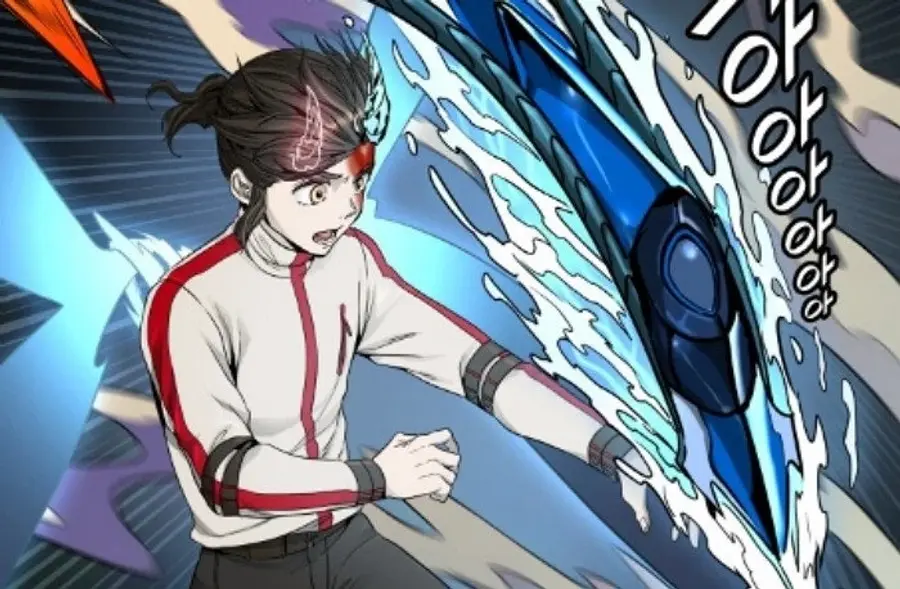
In the beginning, the drawings are relatively rough, but as the serialization progresses, character designs, backgrounds, and colors become increasingly sophisticated. In the mid to late stages, the intensity of large battle scenes, line arrangements, and direction definitely feel like they have risen two or three levels. The direction where the entire screen seems to bend when a huge spear collides with another spear, and the color expression when the divine beast (the tower's energy) explodes, comes across more intensely on a digital screen than in paper comics.
Character narratives cannot be overlooked either. Bam starts as almost a blank slate. He loves Rachel and climbs the tower for her, but he has no distinct personality coordinates beyond that. So, in the beginning, he may seem like a somewhat frustrating protagonist. It is entirely possible to criticize him as "a male lead with zero agency and only filled with romantic thoughts." However, as he climbs the floors, wounds, resolutions, and new relationships are drawn one by one on that blank slate. In particular, the process of reaching the point of "I will fight for myself" is the core of this work's growth narrative. From living a life for someone else to living a life for oneself.
Kun and Rak are contrasting characters to Bam. Kun is smart, cynical, and always prioritizes calculations, but he cannot hide his emotions only in front of Bam. He is a typical 'genius who fails to hide his emotions' character, but that typicality provides a sense of stability. Rak may seem simple-minded, but he is someone who protects his comrades' interests better than anyone else. If you think of Zoro from 〈One Piece〉, he is similar, but much more foolish and much more lovable than Zoro. Their dialogues and banter serve as comic relief that breathes life into the massive narrative.
A Gray World, or a Map of Desires Beyond Good and Evil
An interesting point in the direction of the narrative is that this work does not clearly divide good and evil. Of course, King Jahad and his regime are clearly subjects of criticism, but even within that, each has their own circumstances and logic. Characters that appear to be 'villains' are merely making choices to protect their own floors and families, and those who stand by Bam can turn their backs at any time depending on their interests. The tower is ultimately a collection of desires, and in such a world, absolute good is hard to exist.
This ambiguity resembles the power structures of reality, providing readers with food for thought beyond a simple hero's tale. If 〈Game of Thrones〉 said, "Power is ultimately a matter of who believes in whom," 'Tower of God' whispers, "Desire is ultimately a matter of how high you want to climb."
However, strengths can also become weaknesses. As a long-running series, there are indeed a lot of settings and characters. As the floors rise, new groups and concepts are continuously added, and plot threads thrown in past episodes are picked up later. This structure is a great joy for readers who enjoy digging into settings, but it can give a sense of fatigue to those who want to read lightly, as in, "I can't watch this without a wiki!" In fact, the 'Tower of God' wiki boasts one of the most extensive collections among webtoon wikis.
There are also sections that feel slow in pacing. Battles, dialogues, flashbacks, and political explanations follow, and there will definitely come a point where you feel frustrated, asking, "When are we going to the next floor?" Especially after the mid-point, as political drama elements are strengthened, readers who long for the simple and clear structure of "pass the test → next floor" from the beginning may emerge. It is clear that this is a work that requires patience to follow consistently. It is a webtoon like a marathon.
Who Should Climb This Tower?
Now, let's think about who should climb this tower. First, for those who enjoy rich fantasy settings and love digging into worldviews, 'Tower of God' is essentially a must-read. Just analyzing the rules of each floor and organizing the relationships between families and organizations can become a hobby in itself. It also suits readers who enjoy stories that combine game rules and battles, like 〈The Genius〉 or 〈Squid Game〉. Since new rules and combinations appear on each floor, the more you read, the more you look forward to "how will they fight this time?"
Additionally, it is suitable for readers who prefer narratives with many gray areas rather than simple hero tales. This work does not force you to believe in anyone unconditionally. Bam himself is not a morally perfect character. It is a type of story that continuously asks what choices to make when one's beliefs clash with others' desires and how to bear the consequences. In the process of following these questions, readers will also reflect on the shape of the 'justice' they believe in.
Finally, for those who are willing to endure a slightly slower pace, I would like to recommend this webtoon to those who want to "stay in one world for a long time." Once you start watching 'Tower of God,' the feeling that "there must be dozens of floors in this tower that I still don't know about" becomes more significant than the immediate satisfaction of a conclusion. Some readers may tire of that endless possibility, while others may choose to stay longer because of that endless sense of incompleteness.
If you are the second type, the moment you open the door to the tower with Bam, you will find it quite difficult to escape from this world for a long time. And one day, when someone in reality says, "You should go up," a scene from this webtoon may suddenly come to mind. At that moment, 'Tower of God' will have become a metaphor that remains somewhere in your mind, beyond just being an entertaining webtoon.