

[magazine kave]=Reporter Lee Tae-rim
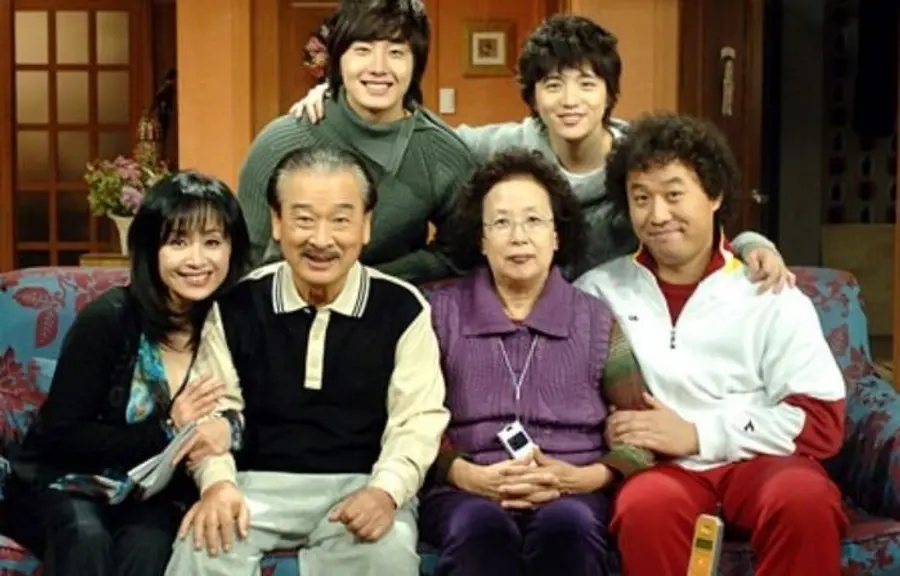
In a cramped living room, the whole family is gathered around a low dining table. The TV is blaring loudly, but even louder is the shouting of Park Hae-mi (Park Hae-mi). She scolds them for not studying, for losing weight, for their falling grades... A storm of nagging envelops the house. In one corner, Lee Soon-jae (Lee Soon-jae) shows off his ridiculous attention-seeking behavior, flaunting unnecessary charisma, while Lee Joon-ha (Jung Joon-ha) just laughs awkwardly as he always does. The smell of instant noodles wafts through the air, hands are busy adjusting school uniforms, and the backs of the sons can be seen as they slam the front door behind them. The sitcom 'Unstoppable High Kick' begins with this very ordinary scene of daily life. However, this ordinariness becomes a monumental landscape that is rarely replaced in the history of Korean sitcoms as the episodes pile up. Just as 'Friends' made the Central Perk coffee shop an icon, 'Unstoppable High Kick' has etched the narrow living room as a miniature version of a Korean family.
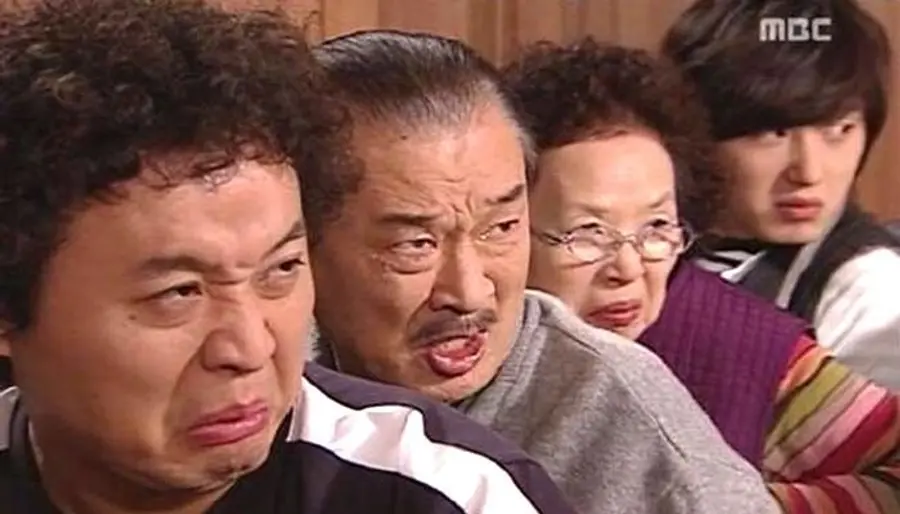
At the center of the drama is the Lee Soon-jae household, known as 'Soon-jae's family'. Lee Soon-jae, who is the head of a traditional medicine clinic and considers himself the patriarch, is unyielding in age, authority, and stubbornness. While he appears to be a dignified director outside, the moment he enters the house, he transforms into a childish grandfather who causes all sorts of trouble. It's as if Homer Simpson from 'The Simpsons' is wearing the guise of a 70-year-old Korean man. His counterpart is his daughter-in-law and fellow doctor, Park Hae-mi. Hae-mi, who treats self-improvement and dieting like a religion, tries to measure everything in the household against her own standards of a 'successful life'. Caught in between is Lee Joon-ha, who is always like a punching bag, being tossed around. This father, who lacks affection, ability, and presence, creates bigger problems while trying to manage the situation. It's like a version of Phil Dunphy from 'Modern Family' who has immigrated to Korea.
In the sibling line, the contrast between the mischievous troublemaker Lee Yoon-ho (Jung Il-woo) and the model student Lee Min-ho (Kim Hye-sung) is a key theme. Yoon-ho has no interest in studying and needs to cause some ridiculous trouble at least once a day to feel satisfied. In contrast, Min-ho is a high school model student who pushes himself hard within a tight schedule. However, the drama does not simply portray these two as 'slacker vs. overachiever'. Yoon-ho is quirky but warm-hearted, while Min-ho is smart but clumsy in expressing his emotions. Their bickering is a portrait of adolescent brothers, depicting a rivalry where they want to resemble each other yet are reluctant to admit it. It has a tension reminiscent of the relationship between Andrew and Fletcher in 'Whiplash', but in a brotherly version.
Utterly Unrealistic Yet Extremely Realistic
The character who injects both decisive cracks and vitality into this household is the newly appointed English teacher, Seo Min-jung (Seo Min-jung). Min-jung, who returned from the United States, is anything but ordinary in personality, speech, and way of thinking. At school, she is swayed by her students, and at home, she moves in as a tenant, starting to live with Soon-jae's family. With Min-jung's arrival, the emotional dynamics between the Yoon-ho and Min-ho brothers also shake. For Yoon-ho, Min-jung becomes the object of his first love, while for Min-ho, she becomes an 'adult-like yet child-like person' that he cannot understand at all. The relationship among these three, moving between classrooms, rooftops, and alleys, leaves a strangely thrilling and bittersweet aftertaste even within the light breath of the sitcom. It feels like a sitcom format version of '(500) Days of Summer', with a sweet yet bittersweet flavor.
The school line is another axis. Within the high school space, where students and teachers, parents and academies, and entrance exams intertwine, 'Unstoppable High Kick' intricately captures the daily lives and concerns of teenagers. From rebellious jokes and trembling hands in front of the staff room, to squabbles over school lunches and the frozen expressions when receiving report cards, each episode presents light-hearted topics, but the emotions underlying them are surprisingly serious. First love, friendship and competition, family circumstances, and anxiety about future paths follow closely behind the laughter like smoke. Just as 'Freaks and Geeks' portrayed outsiders in American high schools, 'Unstoppable High Kick' captures ordinary students in Korean high schools.
True to the sitcom format, the story structure is thoroughly episodic. One day, Lee Soon-jae's absurd senior romance story takes center stage, while another day, Yoon-ho's report card, or Min-ho's rebellion, or Seo Min-jung's mistake becomes the main plot. Nevertheless, as the episodes accumulate, a clear narrative axis forms among the characters. Who likes whom, who feels hurt by whom, and what traumas they carry gradually become revealed. As the story progresses, these relationships converge into one, creating emotional waves that transcend comedy. However, I would like to leave the events that unfold in the conclusion and how the characters change afterward for those who have not yet seen this drama. The impact of 'Unstoppable High Kick' is completed in how the laughter and affection built up until that last moment twist and remain in memory.
Not Just Comedy, But a Sitcom of Outstanding Artistic Quality
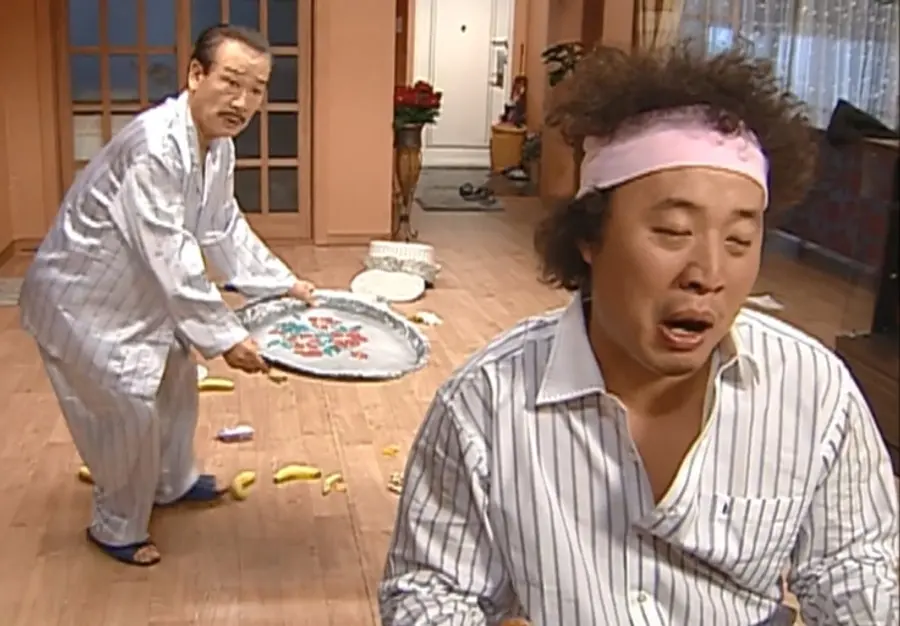
The reason 'Unstoppable High Kick' is regarded as a pinnacle of Korean sitcoms is not simply because it makes people laugh a lot. This work excels not only in the density of laughter but also in the dimensionality of its characters and the realism of its portrayal. First, let's look at the characters. Lee Soon-jae is the last generation of a patriarchal society, yet he is also the first to be consumed as a ridiculous figure. He tries to wield authority over his family with an authoritative tone, but in reality, he is an elderly man swayed by loneliness and pride more than anyone else. The moment he is ignored by his grandchildren or loses his place in the household, he overreacts. That overreaction becomes comedy, but viewers simultaneously discover a familiar 'face of someone in our home' within it. Just like Woody from 'Toy Story' fears being overshadowed by a new toy, Lee Soon-jae is anxious about being left behind by the times.
Park Hae-mi is similar. On the surface, she is a tough self-improvement mom and a self-centered doctor, but a closer look reveals a person filled with anxiety. Her obsession with her children's grades, weight, and career reflects her fear that the world she is holding onto might shake at any moment. The drama does not consume Hae-mi as a one-dimensional villain or nagging machine. Sometimes she takes on the role of the breadwinner more fiercely than her husband, and at other times, she shows her immaturity as a woman and a mother. Perhaps because of this, the audience's reactions are not extremely polarized, but rather become more complex as the episodes progress. She can be both annoying and understandable, ridiculous and pitiful. It feels as if this is what would happen if the mother from 'Lady Bird' lived in Korea.
The narrative of the Yoon-ho and Min-ho brothers is the core reason this sitcom gained explosive popularity among teenage viewers. Yoon-ho's free-spiritedness resonates perfectly with the small rebelliousness of teenagers of that era. Sleeping in class, secretly playing games, joking with teachers and getting scolded, and showing off clumsily at home are all very realistic. However, the reason this character could avoid becoming a simple 'delinquent youth' is due to the episodes that delicately showcase his emotions. The unexpected kindness he shows to Min-jung or his family, and the moments when he lets things slide even when he knows he is losing out, accumulate to make him a 'troublemaker but lovable young man'. Like the protagonist of 'Ferris Bueller's Day Off', he embodies the essence of a character who breaks the rules but is loved.
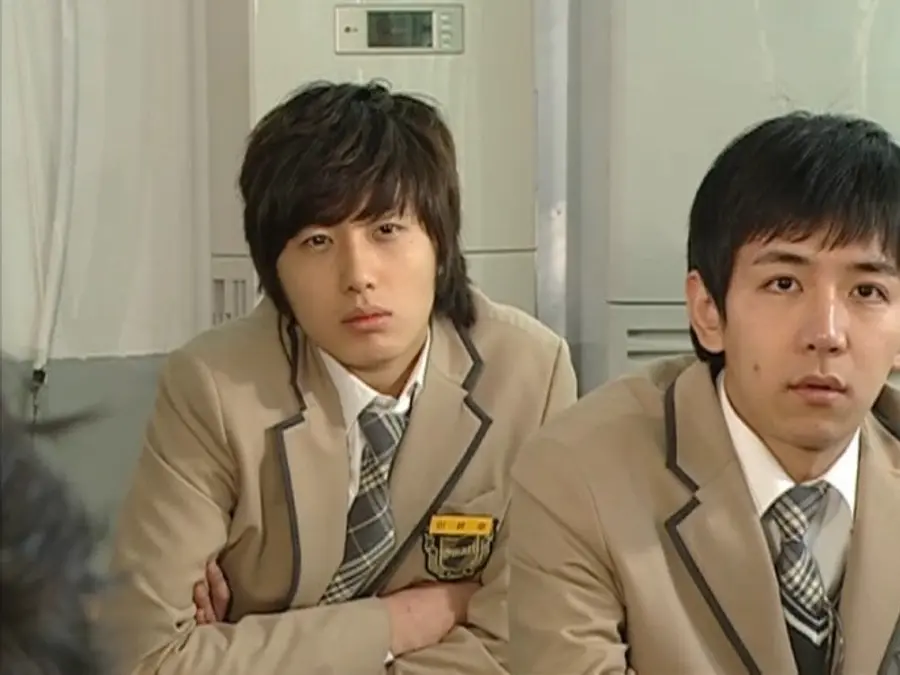
Min-ho provides a different kind of realism. A kind and diligent model student, but one who suffers from pressure. He always carries the burden of having to play the role of the 'good kid'. The fear of falling behind in grades, not meeting expectations, or being loved less than his younger brother permeates all his actions. Therefore, Min-ho's occasional outbursts of anger are quite impressive within the drama. The image of a teenager who is required to be 'good' from both school and home is condensed into this character. Just as 'Boyhood' captured the passage of time in growing up, Min-ho encapsulates the pressure of growing up.
The Ecstasy of Living Characters
The dialogue and situational comedy of 'Unstoppable High Kick' have a rhythm that remains fresh even when viewed again. Even scenes that seem like spontaneous ad-libs have a solid structure. The same humor is not repeated twice, and most of the 'character-based gags' naturally emerge from the personalities of the characters. Lee Soon-jae's exaggerated overacting, Park Hae-mi's straightforward speech, Lee Joon-ha's awkward speech habits, Seo Min-jung's excessive reactions, Yoon-ho's innocent directness, and Min-ho's serious overreactions all have their own comedic domains. Thanks to this, no matter which character takes the forefront in each episode, viewers laugh along with a familiar rhythm. It's like how each instrument in a jazz band emits different charms when it solos.
The direction and editing maintain the fast tempo unique to sitcoms while boldly slowing down during emotional scenes. Typically, sitcoms often shorten emotional scenes to focus on the punchlines. However, 'Unstoppable High Kick' allows the camera to linger on poignant moments. For example, when Min-ho's tears, unable to hide his hurt feelings towards his father, are captured in close-up, or when Yoon-ho shows his true feelings despite his usual antics, the BGM and angles completely deviate from the rhythm of comedy. This small break allows viewers to think about 'not just a story that ends with laughter' but 'the lives of these people'. It crosses the boundaries of genre, much like how 'Scrubs' deals with death and loss amidst hospital comedy.
The use of space is exquisite. The living room, kitchen, hallway, rooftop of Soon-jae's house, school hallways, classrooms, rooftops, and snack bars... Although only a few sets appear repeatedly, the camera angles and movement are diverse. In particular, the rooftop serves as an important emotional stage. Playfulness, escape, confessions, and promises all take place in this space. The rooftop, set against the everyday scenery of Seoul, functions as a breathing space for teenagers, young adults, and adults alike. When the house feels suffocating and the classroom feels stifling, the characters often go up to the rooftop. The camera captures them from a distance, momentarily setting aside the sitcom's laughter to observe their backs. Just like the Central Perk coffee shop in 'Friends' or the restaurant in 'My Dear Lady', the rooftop becomes a sacred place unique to this drama.
How to Heal the Pain of the Ending
The reason this work resonates across generations is that the 'ratio of reality to fantasy' is just right. It tells stories of people that could realistically be found anywhere around us, rather than the outrageous secrets of chaebols or brutal crimes. Instead, it lightly layers a touch of unrealistic exaggeration and fantasy over that daily life. The absurd actions of Lee Soon-jae, the cartoonish events happening in classrooms, and the situations created by overlapping coincidences are things that rarely happen in reality. However, the emotions underlying them are all realistic. Feelings of hurt, jealousy, envy, inferiority, the excitement and loss of first love, the desire to be recognized by parents, and the wish to be respected by children. Because these emotions are real, even somewhat exaggerated settings are easily accepted by viewers. It's like how Pixar movies feature toys or monsters as protagonists, but their emotions are thoroughly human.
Of course, there are points to criticize. As the latter half progresses, the love lines and emotional arcs become somewhat dramatically intertwined, creating a distance from the light sitcom tone of the beginning. In particular, the narratives of some characters veer excessively towards tragic directions, leading to ongoing debates about it. For some, that ending felt like a fresh attempt, while for others, it seemed excessive, questioning whether it was necessary to go that far. It became a divisive topic, much like the ending of 'How I Met Your Mother'. Additionally, the way some female characters are utilized and the jokes surrounding appearance and academics may feel uncomfortable by today's standards. Even considering the sentiments and historical context of the time, there are aspects that warrant critical examination when viewed again.
Nevertheless, the reason 'Unstoppable High Kick' continues to be discussed is that affection for the characters permeates the screen. The production team does not consume characters merely as tools for laughter. No matter how ridiculous a character's actions may be, there comes a moment when their vulnerabilities are revealed. Lee Soon-jae's lonely back, Park Hae-mi's weary sigh, Lee Joon-ha's small and timid courage, Yoon-ho's clumsy sincerity, Min-ho's awkward rebellion, and Seo Min-jung's easily hurt heart are all shown one by one. Through this process, viewers come to accept the characters on screen not as 'laugh-inducing devices' but as 'people to whom they feel attached'. It's like how the characters in 'The Office' initially seem quirky but gradually become lovable.
A Work That Will Be Remembered Even After 20 Years
This is a perfect choice for those who want to laugh while clearing their heads in a busy daily life, but hope that the laughter is not too light. Each episode is solid enough to draw you in quickly, yet unexpectedly brings moments of emotional depth. On a night when the day is ending, if you turn on something random on Netflix or a replay and feel reluctant to just fall asleep, 'Unstoppable High Kick' becomes a pretty good choice. Like comfort food, it is a work that feels hearty and warm no matter when you consume it.
For those who watched it as a child and are now trying to revisit it as adults, this drama will feel like a completely different work. The scenes that were once laughed off now reveal the hearts of the parental generation, and the clumsy choices of teenagers that were once incomprehensible now come across much more clearly. This work excellently shows how the points of empathy shift as age changes, just like how the emotions felt when watching 'Toy Story' differ between childhood and adulthood.
I would also recommend it to those looking for a work to watch with family. It is not excessive for parents and children to sit down together, yet it is not boring either. Some may recall their own homes when watching Lee Soon-jae and Park Hae-mi, while others may see their younger selves in Yoon-ho and Min-ho. After watching the drama, the conversations shared at the dining table may change a little. In that sense, 'Unstoppable High Kick' poses questions that remain valid. Why do we clash so roughly with each other yet cannot ultimately give up on family? Just as 'Little Miss Sunshine' rediscovered the meaning of family through a broken family's road trip, 'Unstoppable High Kick' answers the same question through the commotion that unfolds in a narrow living room.