
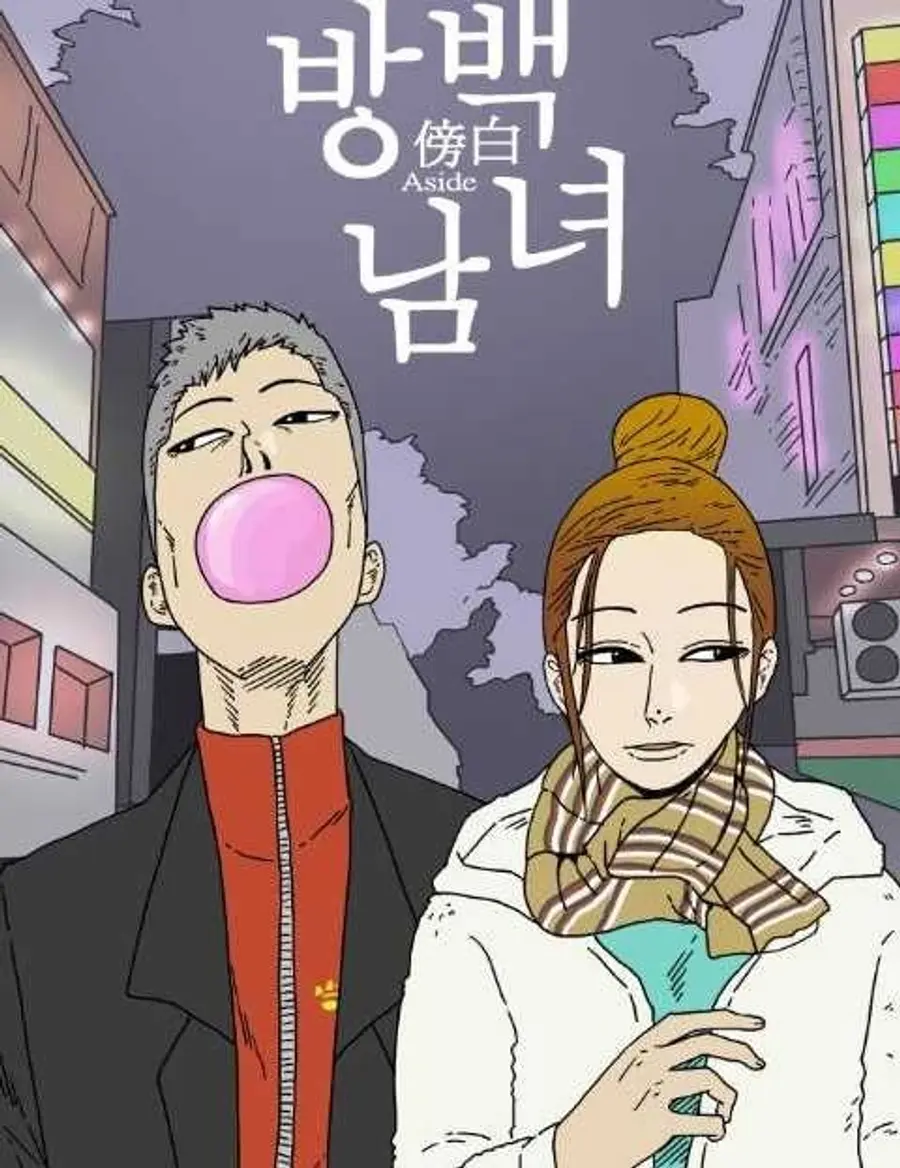
On a narrow playground, in the afternoon as the sun sets, Min Nam-joo squeezes out his last strength to run. At the moment he faces the goalkeeper one-on-one, a strange pain in his leg arrives before the sensation of kicking the ball reaches his toes. His knee buckles, his body rises into the air, and the murmurs of the crowd fade away. The Naver Webtoon 'The Monologue of Men and Women' begins by focusing on the moment a boy destroys his dream of becoming a soccer player. It captures the instant of choosing a catastrophic farewell to a dream, much like Andrew throwing his drumsticks in 'Whiplash' or Nina twisting her ankle in 'Black Swan'. This completed work, serialized on Naver Webtoon from 2018 to 2019, delicately portrays the image of a young man who has lost both the means and the heart to run until the end despite having talent.
Min Nam-joo was once a promising soccer player. However, in a reality where talent, effort, and money are intricately intertwined, he always found himself subtly pushed aside. He loses opportunities to play to teammates who receive better equipment and lessons, practices several times more than others to impress the coach, but all he receives in return is ambiguous treatment and a weary body. In the end, he chooses to deliberately injure himself during a match. He opts for destruction that prevents him from playing anymore as a new exit. Just as Sandra Bullock goes outside the spaceship in 'Gravity', Nam-joo pushes himself out of the spaceship of his dream. After the injury, Nam-joo becomes a figure standing at an ambiguous distance, neither completely breaking away from soccer nor holding onto it. The dream he once devoted himself to has now become a scar and trauma that will never fade away.
Exceedingly Realistic Korean Romance in the 2030s
Jung Joo-hye enters the story from the opposite point of view of Nam-joo. On the surface, she appears calm and composed, maintaining a somewhat stable job and daily life. However, inside, she harbors wounds and anxieties as deep as Nam-joo's, layered like mille-feuille. Misunderstandings built up in her family relationships, a sense of not being loved, and an overly sensitive heart to the gaze of others cast long shadows over her daily life. The work does not push Joo-hye into the role of an extreme tragedy protagonist. Instead, she is portrayed as a character caught in the cracks of everyday life that anyone might have passed through, naturally shown through the silence of the subway on her way home and the air of her small studio apartment. Just as the protagonist of 'Frances Ha' wanders through New York, Joo-hye drifts through the daily life of Seoul.
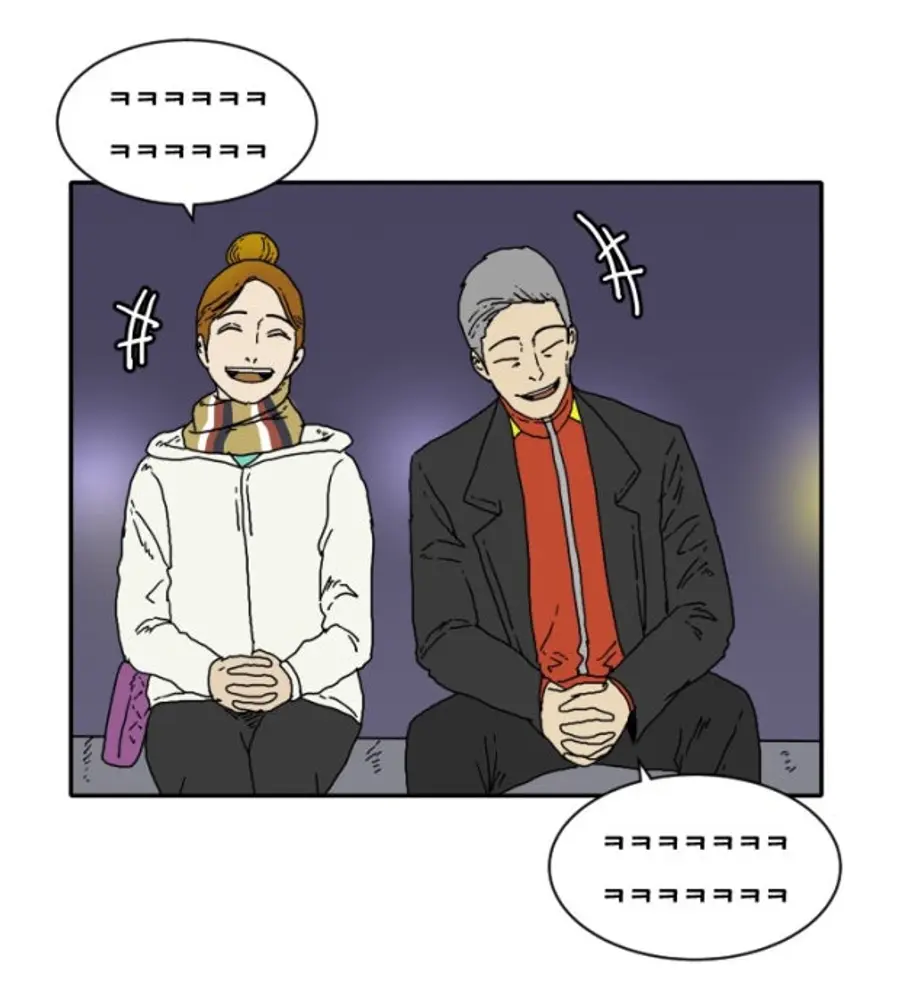
The meeting of the two is closer to a result of their wounds coincidentally overlapping rather than a fateful romance. Nam-joo, who has forgotten how to properly relate to others due to the weight of the past, and Joo-hye, who has retreated step by step to avoid touching wounds, do not smoothly fit together from the start. Conversations are awkward, misunderstandings easily pile up, and there is always a subtle gap between each other's true feelings and actions. It is at this point that the meaning of the title 'The Monologue of Men and Women' is revealed. The two act like actors on stage, saying one thing while their inner thoughts express the opposite. Just as Joel and Clementine in 'Eternal Sunshine of the Spotless Mind' erase each other's memories while continuing to seek each other, these two also hide their wounds while simultaneously revealing them.
Readers vividly experience this ironic distance by reading the inner sentences written outside the frame and the dialogue inside the speech bubbles simultaneously. Each episode is filled with small everyday events rather than grand incidents. A small mistake at work, an awkward drinking session with an old friend, a few words that pop out during a family gathering touch the wounds of Nam-joo and Joo-hye. Nam-joo easily crumbles at every scene that bears traces of soccer. From a street soccer gathering he encounters, TV sports news highlights, to children kicking a ball at the local elementary school, everything pulls him back to the past. Just as Lee Chandler in 'Manchester by the Sea' is haunted by the sight of his home freezer, every soccer scene in the world is a trigger for Nam-joo.
Conversely, Joo-hye feels suffocated as the ties of relationships become tighter. She wants to lean on someone, yet cannot shake off the anxiety that the moment she does, the other person will leave. Nevertheless, strangely, the two gradually walk towards each other. Nam-joo does not pretend to be strong in front of Joo-hye. Rather than hiding the stigma of being a failed soccer player, he sometimes laughs at himself and occasionally stumbles over his words to share his story. Joo-hye also drops the role of being a perfectly burdened person in front of Nam-joo. She honestly reveals the wounds she had brushed off as if they were nothing and only after enduring a difficult day does she regain the ability to smile.
What makes their relationship special is that it is not one where they mechanically heal each other's wounds, but rather one that becomes a gaze that can acknowledge those wounds. Just as Jesse and Celine in 'Before Sunrise' find comfort in each other's existence while walking through Vienna, Nam-joo and Joo-hye also gradually improve just by being together without grand solutions.
Your Meeting is Not Fateful
This process does not happen all at once. 'The Monologue of Men and Women' faithfully follows the emotional rhythm of taking one step forward only after going through numerous misunderstandings and regrets. Some days it feels like they have gotten a little closer, but with a small word, they may not contact each other for days, and when they sit down again, they exchange awkward jokes as if nothing had happened. The moment Nam-joo freezes upon encountering an old colleague, and the moment Joo-hye's mood collapses all day after a phone call with her family unfold before our eyes without any special explanation. The first third of the work is filled with the awkward steps and imperfect language of the two as they begin to seep into each other. Just as '500 Days of Summer' unfolds the pieces of a relationship non-linearly, 'The Monologue of Men and Women' weaves the relationship through repeated advances and retreats. I would like to encourage you to check how the conclusion leads to a moment of choice and reunion through the work itself.
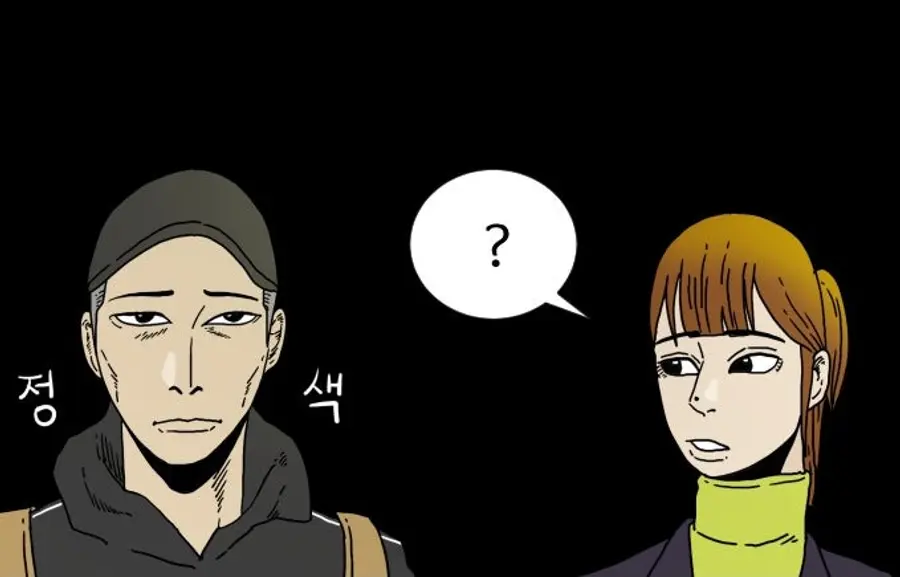
Now, if we dissect the aesthetic aspect of the work, 'The Monologue of Men and Women' is a rare webtoon that skillfully utilizes the form of monologue as its title suggests. In theater, a monologue is a speech given by a character on stage that is heard only by the audience and not by other characters. In this webtoon, the monologue is implemented in various ways, such as subtitles placed outside speech bubbles, cuts that obscure or leave out characters' faces, and black-and-white spaces that have lost color. The dialogue exchanged on the surface and the inner sentences that the reader reads are misaligned. While saying 'I love you', anxieties like 'Is this statement too heavy right now?' float in their minds, and while maintaining a nonchalant expression, their entire face is treated as a black silhouette with only their eyes shaking sensitively.
Readers experience the characters' psychology directly through the screen rather than being told through explanations. Just as 'The Insider' or 'The Crown' captures the subtle expressions of characters in close-up to reveal their inner selves, 'The Monologue of Men and Women' maximizes the strengths of the webtoon medium to visualize the gap between the inner and outer selves. Another impressive point is the use of faces and expressions. The artist Ko Tae-ho does not draw characters' faces with exaggerated beauty but rather shakes the emotional spectrum within ordinary features. Through subtly misaligned expressions, such as a stiff jawline beneath smiling lips or eyes that are not smiling at all despite having a smile, he reveals the characters' inner selves.
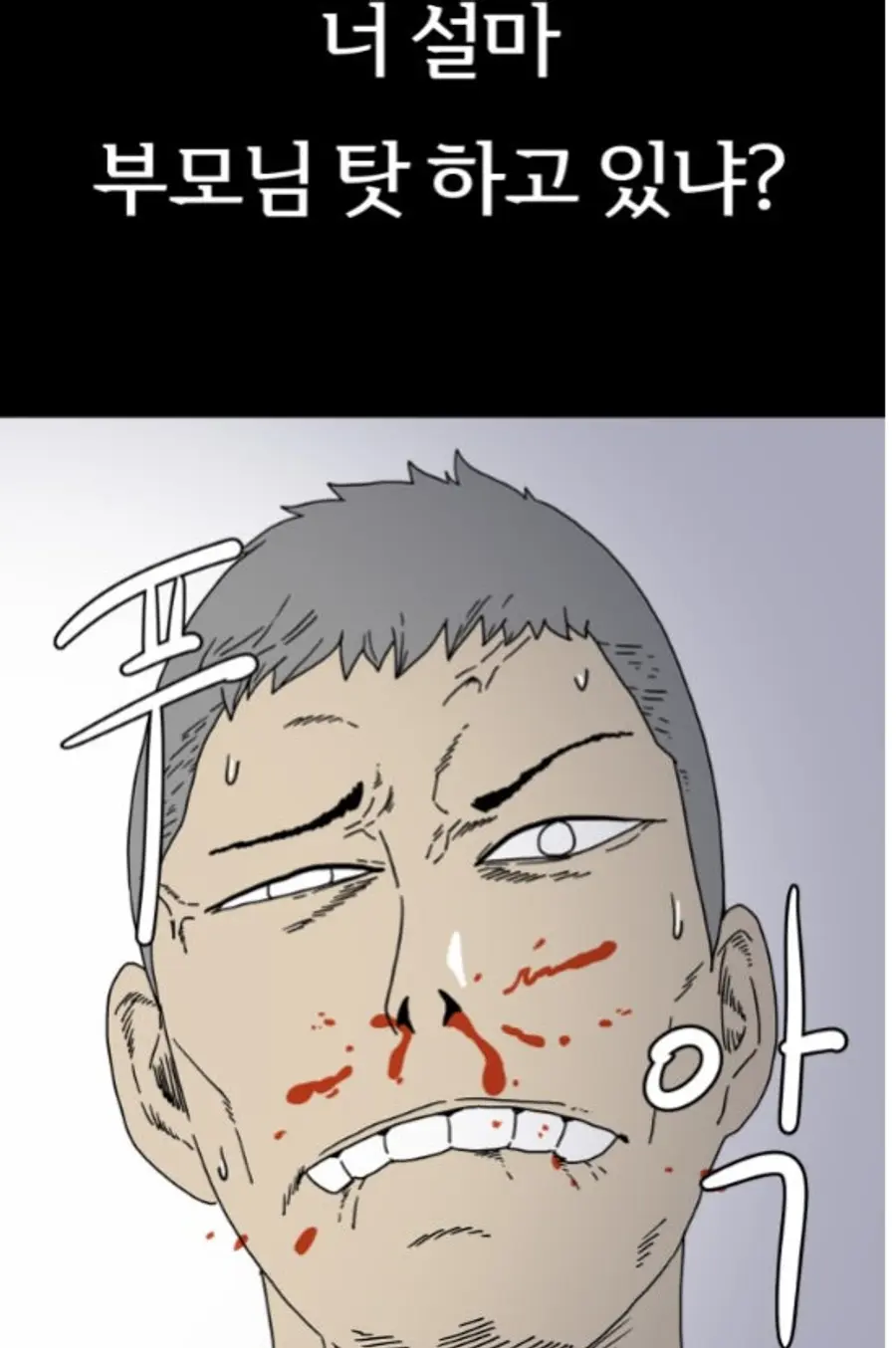
In some scenes, faces are completely omitted, conveying emotions only through gestures, hand positions, and backgrounds. Just as 'Amélie' conveys emotions through small details, 'The Monologue of Men and Women' substitutes thousands of words with subtle gestures like trembling fingers, shoulder angles, and the speed of turning one's head. Color is also important. In ordinary daily scenes, relatively soft and warm tones are used, but when trauma arises or emotions heat up, the screen shifts to black and white or desaturated colors. The black and white at this time does not aim for exaggerated horror or shock but creates a sense of distance as if looking back at scenes from memory, prompting readers to readjust the distance between the characters and themselves. Just as 'The Divine Move' distinguishes between past and present through color, 'The Monologue of Men and Women' also separates reality and trauma through color.
This Work Will Be Your 'Life Romance Webtoon'
In terms of structure and rhythm, 'The Monologue of Men and Women' slightly borrows the formulas of the romance genre but does not strictly follow them. The flow of two men and women becoming friends, being conscious of each other, and eventually confirming their feelings is familiar. However, this webtoon dedicates more pages to uncomfortable and awkward moments than to exciting scenes. It focuses on the silence after a blunder, the hesitating fingers in front of a messenger window, and the sentences that are deleted after failing to send a message rather than confessions, kisses, or dramatic events. Therefore, the romance in this work is more bittersweet than sweet, and sometimes it confuses whether it is love or merely a reflection of loneliness. It is precisely at this point that this work functions as a realistic melodrama. Just as 'Normal People' captured the reality of imperfect relationships, 'The Monologue of Men and Women' captures the texture of love that is not smooth.
The thematic consciousness of the work is closer to 'sharing wounds' and 'life after escape'. Nam-joo is a character who, when his dream, to which he once devoted his entire life, collapsed, tried to protect himself by hating that dream. Joo-hye has defended herself by first erasing her own existence to escape the pattern of repeated wounds. Both wanted to reduce contact with the world, but ultimately return to the world little by little through each other. What is important is that they do not completely heal through each other but decide to live on while still carrying their shaken hearts. This subtle attitude determines the emotion of the work. As readers observe the changes the two undergo, they naturally recall their own frustrations, regrets, and embarrassing choices. Just as 'Spotlight' deals with a grand truth while ultimately prompting reflection on personal wounds, 'The Monologue of Men and Women' also confronts each person's trauma while discussing romance.
Another element that made popular love possible is the meticulousness of the dialogue and scene composition. The dialogue in 'The Monologue of Men and Women' is neither exaggeratedly witty nor overly literary. It seems to directly translate the speech patterns of ordinary Koreans while lightly touching the heart at crucial moments with impactful sentences. In particular, the small words exchanged between each other leave room for readers to overlap with their own experiences. The way seemingly independent episodes connect into a single emotional flow in the latter half is also excellent. The experience of realizing 'Actually, from that moment, this person...' after a joke or action that seemed inconsequential in the beginning returns later. It is a structure where all the hints were in front of you from the start, but only become visible upon a second reading, much like the twist in 'The Sixth Sense'.
If You Need Time to Redefine Your Relationship
I think of those who once devoted all their time to something and ultimately gave up. If there are memories of turning back without being able to explain the reasons and excuses for exams, sports, or relationships, then Nam-joo's narrative will resonate not as someone else's story but as one's own excuse. Following the detours and wanderings he must go through to face the past directly, one may feel a desire to quietly finish the unfinished sentences within themselves. Just as Red goes to Mexico to find Andy in 'The Shawshank Redemption', Nam-joo also begins a journey to find his past.
This webtoon lingers for those who become particularly sensitive in front of relationships. If you have imagined the other person's feelings and schedule several times before making an appointment, and have repeatedly corrected and deleted a sentence before sending it, Joo-hye's monologue will come to you in an oddly specific way. The contradictory heart that fears the gaze of others while simultaneously longing for it is also the intimate face of many people living in this era. In that sense, 'The Monologue of Men and Women' is not a story that only resonates with a specific generation or class, but a universal melodrama of an era that uses anxiety and sensitivity as everyday language. Just as 'Fleabag' captured the youth of Korean society in the 2000s, 'The Monologue of Men and Women' captures the inner world of Koreans in the 2020s.
For readers who prefer the quiet aftertaste of emotions over flashy fantasies or shocking twists, this work is worth savoring slowly. Rather than binge-reading a single episode, the power of this webtoon lies in making you reflect on your day after reading a few episodes. After finishing, you may find words you couldn't say to someone floating in your mind like a monologue. And when you feel the desire to turn that monologue into words in reality, the pages of 'The Monologue of Men and Women' will quietly come to mind and comfort you once again. It feels natural to want to write a short letter to my past self after reading it. Just as one realizes that everyone on the subway has their own stories after reading a Haruki Murakami novel, after reading 'The Monologue of Men and Women', one becomes aware that there are monologues outside everyone's speech bubbles.