
[magazine kave]=Reporter Lee Tae-rim
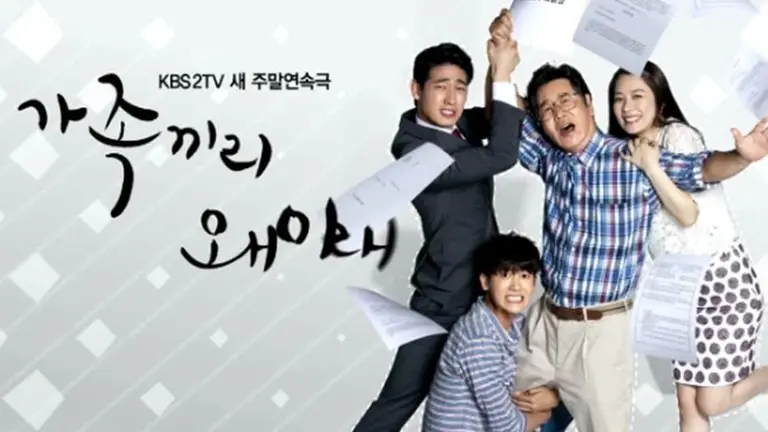
In a small restaurant in front of the store, kimchi stew is bubbling away. In the busy kitchen from early morning, Cha Soon-bong (Yoo Dong-keun) is sweating profusely but his hands do not stop, like an orchestra conductor. He serves soup and rice, even cracks jokes with customers, but the dining table inside the house is a battlefield. His eldest daughter, who rushes out in a hurry during rush hour, his youngest son who looks like a zombie still waking up, and his second son who only calls during the busiest times like a bomb. KBS weekend drama 'Why Are We Like This Family' opens with a scene that could happen in any household. However, this familiar morning routine soon jumps to a shocking plot where the father files a lawsuit against his own children. It’s a twist that feels like Vito Corleone from 'The Godfather' sending bills to his children.
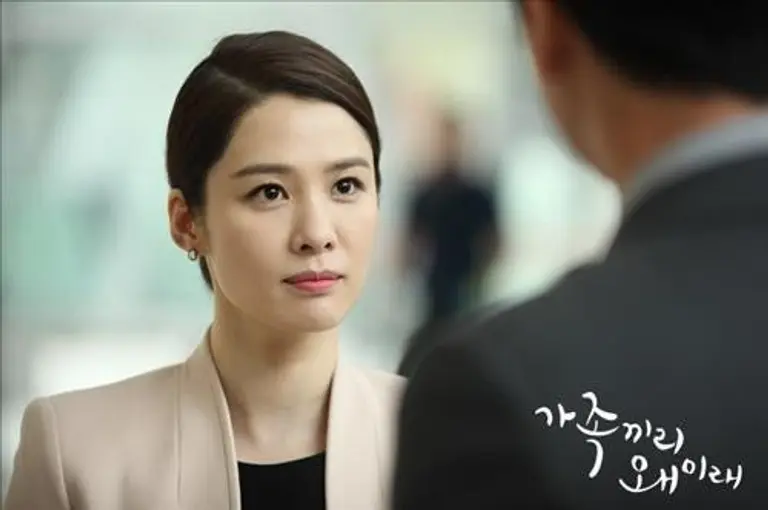
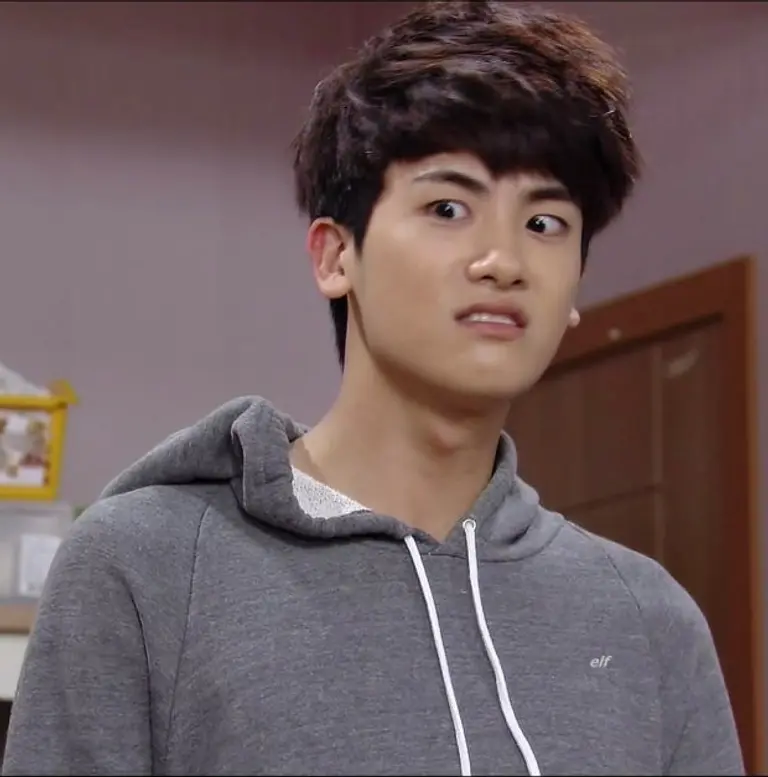
For Cha Soon-bong, life has always been a project called 'family'. After losing his wife at a young age, he raised three children as a one-man show. He goes to the market at dawn to gather ingredients, spends all day cooking in the restaurant, and manages the children's tuition and registration fees. But before he knows it, the children are engrossed in their own lives. The eldest daughter, Cha Kang-shim (Kim Hyun-joo), who is always prickly and sees work as a mission, is climbing the corporate ladder in a large company, but her tone towards her father is as cold as a winter chill. The second son, Cha Kang-jae (Yoon Park), who has succeeded as a doctor, takes his impressive credentials and position for granted and feels embarrassed about his family running a restaurant. The youngest, Cha Dal-bong (Park Hyung-sik), is a job seeker with big dreams but a 404 error in reality, and he is the troublemaker who worries his father the most.
Soon-bong feels disappointed inside but always wraps his children in love on the outside. The children have their own affection, but their ways of expressing it are always out of sync. Kang-shim passes her stress from work onto her father, Kang-jae uses his hospital duties and research as a shield even during holidays to avoid coming home, and Dal-bong tries to hide his frustration from job failures by bragging, often returning home to ask his father for money. One day, Cha Soon-bong waits for his children in front of a birthday table but ends up eating alone. The scene where the candle on the cake flickers alone, in that moment that feels like a one-man show stage, he resolves in his heart, 'I cannot just grow old and die like this.'
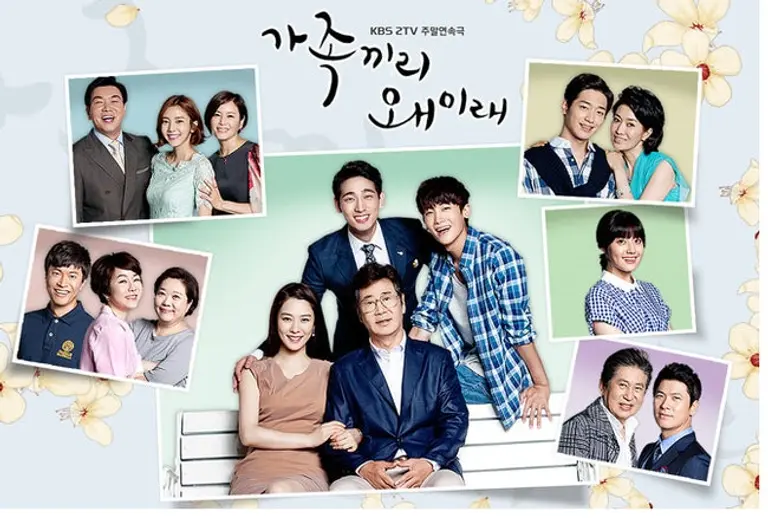
That resolution is the 'disobedience lawsuit' against his children. The lawsuit that arrives from the court states that Cha Soon-bong wants his three children to calculate the child support, tuition, living expenses, and even the care he has invested in them like an Excel sheet. The children are furious and panic. They cannot understand why their father is doing this and resist in their own ways. However, the drama does not consume this setup as a simple comedic device. As the family engages in arguments and frustrations surrounding the lawsuit, their pent-up feelings that they could not express to each other begin to surface one by one. It’s like emptying a cache that has built up over a long time.
The warm laughter that comes as the immature youngest grows up
This lawsuit brings about a wind of change for each of them. The hard-working Kang-shim encounters her prickly yet warm-hearted boss, Moon Tae-joo (Kim Sang-kyung). Initially, the two growl at each other like gladiators, but as they clash inside and outside the company, they slowly open their hearts. Through Tae-joo, Kang-shim begins to rediscover herself not as a 'robot that works well' but as 'someone's daughter' and 'a woman'. Kang-jae weighs his desires against his family while navigating a marriage proposal from a chaebol family, balancing between conscience and responsibility. In front of him lies not only a well-off marriage partner but also the girlfriend he has unintentionally hurt and the back of his father who is trying to believe in him until the end.
Meanwhile, the always immature youngest, Dal-bong, begins to change little by little after meeting a country girl, Kang Seo-ul (Nam Ji-hyun). Seo-ul, who came to the city believing in a promise she made to herself in childhood, hovers around Dal-bong with a clumsy yet pure heart. At first, Dal-bong sees her presence as a burden, but he realizes that Seo-ul is the one who believes in him more than anyone else, and he finally feels the weight of 'becoming an adult'. In the youth period where employment, dreams, and love come all at once, Dal-bong begins to look at the path his father has walked from a different angle. It’s like putting on a VR headset for the first time; he can now see his father's perspective.
The drama intricately weaves the episodes of these three siblings and surrounding characters like a puzzle, gradually peeling away the layers of emotions that have built up under the name of family. Cha Soon-bong's lawsuit is superficially about money, but in reality, it is a cry of 'I wanted to be the protagonist in your lives at least once'. And only then do the children realize that the dining table, home, nagging, and worries they have taken for granted were actually the results of one person's entire life and youth being bet on them. In the subsequent developments, the family goes through several crises and conflicts, and the children each stand at a crossroads of choice. It would be best to see where the story flows and what feelings they will have towards each other in the end.
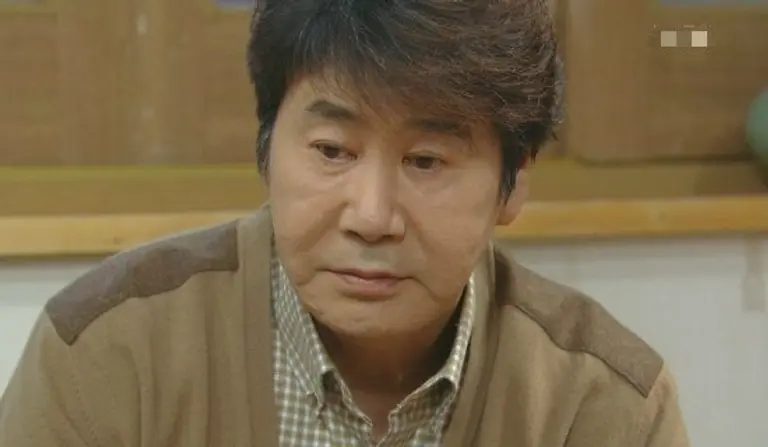
What if the master of Korean acting jumped into reality?
When dissecting 'Why Are We Like This Family', the first thing that catches the eye is the reconstruction of the 'father narrative'. Cha Soon-bong in 'Why Are We Like This Family' does not remain a typical sacrificial father template. He devoted himself to his children, but at the same time, he fails to express his loneliness and disappointment properly, which worsens the situation. The extreme choice of a lawsuit may also seem very childish. However, within this childishness lies the compressed emotions of the middle-aged father generation in Korea. The desire to not be a burden to his children while wanting to be reassured that he is still needed. The setting that brings this desire to the public stage of the courtroom seems exaggerated yet strangely persuasive. It’s like someone who usually doesn’t post suddenly writing a long post on social media, that kind of urgency.
The direction balances comedy and tears excellently. The subject of the disobedience lawsuit could easily fall into a melodrama. However, this drama does not explode the volume of conflict but instead captures laughter and tears simultaneously in the details of everyday life. For example, the scene where Cha Soon-bong reads the 'child support statement' in court and suddenly flashes back to the children's old stories, getting choked up, shows that comic situations and sincerity can coexist. Just like 'Kingsman' inserts British humor into its gentleman spy action, the rhythm of tension and relaxation is superb.
Utilizing the longest running time of the week for weekend dramas, it gives characters enough time to naturally build emotional lines. It’s like a slow cooking show, simmering without rushing to microwave. Character building is also a key strength of this work. The three siblings are not just disobedient children or immature MZs. Kang-shim is a capable and proud career woman, but she has lived filling the void left by her mother since childhood. Therefore, she has become colder, tougher, and switches to attack mode to avoid becoming weak. It’s like in a game where the defense stat is low, so you go all-in on the attack stat.
Kang-jae appears to be a typical elite aiming for success, but underneath lies a complex about his family and a hidden desire for recognition. Dal-bong seems irresponsible, but in reality, he is the youngest who wants to be loved by his family more than anyone else. Thanks to this 3D character setting, viewers cannot easily hate or forgive any one character. They simply watch the process of them gradually changing with each episode.
The surrounding characters also do not simply serve as extras but operate as expansion packs for the story. Characters with their own family histories, including Moon Tae-joo and Kang Seo-ul, appear, and the drama shows various forms of 'family' from multiple angles beyond just one store or household. Families that are wealthy but do not know each other's true feelings, families seeking new relationships through divorce and remarriage, and those who are not related by blood but care for each other more than anyone else. Within that, the question of 'what is a real family?' naturally arises. It’s like asking 'who are the true Avengers?', conveying the message that blood relations do not guarantee family.
There are some unnecessary narratives as well
However, this drama is not without its shortcomings. Due to the nature of weekend dramas, there is a somewhat repetitive impression as the episodes progress into the latter half, and some characters' narratives follow familiar clichés. The conflict structure of chaebol families or political games within hospitals is not particularly fresh. However, the reason these common narratives do not feel completely boring is that the story centered on 'the father and three siblings' does not lose its sincerity until the end. Ultimately, what viewers are waiting for is not the final ending of a chaebol family, but the scene of the Cha Soon-bong family eating together and laughing in a corner of the restaurant. Just like how we keep returning to the home screen on Netflix, what we truly want to see is the recovery of that daily life.
When thinking of this drama, several scenes naturally flash back. Soon-bong eating alone in front of a birthday table where no one has come, Kang-jae bursting into tears in front of his father after holding on without admitting his mistakes, the moment when Kang-shim, who always pretended to be strong, finally breaks down upon seeing her father's tears, and Dal-bong running to report his small successes with sparkling eyes while his father silently watches him. These scenes remain memorable without any special effects or stimulation. Because the emotion of family is ultimately made up of small pieces of everyday life. Just like photos stored in a photo album, they are ordinary yet precious moments.
If you are curious about a story of K-family, not a melodrama
If you have felt that family dramas these days are too heavy or melodramatic, the tone of 'Why Are We Like This Family' will feel rather comforting. It does not overly beautify the hardships of reality, yet maintains a belief in people until the end. If you have ever reflected on how much you care for your family while going back and forth between work and home, you will feel a strange empathy and subtle prick when watching the fights and reconciliations of Cha Soon-bong and his three children. It’s like a self-reflection of 'Ah, I am doing that too.'
This work is also a good choice when looking for a drama that parents and children can watch together. Parents see themselves in Cha Soon-bong's words and actions, while children discover themselves in the tones of Kang-shim, Kang-jae, and Dal-bong. Each will laugh and cry in different scenes, but by the time the last episode ends, they may find the courage to say the words they couldn’t say to each other at the dining table. In that sense, 'Why Are We Like This Family' asks us, just as the title suggests. Before complaining about why we are like this as a family, think about what words and actions can be done because we are family. On days when you want to quietly answer this question, it’s a drama that is good to revisit. Like a comfort game that you boot up often, it’s a work that you can return to anytime to recharge warmth.