

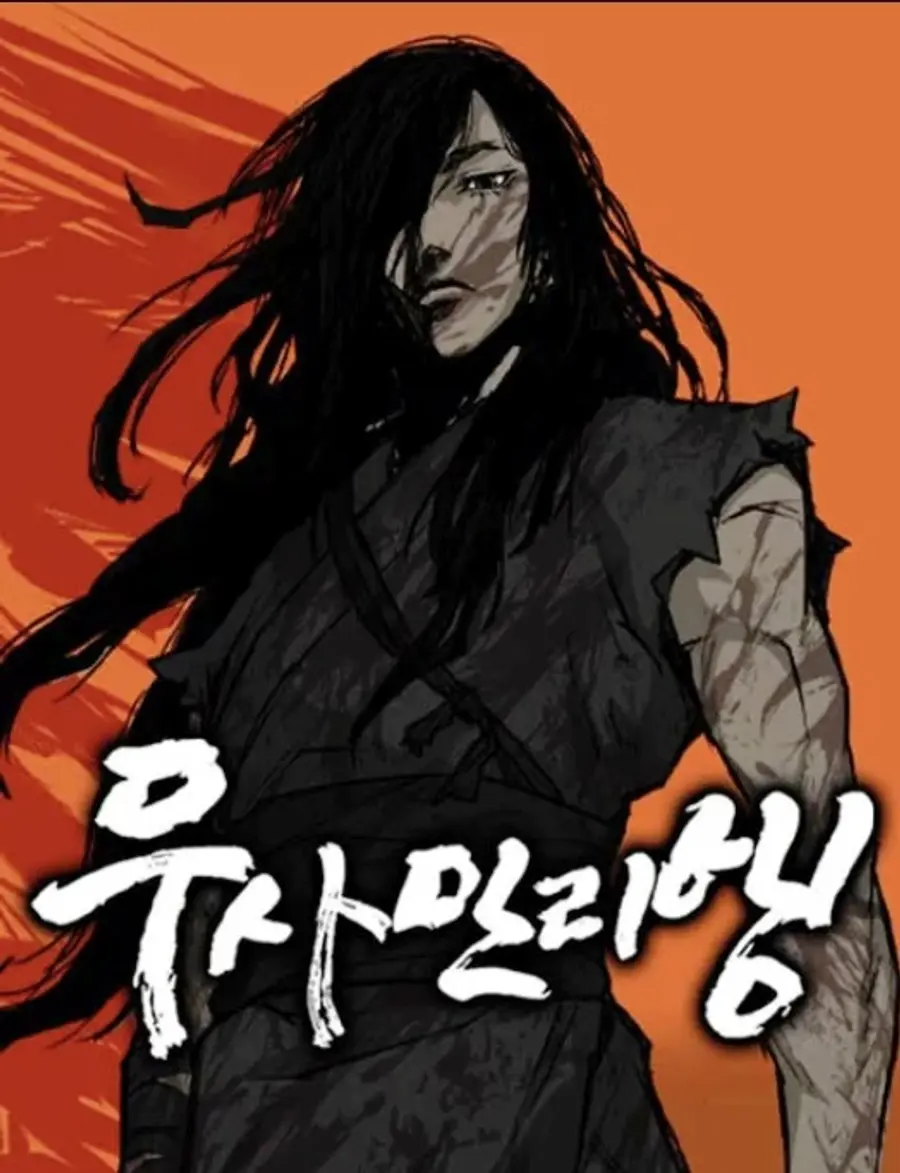
There is a person who seems to be just out of reach, only accessible by crossing the distant sea. For Naru in 'Musamanrihaeng', that person is none other than Princess Sodan. Around the 2nd century, Naru, a warrior from the Mahan Confederacy's Gori Kingdom, grew up vowing to protect the princess from a young age. He fights bravely on the battlefield without seeking glory, and he is a rough but loyal subject who begins every response to the princess with "Yes." In modern terms, he might be called a 'fool', but in his time, this was considered a virtue.
However, due to the betrayal of his trusted master, Gori Kingdom collapses overnight, and the princess is captured and sold to the west. Just like Frodo in 〈The Lord of the Rings〉, Naru has only one destination. The kingdom is burning, comrades are scattered, and all that remains for Naru is the promise to find the princess. That single promise drives him to the other side of the world.
Naru chases the betrayer, hearing rumors that he has headed further west, to the western regions. This is akin to walking from Seoul to London in today's terms. In an era without airplanes or even proper compasses. Nevertheless, Naru does not hesitate. It seems that the only direction a warrior who has lost his country can take is that one, as he turns his back on the mountains and rivers of Gori Kingdom and heads down the endless western road.
However, for a warrior who has only lived at the edge of the Korean Peninsula with a sword, the western regions are an entirely unfamiliar world. The language, food, and even the gods are all different. If you thought of the adventures in 〈Indiana Jones〉, you would be mistaken. There are no convenient maps, friendly guides, or English interpreters. At the end of this strangeness, Naru eventually flows into Rome, facing the sight of himself being dragged out with an iron collar in the midst of a massive slave market of the empire. The irony of a knight who went to save the princess falling into slavery is the true beginning of 'Musamanrihaeng'.
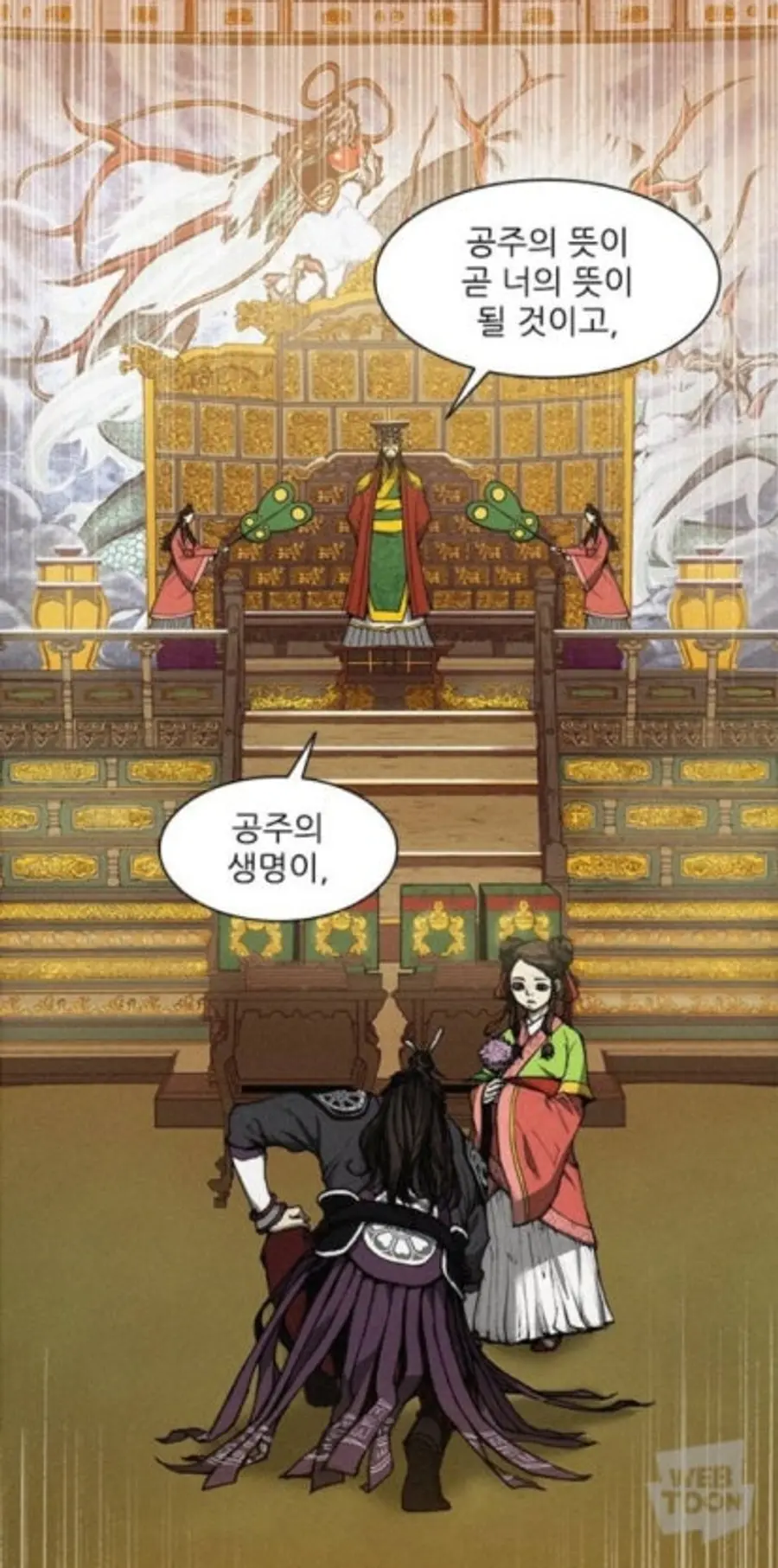
Gladiatorial Arena, or Ancient Death Match
Naru is soon sold as a gladiatorial slave in Rome. Stripped of his name and status, he is treated like a "beast from the East." Just as Maximus in 〈Gladiator〉 fell from general to gladiator, Naru is demoted from a warrior of his homeland to a spectacle of the empire. In an underground prison surrounded by stone and iron, amidst the air mixed with the stench of decay and blood, Naru must raise his sword and shield every day. Now, his audience is not the people of Gori Kingdom, but the bloodthirsty citizens of Rome.
In the center of the sandy arena, when the iron gate opens, roaring beasts and armed gladiators pour out simultaneously. It’s as if the arena of 〈The Hunger Games〉 has been transported to ancient Rome. Naru moves with an animalistic survival instinct, enduring the fight. If he does not defeat his opponent, he will die. Yet, even amidst this, the tip of his sword always points in one direction. "I must survive this fight to find the princess again." He is the ultimate goal-oriented human.
Inside the arena, Naru meets and loses many allies and enemies. Slaves who wield swords for various reasons become his allies, only to appear as enemies in the next round. Some fight to send money to their families, some to buy their freedom again, and others simply to avoid death. Like the participants in 〈Squid Game〉, their desperation drives them into the arena.
Among the Romans, there are also different faces. Some nobles see slaves as mere commodities, while some generals discover true warriors in gladiators and show them respect. In the midst of this strange empire, Naru lives with two faces: "the warrior of Gori Kingdom" and "the slave gladiator of Rome." It is not a division of identity, but an expansion of identity.
The Eastern Monster, or the Empire's Entertainment
As the story progresses, Naru's name spreads throughout Rome. Rumors begin to circulate among merchants, nobles, and soldiers that a warrior from the East is defeating massive gladiators and subduing beasts with his bare hands. In modern terms, it would be like a headline saying "Eastern Gladiator Dominates the Colosseum" appearing on a Roman portal's main page. Some want to profit from him, while others want to use him as a toy for the emperor.
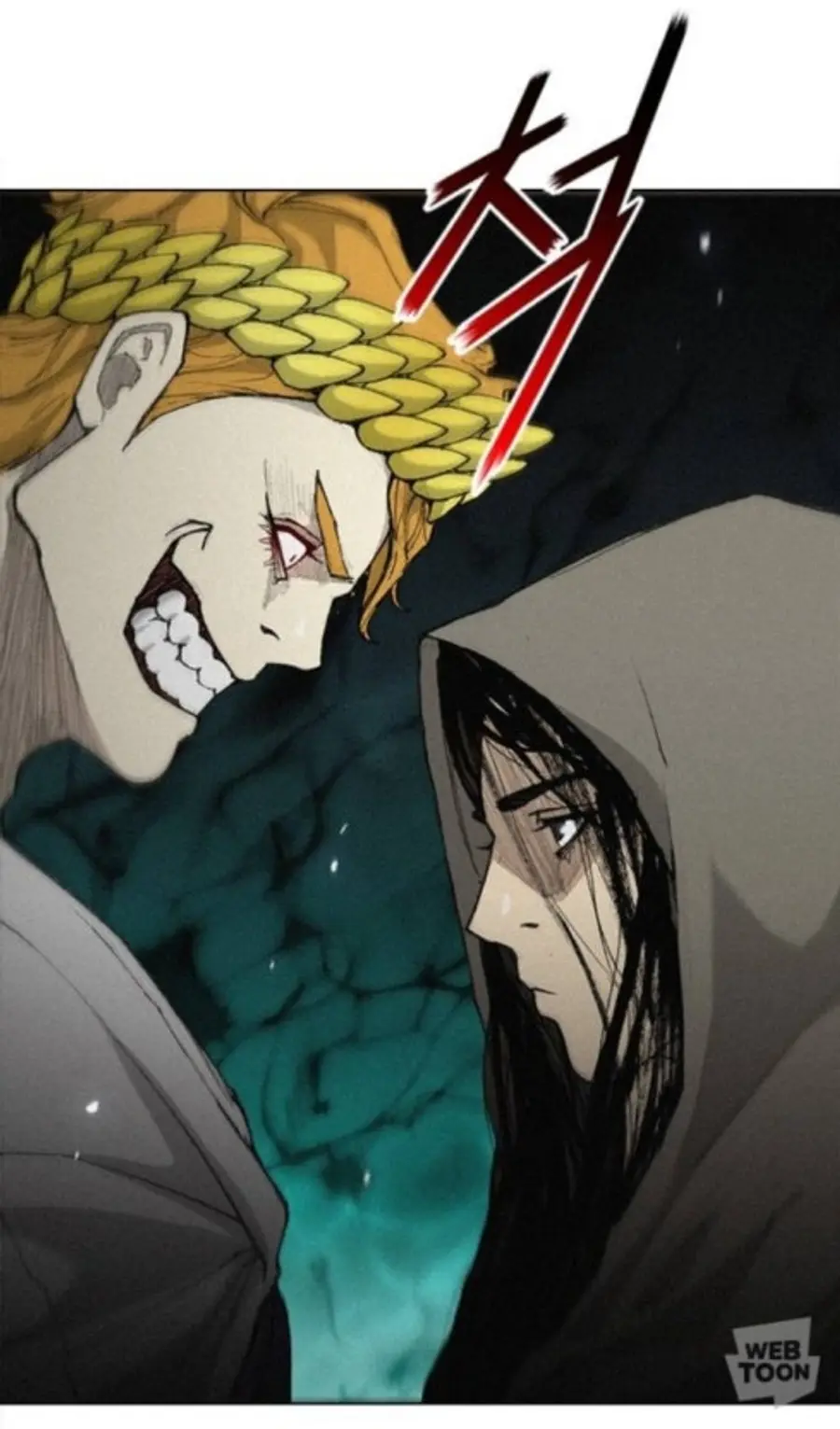
Naru's fights transcend personal vows and become intertwined with the empire's entertainment and politics. Like Truman in 〈The Truman Show〉, his life itself becomes a spectacle. Eventually, he is pushed to fight in the heart of Rome, right in front of the emperor. What battle Naru faces afterward, how his connection with Princess Sodan continues, and what conclusion his long journey reaches is best experienced by following the work itself. The final scenes of this work leave a lingering feeling that cannot be explained in just a few lines of spoilers. Like the last scene of 〈Saving Private Ryan〉, it is an ending where emotions explode in an instant.
The Clash of Two Worlds, or the Contrast of Civilizations
The worldview is also captivating. It is a structure where the ancient history of Korea, represented by Gori Kingdom, meets the ancient history of the West, represented by the Roman Empire. It sounds like a combination that makes one wonder, "Is this even possible?" but it is implemented quite convincingly. The author starts with scenes that evoke the mountains and rivers of Gori Kingdom, the wooden fences, thatched houses, and narrow castle gates, and then, upon arriving in Rome, presents a starkly contrasting landscape of marble columns bathed in Mediterranean sunlight, the massive Colosseum, and arenas surrounded by red sand and white togas.
The artwork and direction are reasons why this work must be viewed as a webtoon. As you scroll down vertically, the high and deep spatial sense of the gladiatorial arena is naturally conveyed. Above, the audience murmurs, in the center, gladiators clash with beasts, and below, blood-soaked sand lies scattered. It’s a composition reminiscent of flipping the aspect ratio of 〈Mad Max: Fury Road〉 vertically.
The direction that extends a single scene vertically, allowing the viewer to follow Naru as he throws a spear and spins his body, is excellent. Thanks to this, each cut is not just a single frame but reads like a choreography of a battle. The collision and evasion, tension and rhythm are well alive, so even just gathering the battle scenes would elicit the remark, "This is properly drawn action." It feels like watching the fight scenes of the 〈Bourne〉 series filmed without CGI.
Empire System vs. Personal Vow
Narratively, 'Musamanrihaeng' does not merely remain a simple revenge tale. On the surface, the story of chasing a betrayer and trying to reclaim a kidnapped princess is similar to Liam Neeson's line in 〈Taken〉 when he says, "I’m going to find my daughter." However, beneath that lies the question of how much a personal vow can endure within a massive imperial system.
While the Roman citizens cheer for Naru, they ultimately consume his blood as entertainment. Today they cheer for Naru, and tomorrow they cheer for the death of another gladiator. The empire continuously transforms personal tragedies into entertainment. Just as modern reality shows or survival programs turn participants' suffering into content. If 〈The Hunger Games〉 adapted the Roman Empire's governing principle of "bread and circuses (Panem et Circenses)" into a dystopia, 'Musamanrihaeng' shows the original form directly.
Naru's vow is a small stone within this system. The work observes how much of a ripple that stone can create, or whether it ultimately gets worn away by the waves. Just as Andy in 〈The Shawshank Redemption〉 breaks through the wall with a small hammer, Naru too knocks on the walls of the empire with a small vow.
The characters are also designed with depth. Naru cannot be summed up with just the phrase 'man of loyalty.' He pushes himself due to the guilt of not being able to protect the princess, and sometimes makes reckless choices that endanger those around him. Like Batman in 〈The Dark Knight〉, there are moments when he is so obsessed with his beliefs that he cannot see those around him. Yet at the same time, he acknowledges his mistakes and takes up his sword again to move forward. He is not a perfect hero, but a flawed human.
The fellow gladiators Naru meets in Rome are not mere supporting characters. Some teach him reality with a cold remark, "This is how it is here," while others are influenced by Naru's stubborn beliefs and gradually change. The villains are not consumed merely as 'dirty and bad guys.' As their own desires and fears are revealed, the entire space of Rome establishes itself as a complex world that cannot simply be judged as good or evil. Like in 〈Game of Thrones〉, no one is a complete good or evil character, but rather shades of gray.
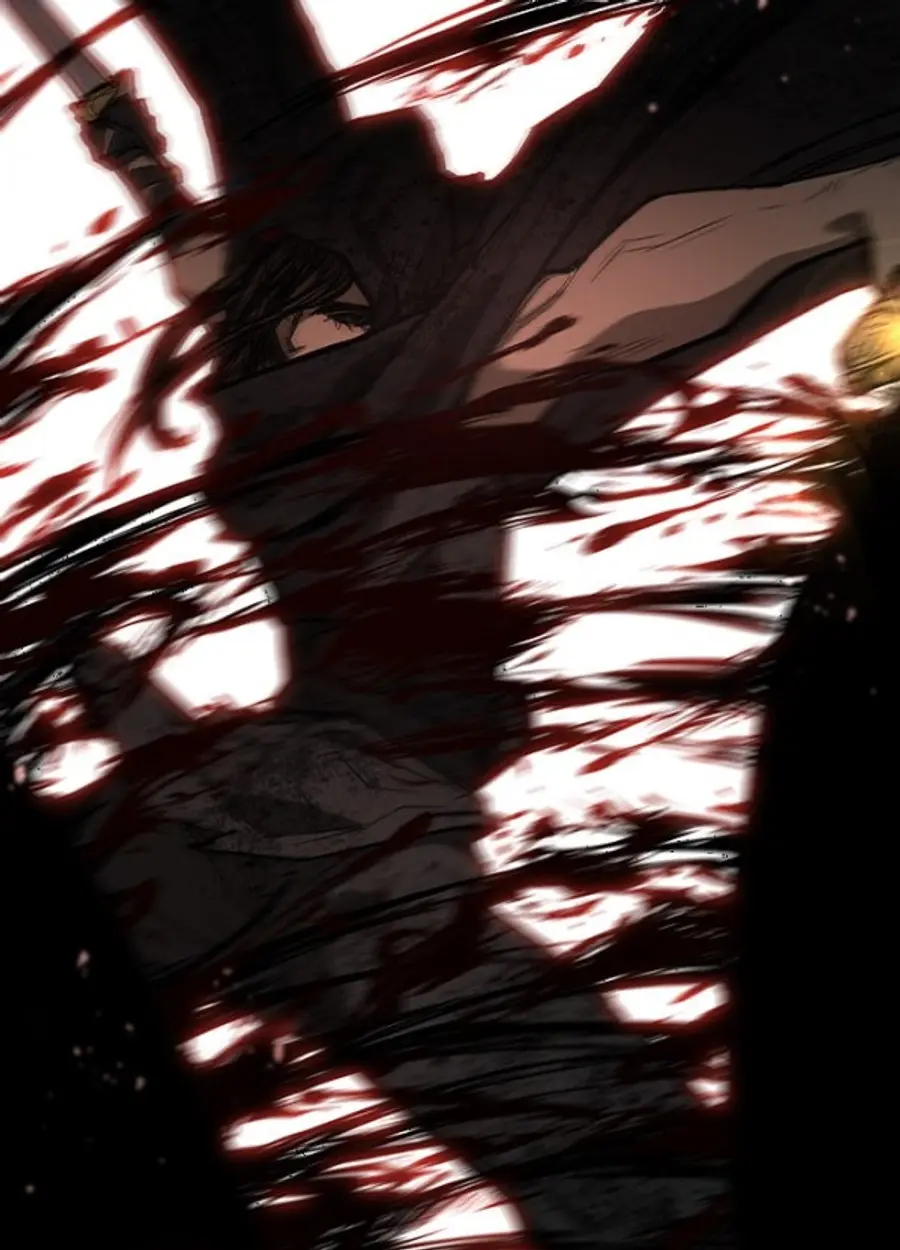
The reason this work is loved by readers today may be that it satisfies two completely opposite emotions simultaneously. One is the thrill of watching an entirely unrealistic 'Korean warrior's expedition to Rome', akin to the pleasure felt while watching 〈Kingsman〉 or 〈John Wick〉. The other is the very realistic texture of fatigue and pain contained within it.
We have already experienced the "feeling of getting stronger" in numerous leveling and system stories. The thrill of seeing stats pop up, numbers rise, and gaining new skills. However, 'Musamanrihaeng' shows the story of a person who endures and perseveres instead of getting stronger. And it does not hide the fact that this endurance is not just portrayed beautifully, but is an incredibly tiring and lonely task. Just as 〈Rocky〉 focused on enduring 15 rounds rather than on glorious victories.
If you are a bit tired of the currently trending regression and game system stories, this webtoon serves as a good breath of fresh air. For those who found stories where a single strike or injury is consumed too lightly tedious, the heaviness felt when Naru gets hit and stands up again will be welcome. It is action that feels like real sweat and blood, just like the "sword dance" special of 〈Infinite Challenge〉.
It also suits readers who enjoy historical and ancient atmospheres. The unusual combination of Gori Kingdom and Rome may feel strange at first, but soon it will come to feel so natural that one might think, "Why haven’t I seen this kind of imagination before?" While it is indeed rare to find a combination that satisfies both 〈Gladiator〉 and 〈The Last Weapon: Bow〉, 'Musamanrihaeng' is a work that can satisfy both tastes at once. Just as 〈Kingdom〉 mixes zombies with Joseon historical drama, this work mixes Korean warriors with the Roman Empire.
Finally, for those who are enduring because of promises made to someone, this story will not feel like someone else's tale. Naru is a character who repeatedly makes choices that seem to be losing propositions. Even when an easier path is visible, he deliberately chooses a longer, more arduous route due to the vow he has already made in his heart. Just as 〈Forrest Gump〉 crossed America simply because he loved Jenny, Naru crosses the continent simply because he wants to protect the princess.
That aspect may feel frustrating, and on the other hand, it may feel enviable. After reading 'Musamanrihaeng' to the end, you may find yourself pondering this question at least once: "What am I enduring this much for, and for whom?" If you want to have an experience that directly confronts such questions, this bloody long journey will linger in your heart for quite a while. And when the next difficult situation arises, you might suddenly think, "Naru walked to the other side of the world, but can’t I even go this far?" At that moment, 'Musamanrihaeng' will have become one of your supports beyond just a webtoon.