

[magazine kave]=Reporter Lee Tae-rim
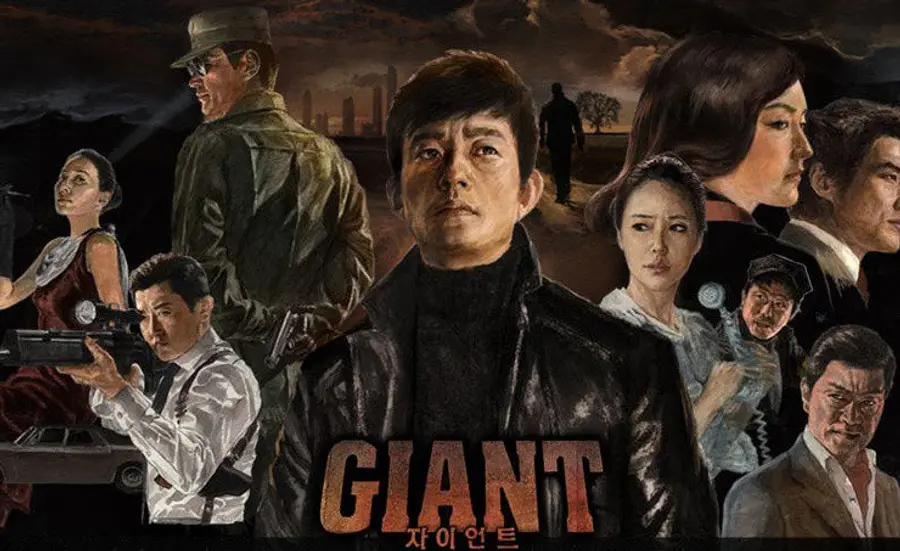
In a shabby one-room apartment on the outskirts of Seoul, young brothers limp around the narrow room. During the development boom of the 1970s, Lee Gang-mo (Lee Beom-soo), who has a construction worker father, along with his older brother Lee Seong-mo (Park Sang-min) and younger sister Lee Mi-joo (Hwang Jung-eum), live a life of poverty but rely on each other. Like a poor family in a neorealism film, but not in post-war Italy, rather in Korea during the era of developmental dictatorship. However, one day, due to a conspiracy between a powerful figure aiming for redevelopment profits and a construction contractor, the site becomes a stage for shoddy construction and collapse accidents, and Gang-mo's father meets a tragic death for not being able to keep silent about the truth. The cold-blooded power broker Jo Pil-yeon (Jung Bo-seok), who orchestrated all this, tries to eliminate the family to cover up the incident, and the young brothers are forcibly separated, losing each other amidst explosions and fires. The grand narrative of 'Giant' begins with the destruction of this family.
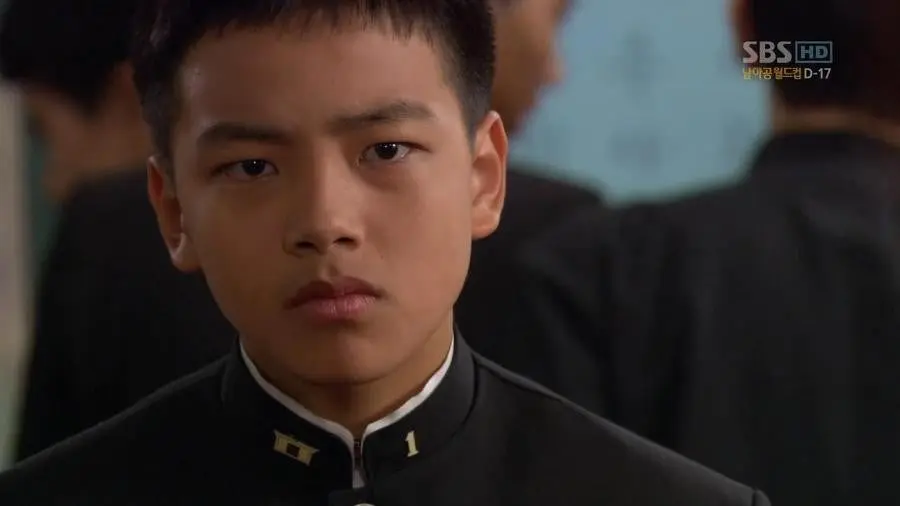
As time passes, Gang-mo wanders through a life at the bottom, unable to even keep his name. He endures by doing menial jobs like construction labor, errands, and driving for brokers, gradually learning the workings of the construction industry. He learns through experience who truly holds power, how a single blueprint can determine the value of lives, and how many lives collapse with a single word: redevelopment. Like Vito Corleone learning the rules of the New York underworld in The Godfather. And one day, he firmly vows to seize the leash of those who trampled on him and his family. One day, an opportunity arises for him to gain both capital and power. Starting from a mere subcontractor, he begins to win contracts one by one, and by working night shifts and taking on dangerous underground construction, he slowly starts to grow into 'the one who sets the stage.'
Jo Pil-yeon...The Birth of the 'Korean Machiavelli'
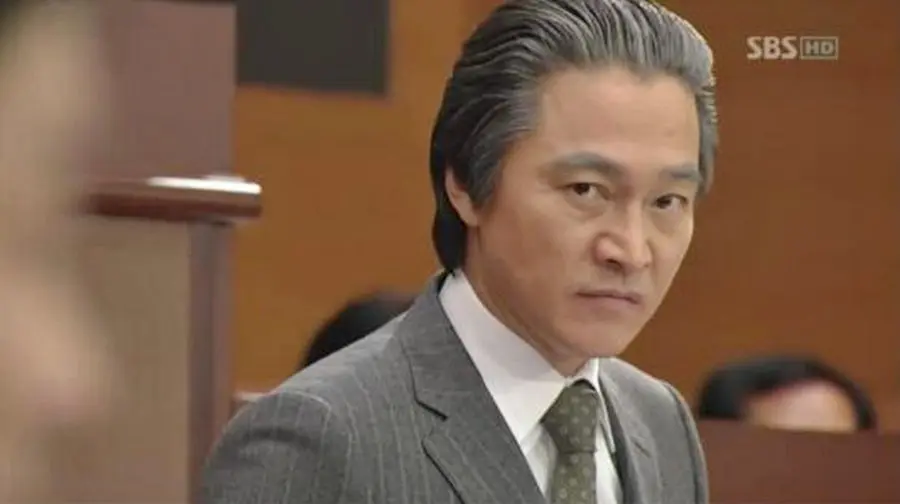
On the opposite axis, Jo Pil-yeon has already built a massive network connecting politics, intelligence agencies, and chaebols. Using the development policies of the military regime as a stepping stone, he constantly climbs upward. Moving between the corridors of the National Assembly, hotel suites, and secret investigation rooms, his work is simple. He keeps those who are helpful to him alive and erases those who are obstacles from the records. Like Frank Underwood reincarnated in the Korean construction industry from House of Cards. The name Lee Gang-mo, which he thought had only brushed past him in childhood, echoes again in the construction industry as an adult, while Jo Pil-yeon's life continues to be a series of successes.
The drama does not stop here and establishes a third axis. That is the older brother Lee Seong-mo, who grows up to be a prosecutor. After years of believing he was dead or having to forget each other, Seong-mo confronts Jo Pil-yeon's evil deeds head-on with the language of law and systems. On the surface, he appears to be a cold and principled elite prosecutor, but inside, he is burdened with the trauma of his father's death and childhood. When Gang-mo faces the massive wall of Jo Pil-yeon in the construction industry and Seong-mo faces it in the legal field, 'Giant' accelerates into a grand narrative of revenge intertwined with family drama, coming-of-age story, and political thriller. Like the Count of Monte Cristo surrounding his enemies with three identities.
There is another character who adds weight to their trajectories. Hwang Jeong-yeon (Park Jin-hee), the only daughter of a chaebol family and heir to the department store and construction conglomerate. Having taken the privileged life for granted, Jeong-yeon encounters Gang-mo and for the first time faces the reality of labor and the shadow of wealth built by her father's generation. The relationship between Gang-mo and Jeong-yeon transcends a simple romance of class difference. Their love and conflict, cooperation and betrayal overlap with the point where the light and shadow of the myth of Korea's economic growth collide. Like Jack and Rose from Titanic, but in a rapidly growing country rather than a sinking ship.
Narrative Penetrating the Era from the 1970s to the 1990s
The first half of 'Giant' unfolds amidst the fervor of demolishing shantytowns in the 1970s and constructing highways and new towns. The alleys where demolition workers are chased away at dawn, workers hanging without safety equipment, and scenes of excavation work that do not stop even on rainy days are repeated, presenting the blood and tears of someone hidden behind the myth of growth to the viewers. It is realistic like a documentary, yet emotional like a melodrama. In the midst of it all, Gang-mo struggles to grasp money and fame while trying not to forget where his starting point was. Seong-mo fights against 'pressure from above' through investigations into illegal political funds and slush funds, while Jeong-yeon becomes increasingly isolated as she gets caught up in the internal power struggles of the chaebol surrounding the chairman's position.
At every intersection of the three characters, Jo Pil-yeon is always one step ahead. He does not hesitate to eliminate evidence, people, and sometimes even abandon allies. He knows better than anyone that at every moment the skyline of a city changes, his name is signed in places where it cannot be seen. Thus, he gains even more confidence and falls into the illusion that 'I am the one who makes history.' Like Noah Cross from Chinatown controlling the water of LA, Jo Pil-yeon controls the land of Seoul. The drama builds up how this arrogance brings about cracks and how Gang-mo, Seong-mo, and Jeong-yeon penetrate through those cracks with a long breath.
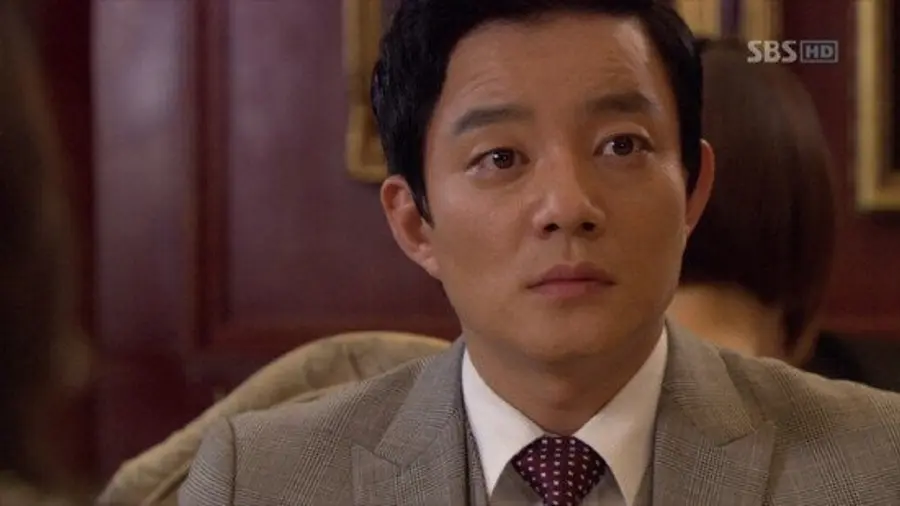
As the story progresses, Gang-mo is no longer simply in the position of a victim. He becomes the representative of a mid-sized construction company that wins significant contracts, sometimes teaming up with the political world, and leads his own people. The childhood dream of rushing toward success begins to waver at the boundary of revenge, responsibility, desire, and ethics. The viewers will observe how each of Gang-mo's choices increasingly resembles Jo Pil-yeon, or where he tries to draw the line. Like Batman in The Dark Knight having to choose between "dying a hero or living long enough to see himself become the villain." 'Giant' pushes the story to the end in that tension. It is better to directly check who loses what and what is preserved in the conclusion. This drama questions the process over the result, the cost over the victory until the end.
How to Place Characters in History
The greatest strength of 'Giant' is that it intricately weaves a massive narrative that penetrates modern Korean history with a personal tale of revenge. Unlike many dramas that merely consume the era as a backdrop, in this work, the era functions as a force that defines characters and compels choices. From the development of construction and heavy chemical industries, the birth of large construction companies, the solidification of the chaebol system, to the changes in power structures from military regimes to civilian governments, events that evoke real history flow closely with the lives of the characters. Like Forrest Gump penetrating modern American history, but not as a comedy, rather as a tragedy. Characters are divided into 'those who use this massive flow,' 'those who get caught up in it,' and ultimately 'those who try to change it,' and each choice is read as an attitude toward the era.
The narrative structure is also solid. To carry over more than 50 episodes of a grand drama that starts from a childhood catastrophe, through the growth and failures of youth, and the conflicts and reconfigurations of middle age, the motivations of the characters must be strong. 'Giant' shows a design that is almost textbook in this regard. Gang-mo has a simultaneous mix of anger at having his family taken away, the survival instinct of someone who has passed through the bottom, and ambition for success. Seong-mo is entangled with a sense of justice and a desire for revenge, wanting to believe in the weapon of law, while Jeong-yeon has internal conflicts wavering between love, family, corporate, and social responsibility. Because these complex desires collide and vary, viewers will encounter the emotions felt in episode 1 in completely different ways in episodes 30 and 50. Like the theme of a symphony being varied in each movement.
The acting and character building are another pillar that elevates this drama to the classic level. The character Lee Gang-mo is a mix of anger, humor, and vitality. He bursts into laughter while cursing on the market floor, yet screams in horror in the middle of a construction site. Jo Pil-yeon stands at the opposite end. A cold-blooded person who controls even a breath and a glance, he never loses his smile in public but calculates people's fates with numbers and documents in private spaces. Like Anton Chigurh from No Country for Old Men, executing murders without emotion. The moment these two characters stand in the same frame, the density and tension of the screen change dramatically, and viewers gain the motivation to keep watching just by witnessing their confrontation.
However, the truly interesting point of this drama is that it poses quite uncomfortable questions to a Korean society accustomed to success myths. Instead of hiding the numerous failures and sacrifices behind someone's success with editing, it shows them head-on. While cheering for Gang-mo's success, viewers realize that this success may not be entirely different from Jo Pil-yeon's methods. The way money and power accumulate is similar, and the only difference is how and where it is used, a harsh truth. The drama does not preach like a moral textbook. After showing the characters' choices and their aftermath to the end, the interpretation of their meaning is left to the viewers. Like There Will Be Blood shows the birth of the oil industry, Giant shows the birth of the Korean construction industry.
Of course, there are also disappointing aspects. The elongation typical of long dramas and the excess of some subplots are hard to avoid. There are moments when the edge of structural criticism becomes dull as melodramatic conflicts are repeated. Nevertheless, the overarching narrative and character arcs are so strong that once completed, these shortcomings are generally absorbed into the texture of the grand story. Rather, this slight roughness feels like a record that fully shows the grammar of the public broadcasting grand drama of that time.

If a Desperate Revenge Tale is Your Style
Now, let's summarize who you would recommend this drama to. For those who want to feel the air of modern Korean history in the story, 'Giant' is almost essential. Instead of the years and policy names in textbooks, the dust of construction sites, the screams of demolition sites, the transactions in the corridors of the National Assembly and the chairman's office of chaebols come together as a single narrative.
Also, for those who enjoy success and revenge narratives but are tired of simple cathartic endings, this work offers a heavy catharsis. Here, victory always demands a price, and the more complete the revenge, the greater the emptiness it leaves behind. Nevertheless, the stubbornness of the characters who continue to fight until the end lingers in the heart.
Finally, I would like to recommend it to today's viewers who are used to fast-paced developments. After just a few episodes, you will find yourself looking at the dusty construction site and the dazzling forest of buildings alongside the Gang-mo brothers. And by the time the ending credits roll, the emotional line recalling the myth of growth in Korea will have changed somewhat.
Like looking down from the top of a skyscraper, you will begin to see the many stories hidden beneath the dazzling skyline. The aftertaste lingers long, very long.