
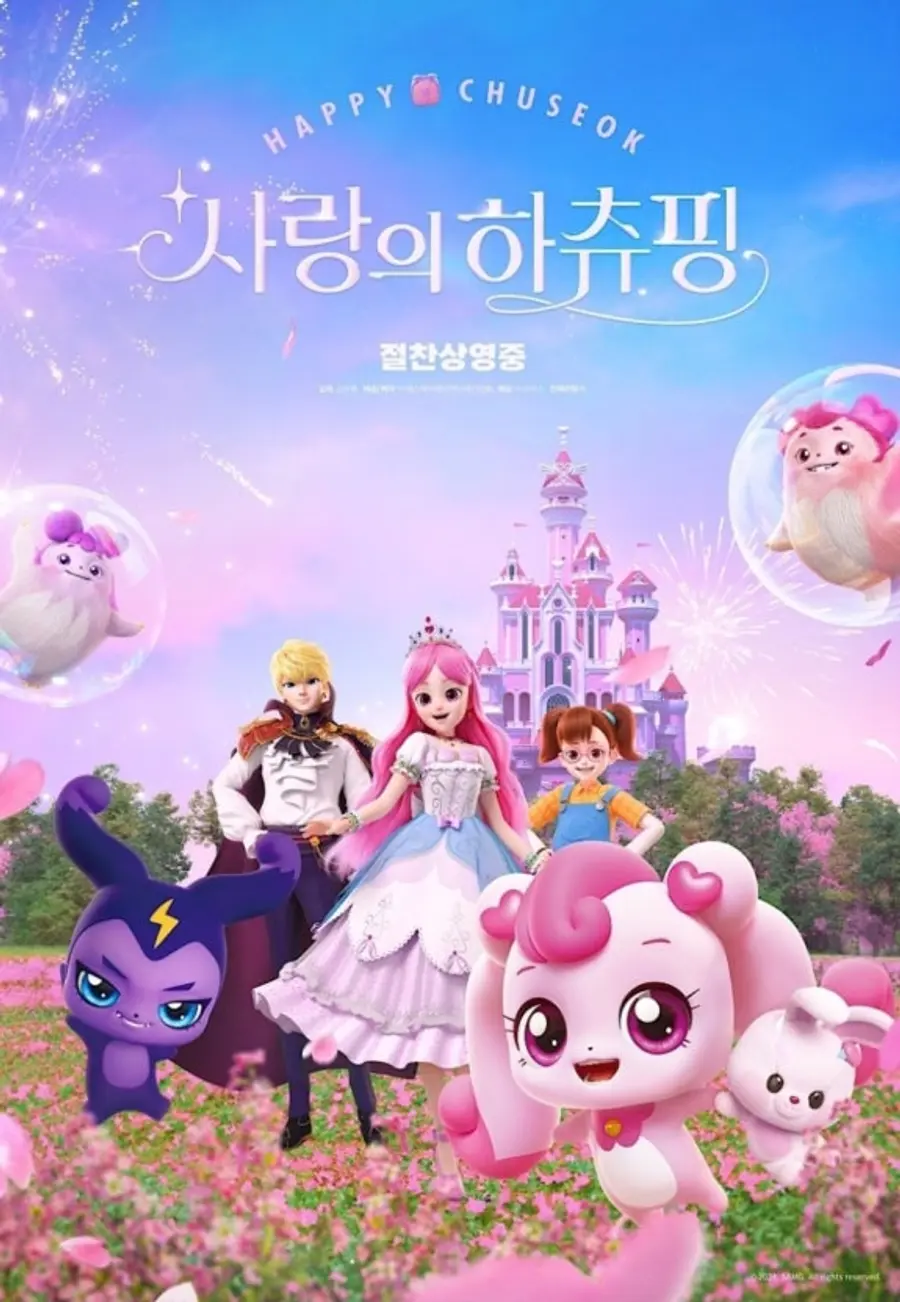
The theater is bathed in pink. The moment a princess wearing a crown and small fairies with round eyes fill the screen, the children seem ready to jump out of their seats. Just like when 'Let It Go' from Frozen plays, but instead of the Snow Queen, it’s with the pink fairy. The animation 'Love Hachuping' is the first theatrical film of the TV series 'Catch! Tinyping' and tells the story of how Princess Romi (Lee Ji-hyun) and Hachuping (Jo Kyung-yi) first met, serving as a kind of 'prequel'. Delving into the past of characters that have been loved on TV for years, it fills the children’s musical fantasy with themes of love, wounds, and growth, which are somewhat serious emotional lines.
The Emotion Kingdom: The Korean Version of Inside Out
The story takes place in the Emotion Kingdom, where the energy of emotions blooms into light. One day, Princess Romi feels both excitement and anxiety as she prepares for a ceremony to find her own 'partner Tinyping'. The rule of this world is that every child must meet the Tinyping that best matches their emotions and grow together. Just like Harry Potter finding his wand at Hogwarts, but instead of a magic wand, it’s an emotional fairy. However, Hachuping, who appears as Romi's partner in the fortune-telling, is nowhere to be found in the kingdom. The princess smiles kindly and says, "It’s okay," but inside, she is tormented by the anxiety of thinking, "What if I’m the only one without a partner?" It feels like posting something on social media without any 'likes'.
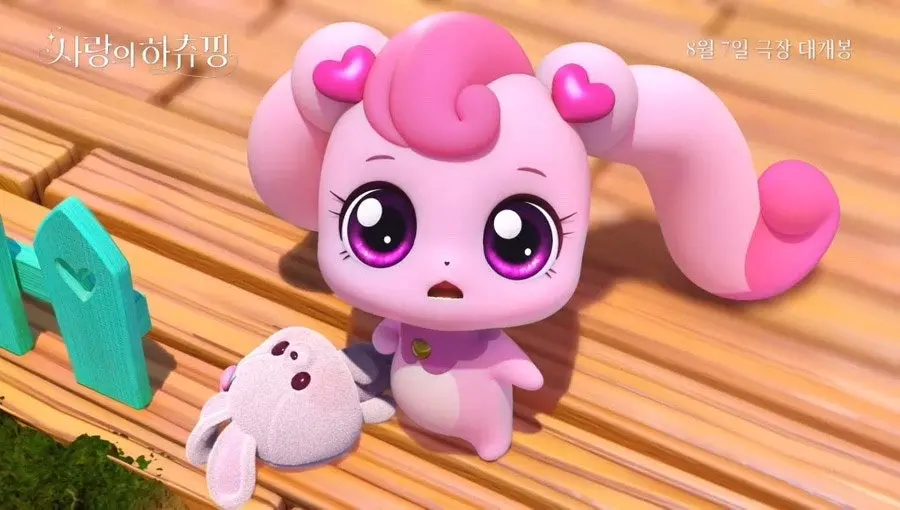
Meanwhile, the Tinyping Hachuping, with pink ears and a heart-shaped tail, is hiding somewhere in the human world. Although she looks more adorable than anyone else, she has become deeply afraid of humans due to past wounds. Hachuping imagines everyone she encounters as a dangerous being and wanders around the city, curled up smaller and smaller. Like Lotso from Toy Story 3, the memories of being loved have turned into trauma. While other Tinypings in the kingdom grant children’s shining wishes, Hachuping has become a child who avoids love alone.
Eventually, Romi runs out of the palace to find Hachuping herself. Changing into comfortable clothes instead of a fancy dress, she crosses the kingdom's borders with her friends, the Tinypings she grew up with. Just like Moana leaving her island, but instead of the sea, it’s the boundary of emotions. What appears before her is Prince Liam (Ryu Seung-gon), who has been cursed and turned into a horse. Even in the form of a horse, Liam exudes elegance and coolness, warning Romi of danger while strangely helping her with her choices. He seems to say with just one expression, "I was once paired with someone like you." The Beast from Beauty and the Beast, but instead of breaking the curse, he helps break someone else's curse.
On the opposite side of this adventure is the film's villain, Trapping (Jo Hyun-jung). Once Liam's partner, the Tinyping Trapping has become a dark character who believes she was abandoned by humans due to misunderstandings and wounds. Reborn with crimson eyes and black wings, Trapping denies the very relationship between humans and Tinypings and plans to shake the kingdom. Just like Maleficent cursed Aurora, but instead of 16 years, it’s eternal distrust. She controls an army of Tinypings called Soldierpings with a curse and whispers to Hachuping, "Humans will eventually abandon you," tightening her heart. Thus, Romi's appearance is both the beginning of love and another beginning of fear for Hachuping.
The Power of Musicals: It Seems to Inherit 'Disney's DNA'!
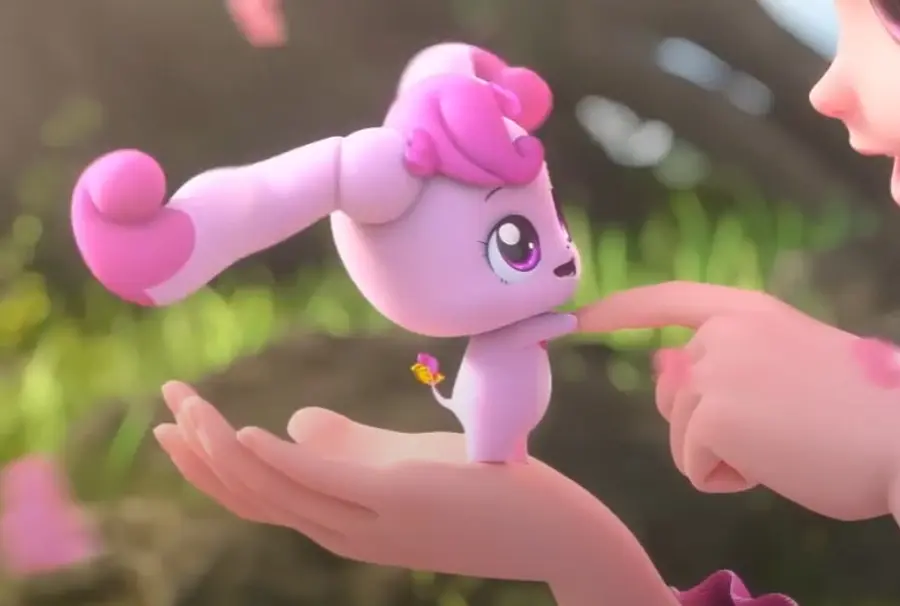
The film rhythmically weaves the process of Romi and Hachuping gradually approaching each other while being cautious and becoming 'partners' through adventure, musical numbers, and action. The chase and aerial battles unfold between the amusement parks of the human world, the city streets at night, and the palace and castle towers of the Emotion Kingdom, and as each character's theme song follows, the young audience is naturally drawn into the story. The moment Romi first holds Hachuping in her arms, Hachuping's trembling voice asking, "Can I trust you?" conveys the weight of the emotions the film wants to express. Just like the emotion felt when E.T. reaches out to Elliott.
As the story progresses, the relationships between Romi, Hachuping, Trapping, and Liam intersect. It clearly shows how past misunderstandings create monsters and what choices beings who believe they are unloved make, in a way that even young audiences can understand. At the same time, it gently conveys the message that "the fact that you have not been loved does not mean you will never be loved again." It’s best to see how the ending is stitched together for yourself, but at the very least, this film holds onto the theme of 'love' until the end, fitting the name Hachuping.
Touching Emotional Roots Beyond Fan Service
What makes 'Love Hachuping' interesting is that, while it is a theatrical version of the long-running series 'Catch! Tinyping', it does not stop at simple fan service but digs directly into the emotional roots of the world. By choosing a prequel structure that deals with the past rather than the original perspective, it answers questions like "Why was Hachuping Romi's partner?" and "What was Hachuping originally?" while reframing the relationship between humans and Tinypings with the intense emotion of 'first love'.
Typically, theatrical versions of TV series throw characters that fans already know onto a different stage, often increasing the scale or the level of the enemy. Just like Pokémon movies introduce legendary Pokémon. In contrast, 'Love Hachuping' places the characters' pasts, wounds, and the beginnings of relationships at the center of the narrative. The process of Romi falling in love with Hachuping, the moment Hachuping decides to trust humans again, and Trapping's dark desire to return her wounds to others all center around 'emotion'. It effectively utilizes the world setting of the Emotion Kingdom as a true emotional drama.
The character composition is particularly solid. Romi, fitting her title of 'princess', is a responsible character but is also impulsive and honest like a sixteen-year-old girl. She sometimes makes dangerous choices, ignoring the kingdom's norms and adults' advice, but her underlying thought is always, "Someone has to help that child." Just like Elsa leaving the castle to protect her sister. Hachuping embodies the typical 'wounded hero' face. She has the ability that symbolizes love but cannot believe in love herself. This contradiction makes Hachuping not just a cute mascot but a protagonist with narrative weight.
Trapping is a rather three-dimensional villain for a children's animation. He is not an absolute evil trying to destroy the world from the beginning. The betrayals, misunderstandings, and feelings of inferiority he experienced in the past accumulate and eventually create the face of a monster. Just like Ernesto from Coco, the desire to be loved becomes distorted. Therefore, his anger is understandable, and in the scene where he whispers to Hachuping, "Don’t trust humans," adult audiences feel even more uncomfortable. It reminds them of the wounds and distrust they felt in their childhood. Liam, too, is portrayed as a character carrying responsibility, guilt, and self-blame, beyond the cute setting of a 'cursed horse'.
The music is another hero of this film. The main theme song 'The Moment I First Saw You' sung by aespa's Winter has gained attention and has become popular enough to earn the nickname "Korean version of 'Let It Go'". In theaters, every time this song plays, children naturally sing along, and parents smile and take out their phones to record. Some theaters even held 'Sing-Along' screenings, where everyone sang together with the lights on, similar to 'The Greatest Showman' screening of 'This Is Me'. Because the song is not just an insert song but is perfectly timed with Romi and Hachuping's emotional changes, audiences find themselves searching for the OST even after the ending credits roll.
From a brand perspective, 'Love Hachuping' is a good example of how domestic animation IP can expand. The 'Tinyping' series, which has already secured a wide fan base on TV, operates a huge ecosystem linked to toys, merchandise, albums, and fashion items as it transitions to the theatrical version. However, the reason the main film does not feel like a long advertisement to sell products is that the narrative and emotional lines are sufficiently solid. It does not end with "cute" but follows with explanations and understanding of "why those kids behave that way." Just as Transformers started as a toy advertisement and gained a narrative, Tinyping is walking that path.
This is Not Just a Work for Kids!
What’s interesting about this work is that, despite targeting children, it has received enthusiastic support from adult audiences in their 20s and 30s. While they may start watching it drawn in by the cute characters and vibrant colors, what truly shakes their hearts is the strange déjà vu of "It feels like seeing my childhood self." Hachuping, who is afraid of not being loved and closes her heart first, and Romi, who pretends to be bright in front of others but feels useless when alone, reflect emotions that everyone experiences at least once in their growth process. Therefore, some adult viewers leave reviews saying, "I cried more than the kids did." Just like adults cried over Carl's life in Up.
I would recommend this to parents who have been convincing themselves, "I’m okay with being a little bored," while choosing a movie to watch with their kids. 'Love Hachuping' is a tailored fantasy for children, while also offering significant comfort to adults. It subtly hides the sense that 'I can be loved too'—a feeling often lost during the growth process—between the colorful screens and songs. While Inside Out dealt with emotions and Coco dealt with family, Hachuping deals with wounds.
For audiences curious about the current state of Korean animation, this work is definitely worth watching. From character design and world-building to musical direction and brand expansion strategies, it provides a clear view of how domestic IP is growing. It’s not just about being 'popular among kids' but shows what choices are being made to become content that spans generations while targeting both OTT and theaters.
If you still carry childhood wounds in a corner of your heart, it might be good to secretly watch this movie alone once. Watching the scene where Hachuping overcomes her fear and reaches out again, and the scene where Romi says, "I believe in you," might make you want to say that to yourself as well. A film that reminds us that even if we are not heroes, we can be a small courage for someone. In that sense, 'Love Hachuping' is quite a wonderful love story that goes beyond just cute characters.
And as you leave the theater, you might find yourself murmuring, "Can I be someone’s Hachuping?" Will you have the courage to approach someone who is hurt and say, "It’s okay, I believe in you"? If you return home with that question in mind, this 90-minute pink adventure was certainly a worthwhile time.