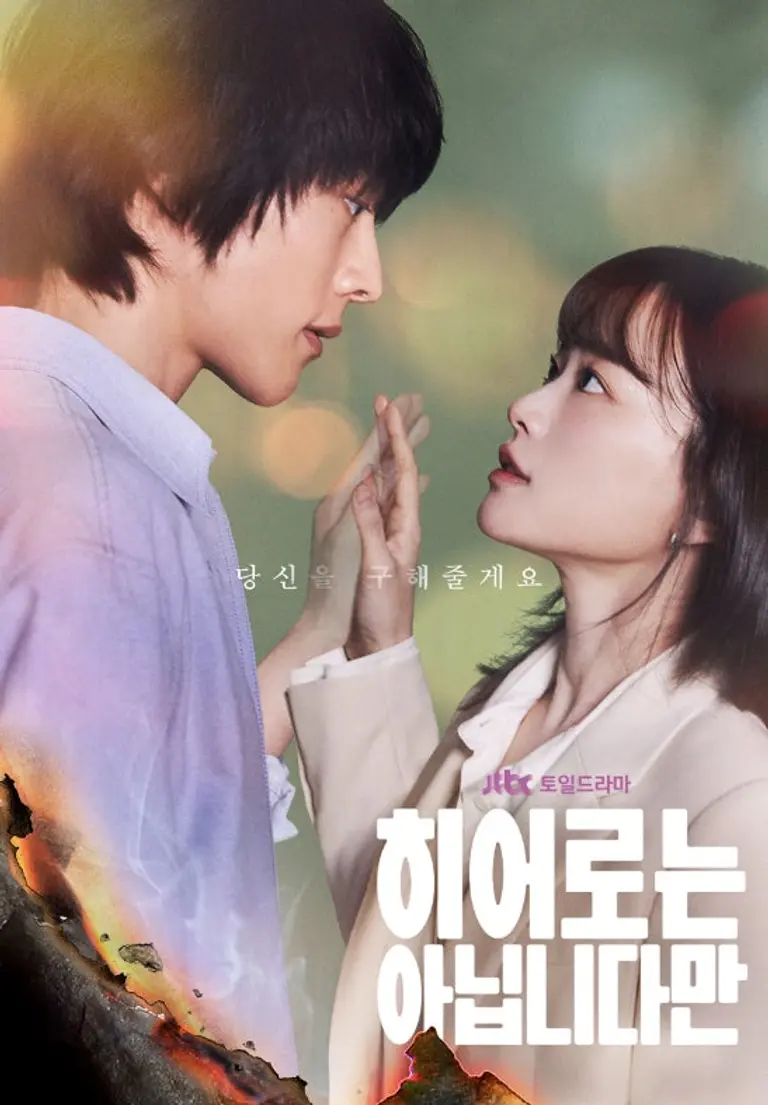
There is a man who dreams the same dream every night. Lying slumped on the darkened living room sofa, Gyu-joo (Jang Ki-yong) suddenly finds himself standing in the middle of a 'happy moment' from the past when he closes and opens his eyes. The night he sat next to his young daughter, Ina, blowing out the candles on her birthday cake, the evening he took a selfie with his once-beloved wife while smiling, the dining table where the family gathered and ate noisily. Gyu-joo returns to that time, breathing in the air, looking at people's expressions, and smiling himself. Like Tim from About Time, but not to change the future, rather to be trapped in the past.
However, he cannot reach out to change the past at any moment. Time may rewind, but fate remains fixed. Thus, his ability gradually becomes a torment rather than a comfort. Repeatedly witnessing happiness that can never return only serves to confirm how unhappy he is now. It is no different from endlessly replaying past home videos with a VR headset.
The Decline of a Superpowered Family: If the X-Men Were Burned Out
Gyu-joo's family was once known as the 'superpowered family' of the Bok family. Grandmother Bok Man-heum (Go Doo-shim) had prophetic dreams that clearly foresaw the family's future, and sister Bok Dong-hee (Su-hyun) was born with the ability to fly. Daughter Bok Ina (Park So-i) has yet to manifest her powers, but everyone believed that she would eventually have special abilities. Like The Incredibles, but without superhero activities.
However, at some point, things began to go slightly awry. Man-heum suffers from severe insomnia and becomes unable to dream at all, while Dong-hee can no longer fly due to binge eating and weight gain. Gyu-joo feels the door to the past narrowing as he is consumed by depression and lethargy. The superpowers have not disappeared; they have rusted away along with the pathologies of modern life. Like Logan losing his healing factor as he ages, but not due to battle, rather because of depression.
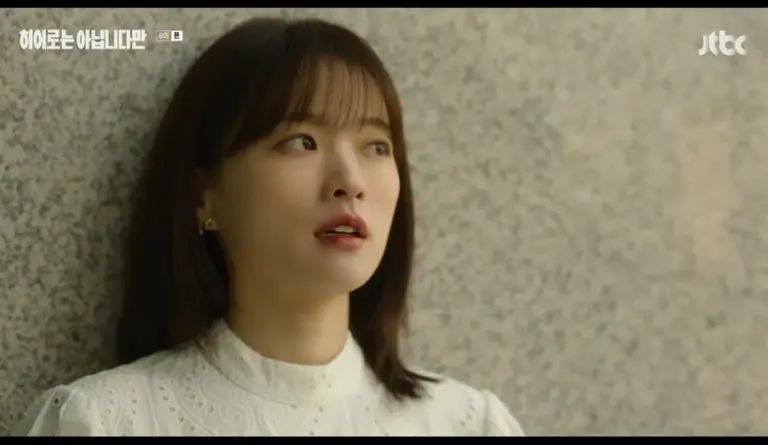
One day, into this stagnant daily life walks Da-hae (Cheon Woo-hee). Da-hae has lived a life that exploits people's weaknesses alongside suspicious family members at the scene of an insurance scam disguised as a traffic accident. On the surface, she appears to be a bright and cheerful young woman, but behind the scenes, she is a member of a team that systematically selects 'prey'. Like the Hanks couple targeting an elderly woman in Ladykillers. The new target she has set her sights on is the Bok family, who have a large yard and a big, strange house. Da-hae pretends to be coincidentally wandering near Gyu-joo's home and, using an unexpected connection with Man-heum, gradually infiltrates their lives. What starts as a visit where she stays for a night with a pillow soon leads to her becoming a 'tenant family' in a quite natural progression.
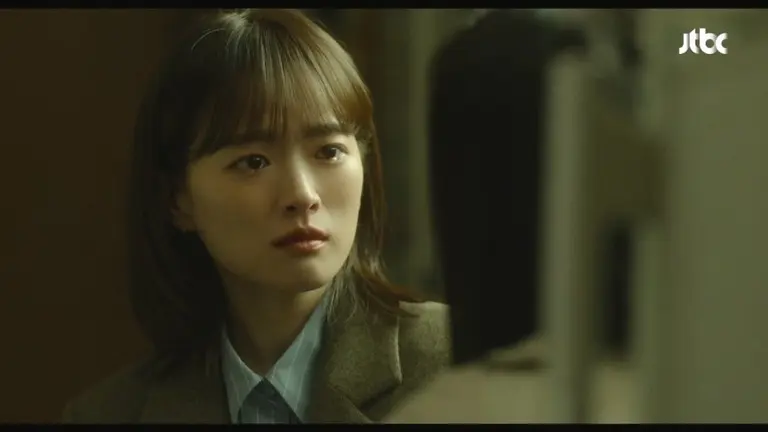
Once Da-hae enters the Bok house, she quickly notices the family's oddities. Man-heum, unable to sleep at night, wanders in front of the TV; Dong-hee secretly orders food through the window and binge eats; and Ina, who is afraid to socialize with her peers, is addicted to the world on her smartphone. Most notably, Gyu-joo is always curled up in a corner of the house, wearing an old T-shirt. He cannot even attend his daughter's school events properly and avoids making eye contact with anyone in the house. To Da-hae, Gyu-joo seems more like 'someone to deceive' than 'someone to help'. He appears emotionally dulled, and his will to live is almost non-existent. Like Pat from Silver Linings Playbook, but not jogging, rather not moving from the sofa.
However, the moment Da-hae accidentally witnesses Gyu-joo's secret, her expression subtly changes. At the scene of a sinister accident, Gyu-joo closes his eyes for a moment and then opens them, showing the first person he saves. Gyu-joo, who had thoroughly hidden his ability to retreat into the past, instinctively uses that power only in front of Da-hae. Like David Dunn realizing his abilities for the first time in Unbreakable. Da-hae realizes that this family is not simply 'rich' or 'careless people', but literally living a life on a different dimension. At the same time, she instinctively senses that the thread of fate she can intervene in is much larger.
Da-hae approaches Gyu-joo for her original purpose. She offers kindness to the wounded man, befriends Ina, and earns the trust of the family elders. However, in the process, she becomes more shaken herself. Every time she sees Gyu-joo, who is trapped in the past due to depression, the family members who have lost their abilities due to illness, and the way this family, who pretends to be fine on the surface, is quietly worried about each other, Da-hae begins to view her own life and lies with a sense of estrangement. Like Kay in The Godfather learning about Michael's world, but not the mafia, rather the superpowered family.
In particular, the scenes where Da-hae intervenes between Gyu-joo and Ina, choosing birthday gifts and facilitating their awkward conversations, are significant. Gyu-joo is an awkward father who does not even know what to buy for his daughter, and Ina is a child who feels that such a father is 'incompetent' but cannot give up hope. Da-hae becomes a bridge between the two. Gyu-joo gradually transforms from someone who only escapes into past happiness to someone who tries to create present happiness, with Da-hae acting as a catalyst. Like Mary Poppins healing the Banks family, but with con artistry instead of a magical bag.
Fake Family vs Real Family...Who is More Real?
Meanwhile, Da-hae's family is no less complicated. On the surface, they act like a warm family, calling each other 'mom', 'aunt', and 'uncle', but in reality, they are more like a group of accomplices sharing the same crime. Centered around Baek Il-hong (Kim Geum-soon), this family meticulously plans to target the Bok family's wealth. Like Ocean's Eleven, but targeting a superpowered family instead of a casino. Partners like Grace (Ryu Ah-bel) and Noh Hyung-tae (Choi Kwang-rok) faithfully fulfill their roles, but they increasingly view Da-hae's emotional changes with discomfort. As Da-hae genuinely empathizes with the Bok family's wounds, especially her growing feelings for Gyu-joo and Ina, the boundary between 'fraud' and 'sincerity' begins to blur.
After the midpoint, Man-heum's prophetic dreams increasingly hint at a darker future, and the fear that this family may lose someone instead of regaining their powers looms heavily. The Bok family and Da-hae's family sharply collide as they become aware of each other's secrets, while also getting entangled with external criminal forces, heightening the narrative tension. The fantasy romance, intertwined with superpowers, fraud, family, and love, continues to pose the question, "Who can truly be saved?" It is best to see for yourself what choices and sacrifices unfold in the conclusion. The story clearly claims to be a romance and healing, but the emotional impact is anything but light.
A Fresh Twist on the Genre, Facing Rather Than Avoiding
This drama takes the somewhat familiar setting of a 'superpowered family' and combines it with a distinctly Korean sense of reality to create a fresh variation. The Bok family's abilities are flashy superpowers commonly seen in hero stories, but the reasons for their disappearance are all too realistic. Modern ailments like depression, insomnia, binge eating, and smartphone addiction gnaw away at the functions of their superpowers one by one. The saying, "Even those who have the power to save the world struggle to manage their own lives" becomes not just a joke but the very premise. Like the superheroes in Season 1 of Heroes, but collapsing not due to aliens, but because of psychiatric diagnoses.
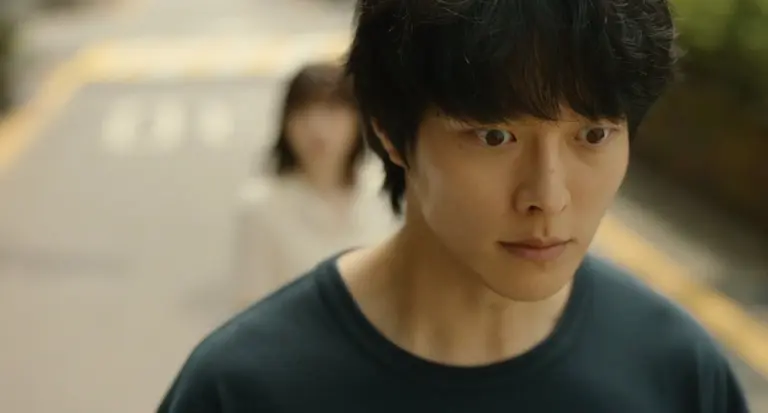
Gyu-joo's time travel ability is particularly impressive. He cannot change the past. He can only see and feel the happiness that has already passed. This power initially seems like an enviable ability, but soon reads as a symbol of "a person with depression who only revisits good memories of the past while avoiding the present." Like Joel trying to erase memories in Eternal Sunshine, but in the opposite direction. The drama shows that Gyu-joo's life changes depending on how he accepts this ability. When he no longer runs away to the past and instead uses his power as a tool to change the present reality with Da-hae, that is when this fantasy setting aligns with a healing narrative. The way the genre device of time travel is brought into a drama about mental health and healing is quite delicate.
The direction subtly mixes the tones of 'family drama', 'romance', and 'fantasy'. The interior space of the Bok house is always shot with a slightly glowing saturation and color, making this house, which simultaneously contains an old Western-style house, a garden, and a basement, feel like a kind of 'structure of the mind'. The living room serves as the main stage where family emotions collide, the rooftop is a sanctuary where Gyu-joo and Da-hae share secrets, and the stairs and corridors are utilized as passages between the past and present, sincerity and deceit. Like Carl Fredricksen's house in Up being a museum of memories. The scenes of using superpowers are directed calmly, focusing on light, sound, and frame transitions instead of exaggerated CGI, making them resonate emotionally.
Three-Act Structure, From Fairy Tale to Thriller
The rhythm of the story beats slightly differently in the beginning, middle, and end. The early part spends a lot of time introducing the Bok family's story and Da-hae's infiltration process, emphasizing a fairy tale-like fantasy and comedy. There is a flavor of suddenly introducing superpowers into a very Korean family landscape that is both melancholic and somewhat funny. In the middle, as romance and family healing become more pronounced, the relationships between Gyu-joo, Da-hae, and Ina take center stage. As the story progresses to the latter half, elements of crime and thriller become more prominent, with Da-hae's family's criminal activities and the Bok family's secrets erupting simultaneously, causing the tone of the drama to shift somewhat sharply. Like Parasite transitioning from comedy to thriller. In this process, some viewers may have felt that "the healing fantasy suddenly turns into a messy thriller." However, what the work has aimed for from the beginning is not 'healing that lightly covers the ailments and wounds of modern people with fantasy', but rather the late peace that can only be obtained after facing those wounds to the end. Thus, the emotional density also deepens as the story progresses.
The acting and character development also have many commendable points. Gyu-joo is a typical 'hero who has lost his powers' character, but hidden within his slouchy T-shirt, messy hair, and dry lines is a subtle tsundere sentiment. He is an awkward father who cannot even properly speak to his daughter after giving her pocket money, and at the same time, the emptiness of a man who has lost love is felt. Like Lee from Manchester by the Sea, but in a relationship with his daughter rather than a brother. Da-hae initially stands out for her calculating nature, but as she faces the wounds of the Bok family, she shows a wavering gaze. The moments when the two recognize each other's wounds—such as the scene where they look at each other's traces in the rain-soaked garden or Gyu-joo's gaze as he looks at past Da-hae in a time slip—are emotionally convincing even without the fantasy setting.
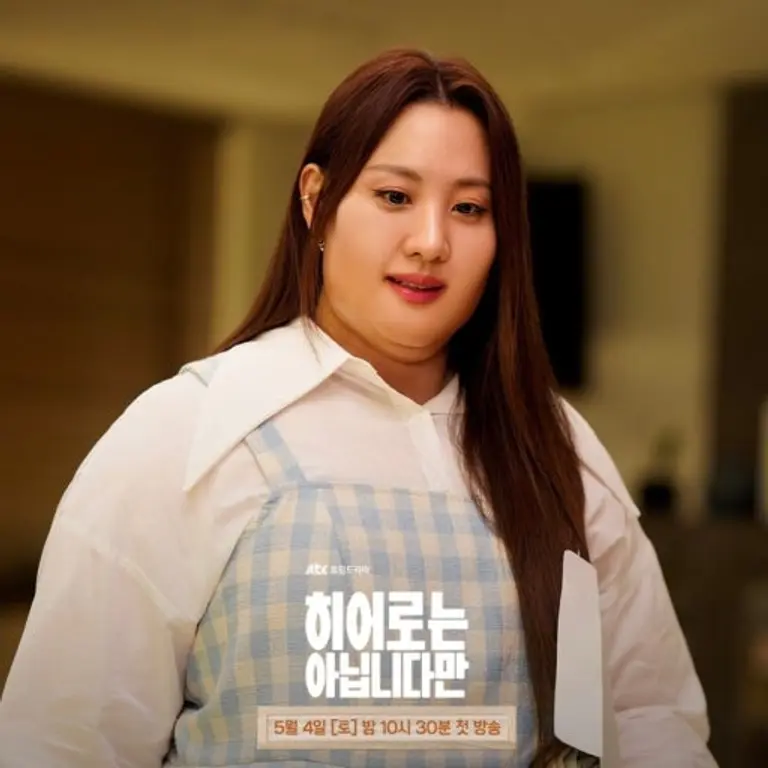
The charm of the supporting characters cannot be overlooked either. Man-heum poignantly portrays the loneliness and anxiety borne by someone who knows the family's future. Like Louise Banks from Arrival, knowing the future but unable to prevent it. Dong-hee intersects the fantasy setting of being 'a woman who can fly' with the reality of women obsessed with appearance and weight, leaving an unexpectedly heavy message. Ina, like kids these days, is tied to her smartphone and school life, but at the same time, she possesses the keen ability to discern adults' lies and sincerity. Each supporting character's sub-story functions like a small healing drama, enriching the overall narrative.
Providing Freshness Through a Tired Variation of Hero Stories
Those expecting a traditional superhero story may be somewhat surprised. The superpowers in 'Not a Hero, But' are not used to save cities or defeat villains. Instead, they are used to alleviate one person's depression, reweave a broken family, and view past wounds in a different light. Closer to A24 films than Marvel, more like Legion than Avengers. This story is more suited for those who enjoy watching the process of a person's heart changing rather than those who prioritize action and scale in superhero stories.
Additionally, for those who feel complicated emotions at the mere mention of family, this drama offers a strange comfort. Numerous relationships appear, from parents and children to grandparents and grandchildren, and even fake families with no blood ties, but none are perfect. Everyone has clumsy, selfish, and cowardly aspects. Yet, the effort not to give up on each other comes across as a much stronger comfort than exaggerated lines. Like the Hoover family in Little Miss Sunshine, all broken but moving forward together.
Finally, viewers who enjoy a slightly floating atmosphere between fantasy and reality will likely remember 'Not a Hero, But' for a long time. Watching this work, one might find themselves pondering, "Did I once have some ability that others didn't know about, which I lost as I grew up?" For those who hold such questions in their hearts, the journey of Gyu-joo, Da-hae, and the Bok family will likely not feel like someone else's story.
And after watching the final episode, one will likely murmur, "Not a hero, but that's okay." Even if one cannot save the world, understanding one person and protecting one family can be heroic enough. That is the warmest message this drama conveys.