
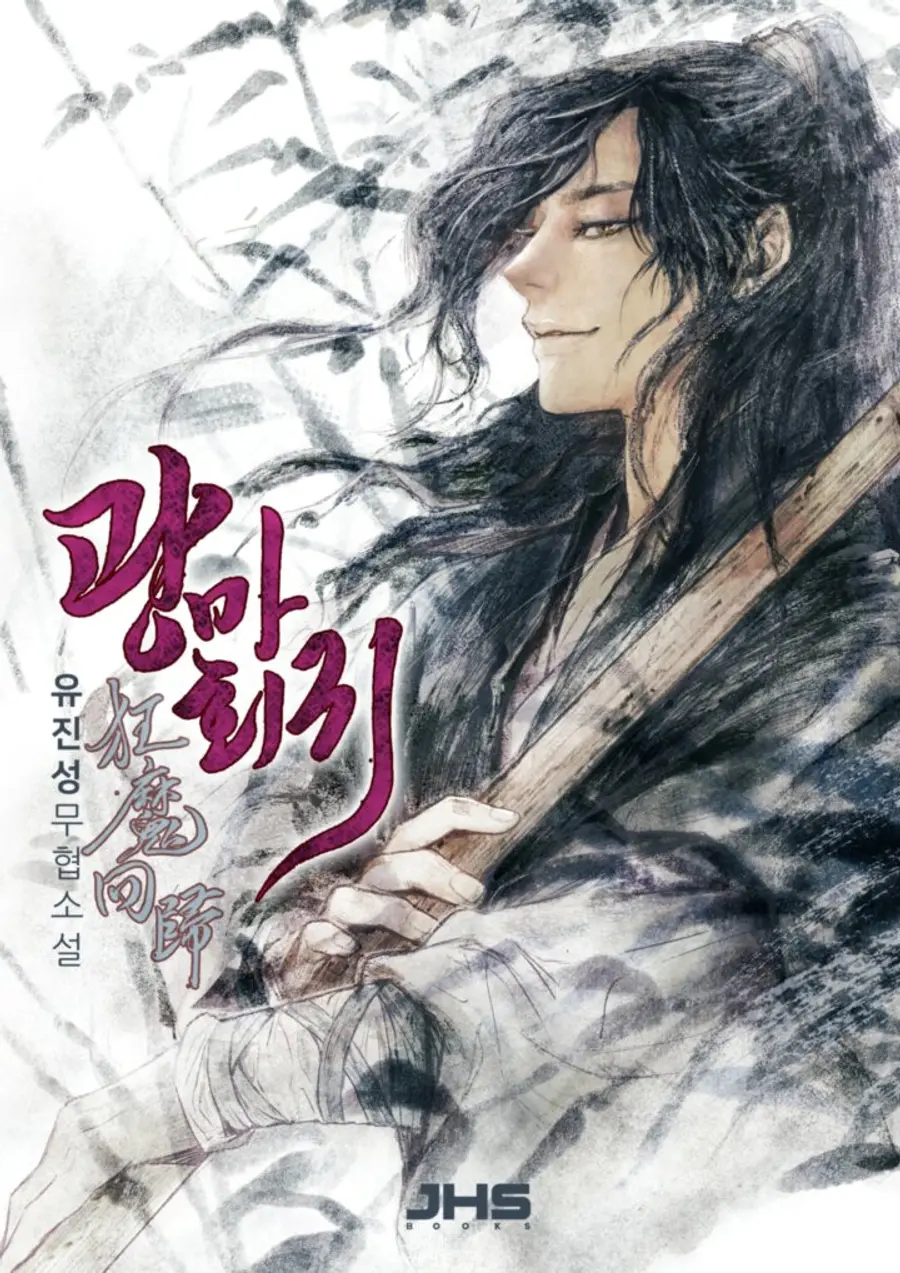
Under the night sky, in a cheap tavern where the smell of blood and alcohol mingles. At some point while serving customers, the bartender, Lee Jaha, recalls that he is the man who will one day be called the 'Mad Demon' and stain the world with blood. The moment past memories flood in, the time he has lived until now and the time he will walk in the future all become distorted. The Naver web novel by Yoo Jin-sung, 'The Return of the Mad Demon,' starts from this point. What can a madman do when he returns to the moment before he goes insane? And can he struggle not to go mad again, or will he make the world go mad this time? This question runs through the entire work.
In his first life, Lee Jaha was already a being feared by the world. Unmatched martial arts, unpredictable madness, and countless nameless souls extinguished at the tip of his sword. However, what he gained at the end of that mad life was closer to emptiness than victory. The more he shook the world, the more shattered he became within. When he opens his eyes, what he holds is not a blood-stained sword but a table of drinks and a bottle of alcohol. He has returned to the time when he was doing menial work in a small tavern before stepping into the martial world. The moment the monster, driven only by raw desire and hatred, regains a body closer to the ordinary, the work begins its second life with a strangely bittersweet humor.
Unusual 'Reformation'
However, the 'ordinary life' does not last long. The tavern itself is already deeply connected to the outskirts of the martial world. Most of the customers who come to drink are figures from the martial world. Disciples of famous sects, assassins operating in the shadows, and masters whose affiliations are unknown. While Lee Jaha does the dirty work in the body of the bartender, he reads the breath and momentum of his opponents with the senses he built in his first life. Scenes where he can gauge the level of martial arts just by observing their speech, gait, and drinking habits are repeated, allowing the reader to view the martial world through the eyes of someone who has 'gone mad once.'
The perspective of this world is also interesting. It is not an era where the familiar systems of the martial world, such as the Nine Great Sects, are already established, but rather a chaotic period before that. Each faction is still tangled without names or forms, and the boundaries between demonic and righteous paths are not as clear as they are now. Lee Jaha falls back into this transitional period. Holding the direction of the future that only someone who has lived a full life can know, he crosses paths with forces and figures that are just beginning to emerge. In this process, the reader observes how he lays the groundwork for what will later become 'standardized history.'
The main conflict begins with Lee Jaha's internal struggle. In his first life, he was swept away by madness and killed countless people, ultimately collapsing himself. After his return, he lives with those memories intact. Therefore, he could become even more brutal or, conversely, try to change. In reality, he remains sharp and cruel, but when he sees those who are misaligned, he cannot easily cut them down as he did before. In the past, he would have killed them without a second thought, but in this life, he chooses to keep them close and watch over them. Even knowing that they are individuals who could betray him at any moment, he becomes more deeply involved and builds relationships.
Enemies from the Previous Life Become 'Brothers' in This Life?
The dynamics of character relationships are also unique. Around Lee Jaha gather eccentric masters from the demonic sect, problematic geniuses from various sects, and reclusive masters who have closed their hearts to the world and only gaze at nature. Most of these individuals are entangled with Lee Jaha in a bad relationship from his first life or are those who passed by without a name. In this life, he encounters these figures again. However, instead of drawing his sword as before, he tries to lead them in a new direction. The 'Three Calamities,' who will one day leave a significant name in history, also appear intertwined with this narrative. When the three disasters that shake the world reveal themselves, the story transitions from a simple personal atonement to a massive turning point that changes the shape of the world. It is much more thrilling to read until the end to see where this turning point converges.
As the work progresses into the latter half, Lee Jaha's battles transcend simple confrontations. He confronts the choices he made in the past that led him to become the Mad Demon, as well as the atmosphere and structure of the era that shaped those choices. He does not dismiss his madness as merely a 'crazy personality.' There is an underlying realization that madness may be the result of the world pushing people into a corner. Therefore, in his second life, while he cuts down enemies, he listens to their stories until the end and sometimes spares them, drawing them to his side. The process of problematic individuals coming together to form a single faction, which will become the foundation for changing the history of future generations, is a rare long-term design within the genre of martial arts.
Unbelievable Writing That Makes Characters Convincing
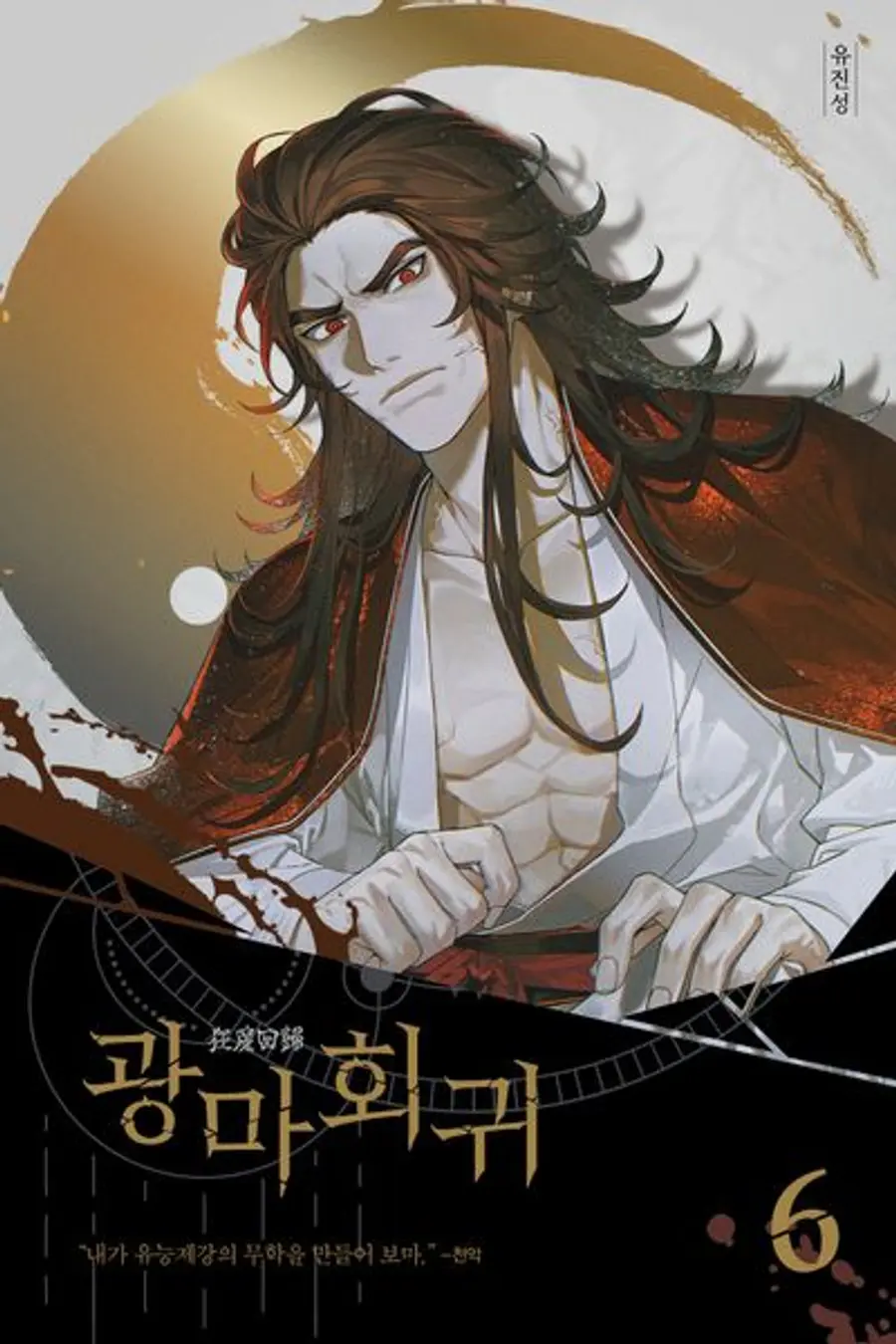
The greatest strength of 'The Return of the Mad Demon' is not simply that it adopts the framework of a reincarnation story. It takes the already overused device of reincarnation and combines it with the character of a 'madman,' leading to a completely different nuance. While most reincarnation protagonists are cool strategists who calculate efficiency and gain without hesitation, Lee Jaha is, in a word, the opposite. He knows more than anyone and has already reached the top of the world once, yet he is still easily swayed by emotions, bursts into anger, and acts unpredictably. Strangely, that impulsiveness becomes a massive driving force that moves the world.
This impulsiveness, combined with Yoo Jin-sung's unique writing style, creates the persuasiveness of 'madness.' Lee Jaha's monologues are often scattered and disorganized. He expresses anger in one sentence, discusses emptiness in the next, and then contemplates restaurant menus. The dialogue and inner monologues flow almost like a stream of consciousness, but the problem is that these disjointed thoughts naturally coalesce into a single narrative flow over time. When lines that seemed like strange jokes in the beginning gain new meaning in the latter half by connecting with the character's past, the reader realizes that the 'madman's' language is, in fact, built on meticulous design.
The worldview is also quite ambitious among Korean martial arts web novels. This work does not merely record events of a specific era but rather shows the origin stories of settings that will later be consumed as 'given premises' in other works. Before clichés like the Nine Great Sects and the righteous and demonic wars become solidified, it depicts the process where someone's choices and coincidences overlap to become a 'constant.' The point where the sects, martial arts, and rules of the world that later appear so naturally in other martial arts works feel like the result of the butterfly effect left by Lee Jaha and his associates is the charm of this work. The more familiar the reader is with martial arts clichés, the more they will laugh and empathize deeply.
The battle descriptions also have a slightly different texture. While many web martial arts novels display combat power by listing stages and numbers like 'lightness skill - internal energy - sword energy,' 'The Return of the Mad Demon' uses almost no quantified hierarchy. Who is stronger is revealed not by training years or levels but through the momentum, psychological warfare, and context of the fight that emerge in the scenes. By the time Lee Jaha draws his sword, countless words, expressions, and changes in atmosphere have already accumulated, so when the actual fight occurs, the superiority of the characters is clearly felt with just a few lines of description. As a result, the battles read more as an extension of emotion and narrative rather than technical explanations.
However, the work does not always maintain perfect balance. Given its considerable length, as it progresses into the latter half, the scale expands significantly, while the narratives of supporting characters that were carefully built in the early to mid-stages become somewhat faint. Characters with their own wounds and desires leave a strong impression in the beginning but may feel like they retreat into the background during the final major scenes. While the structure of the narrative converging around the protagonist and the 'Three Calamities' is convincing, there is certainly a lingering disappointment that some characters the reader has grown fond of do not receive sufficient closure.
Another barrier is the familiarity with genre conventions. This work is not particularly friendly to newcomers to martial arts. It starts with the premise that it shares a certain level of understanding of terms and sensibilities that have repeatedly appeared in Korean martial arts web novels, such as the Nine Great Sects, demonic paths, and righteous and demonic wars. Therefore, for readers encountering martial arts for the first time, it may take some time to understand why this world operates as it does and why people accept these values as given. Conversely, for readers who have read several web martial arts novels, simply witnessing the process of the symbols that existing works used as 'premises' being born one by one can provide a strong thrill.
Nevertheless, the reason 'The Return of the Mad Demon' continues to be discussed among many readers is ultimately due to the human charm of the characters. Not only the protagonist but also those who become his companions through bad relationships and even the fleeting characters all have their own stories and desires. Some gather around the Mad Demon to survive, some to forgive themselves, and others simply because it seems interesting. The process of these characters laughing, fighting, betraying, and reconciling creates a portrayal of human figures that is compelling enough even without the genre's embellishments. Thus, the real fun of this story lies not in the journey to become the 'greatest in the world' but in watching a once mad human stand among people again.
For those who have ever thought of a 'dream abandoned in flight' in life, this novel resonates deeply. Whether it is studying, exercising, or daily life, if there is a memory of letting go somewhere without going all the way, the scenes where the reincarnated Lee Jaha confronts the past will feel personal. If he were to return, would he ultimately make the same choices, or would he walk a slightly different path? As you turn the pages holding onto that question, you may find yourself attempting a small reconciliation with your past.
For those who easily tire of relationships and the world, the 'mad humor' of this work may provide a strange comfort. Setting aside the serious gaze with which one views the world, the experience of observing characters who somehow live on while holding their inner burdens offers a surprisingly great sense of liberation. You will find yourself laughing, yet feeling a pang from a single sentence, and experiencing moments of inexplicable warmth in the midst of bloody battles. For readers who are willing to traverse such emotional ups and downs, 'The Return of the Mad Demon' will undoubtedly remain an unforgettable reading experience.