
[magazine kave]=Choi Jae-hyuk, reporter
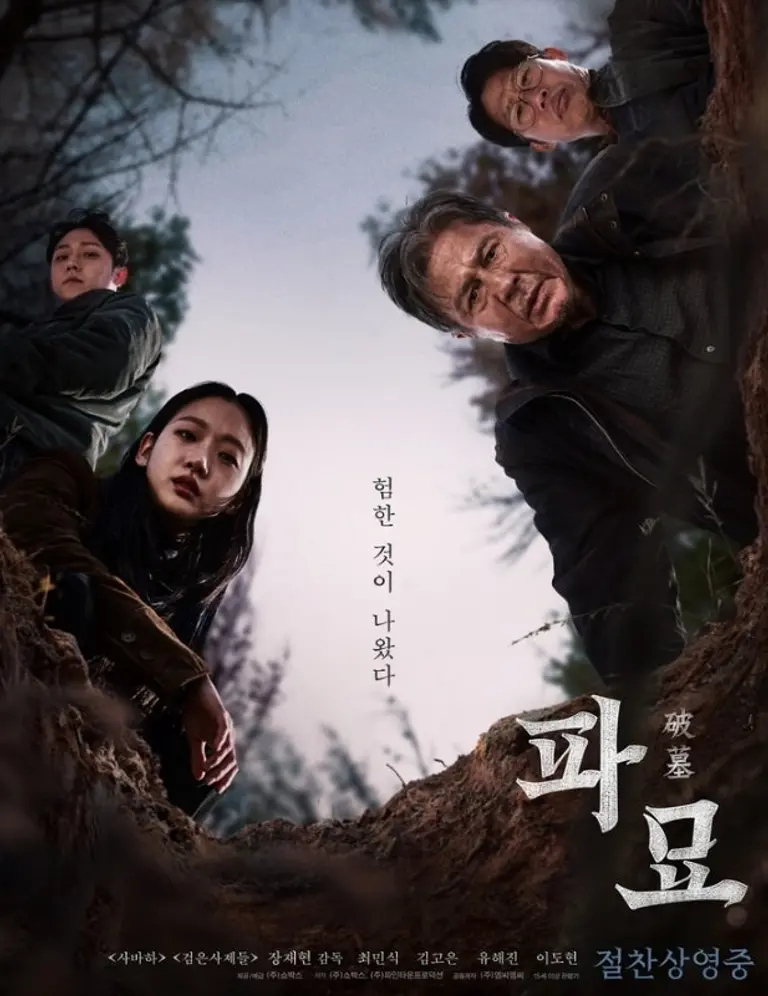
Deep in the mountains, a black van slowly approaches a fog-laden graveyard. It looks more like a ghost hunters' work vehicle than a hearse. Kim Sang-deok (Choi Min-sik), a geomancer who reads the energy of the land, Go Young-geun (Yoo Hae-jin), a cold and business-savvy undertaker, the young and bold shaman Lee Hwa-rim (Kim Go-eun), and Hwa-rim's disciple and sorcerer Yoon Bong-gil (Lee Do-hyun). The four have gathered here due to a lucrative request that flew in from Los Angeles, USA. There is a story that an inexplicable 'grave wind' is being passed down in a wealthy real estate family. A baby that cries day and night from birth, a father who has collapsed in the hospital for an unknown reason, and an eldest son who has already given up on life. The client Park Ji-yong (Kim Jae-cheol) claims that all this misfortune is due to the ancestral grave site and asks for it to be resolved at any cost.
From the first scene in the LA hospital, the film creates a strange atmosphere. Under the fluorescent lights, an incredibly quiet hospital room. Hwa-rim approaches the baby, whistles, and recites a sutra while looking into the child's eyes. The conclusion she reaches after that brief gaze is simple. "The ancestors are causing trouble because they are unhappy with the grave site." The moment this rough talk and occult sense burst forth simultaneously, the audience is already drawn into the unique world of director Jang Jae-hyun. It’s as if they are suddenly warped from a cool LA hospital to a shaman's house in the mountains.
The moment the ground is dug, history begins to breathe
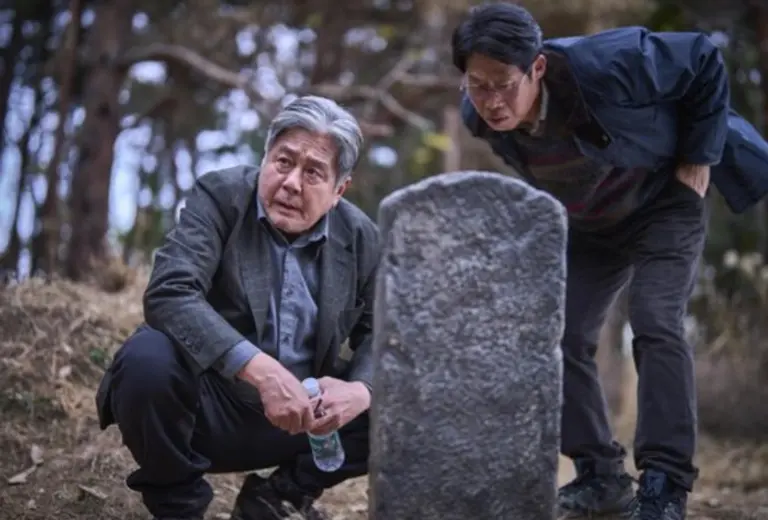
Hwa-rim and Bong-gil return to Korea and begin the full-scale 'grave robbery project' with Sang-deok and Young-geun. Sang-deok tastes the soil, feels the wind, and examines the grain of the trees to assess the grave's position. It’s as if a wine sommelier is reading the terroir. Trees that remain green even in the dead of winter, unusually damp ground, and a burial mound that is excessively deep. To Sang-deok's eyes, this grave does not appear to be a place created to 'save a person' from the start, but rather a place intended to trap something. Hwa-rim also senses an ominous feeling that "things will escalate the moment we touch this place," but with a hefty deposit already exchanged, no one can back down. It’s the fate of freelancers, one might say.
From the moment the shovel goes in and the burial mound collapses, the film's horror gains warmth. Strange water flowing from the coffin, hair that does not seem human, and a massive wooden coffin wrapped in barbed wire. Sang-deok and his party gradually realize that they are not simply dealing with an ancestral grave, but are touching something that someone has intentionally 'sealed away'. This first grave robbery scene is a sequence that makes the audience feel the dust, sweat, and breath on their skin. It’s an experience that is the exact opposite of ASMR, sending chills through sound alone.
However, the real problem comes next. Even after the grave is dug up, the misfortunes of the Park Ji-yong family do not cease, and bizarre incidents seem to erupt around the group. Strange deaths of family members, the mysterious death of a worker who helped, inexplicable omens. Sang-deok and Hwa-rim sense that "something entirely different" is moving and begin to trace a 'kind of iron stake' embedded in the middle of the Baekdudaegan mountain range, which corresponds to the waist of the Korean Peninsula. It’s like clearing a quest in a mystery game only to have a hidden boss appear.
The place they arrive at is a small temple, Bokuksa, and a nearby mountain village. On the surface, it appears to be a peaceful countryside, but as hidden secrets of a coffin, old maps, and traces of the independence movement are revealed one by one, the story expands further across the past and present, national history and personal history. The being that has been sleeping in the coffin is no longer a simple vengeful spirit. It is a 'Japanese-style monster', close to an Oni, intertwined with the violence of war and colonization, iron stake faith, and bloody slaughter. At night, this being breaks its seal and bursts forth, ravaging the barn and village, standing at the intersection of monster movies and folk horror. It’s a bizarre genre hybrid, as if Godzilla suddenly appeared in the mountains of Jeolla-do.
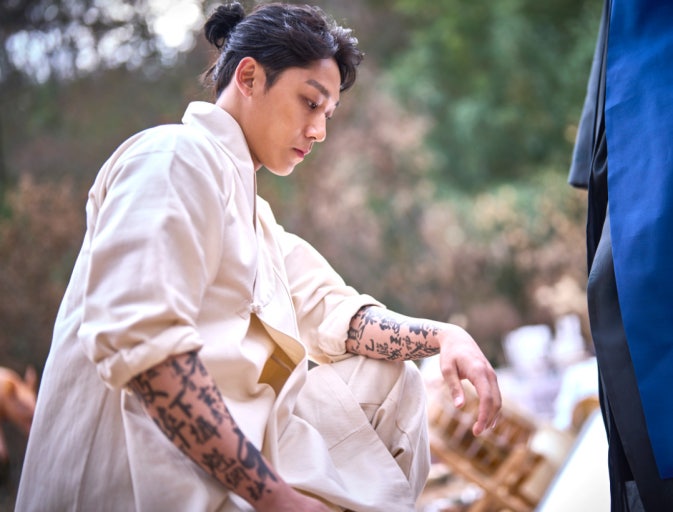
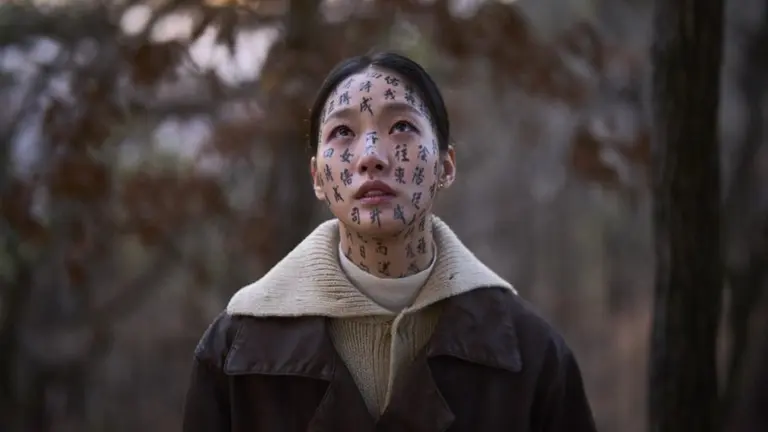
In this process, the combination of Sang-deok, Young-geun, Hwa-rim, and Bong-gil establishes itself as a kind of 'Korean Ghostbusters'. Instead of proton beams, they use rituals and sutras, instead of traps, they employ geomancy and funeral rites, and instead of a firehouse headquarters, they hold meetings in a van. Prayer and sorcery mix together, leading to the final ritual against the Oni. The sutra tattoos on Hwa-rim and Bong-gil's bodies, the burning flesh of the Oni in front of the stupa, and the massive fireball flying through the sky like a will-o'-the-wisp. The film reaches its peak of horror and spectacle here. However, what the four lose and gain as a result is best discovered directly in the theatre. Some scenes in the conclusion have the power to redefine the meaning of the entire work, so if explained in advance, it would be a spoiler alert level of disappointment.
The completion of the occult trilogy, the miracle of ‘10 million’
Director Jang Jae-hyun seems to have reached a destination with the completion of his three-part occult series. If 'The Priests' Koreanized the Western horror grammar with Catholic exorcism, and 'Svaha' posed philosophical questions based on new religions and Buddhist mythology, 'The Grave Robbery' thoroughly showcases Korean shamanism, geomancy, and grave culture. Thanks to this, even though the genre is occult, the distance felt by the audience is much closer. It feels as if "words you might have heard at a relative's funeral" and "the story of pro-Japanese descendants seen casually in the news" have entered the film directly. Like an old photo album found in a grandmother's wardrobe, it feels both unfamiliar and somehow familiar.
Genre-wise, this film is closer to an occult adventure than a horror film. While genuinely chilling scenes appear several times, the overall tone is more about tension and curiosity, occasionally punctuated by laughter. Young-geun awkwardly sitting at the ritual as an elder (like a vegetarian dragged into a meat restaurant), Sang-deok and Young-geun bickering over the consulting fee (feeling like exorcists calculating on Excel rather than accountants), and Hwa-rim and Bong-gil showing a strange chemistry that is half 'salesperson' and half 'priest'. This everyday humour is necessary for the subsequent horror to stand out more clearly. The switching between comedy and horror is as precise as a dance game's step change.
The ensemble of the four actors is the film's greatest strength. Choi Min-sik, playing Kim Sang-deok, coolly mixes affection, stubbornness, and a sense of guilt from the times into the character of a seasoned geomancer. When he mumbles, "I can tell what has happened to this land" while tasting a handful of soil, it feels like more than just a profession. It’s as chilling as a wine expert saying, "This vineyard was bombed during World War II" after taking a sip. Yoo Hae-jin's Go Young-geun is an undertaker with a 200% sense of reality. He is money-driven, cautious in the face of danger, yet throws himself in at the last moment while pretending to be indifferent. He takes on the role of conveying the heavy themes of shamanism and funerals to the audience without burden. He feels less like a comic relief in a horror film and more like the real owner of a funeral home in our neighbourhood.
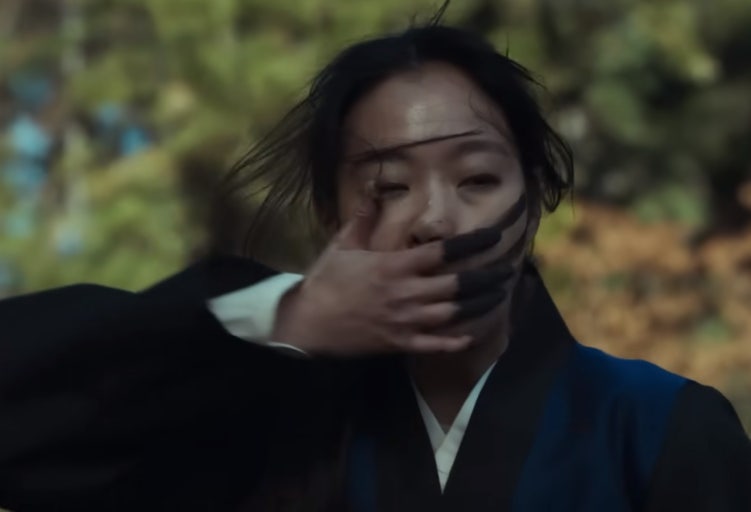
Kim Go-eun's Lee Hwa-rim is the clearest face of this film. The setting of a young shaman dressed in flashy padding and a hoodie is already fresh. A shaman performing rituals in North Face instead of traditional hanbok. She speaks frankly, mixing in swearing at the ritual, and is bold enough to walk out if she feels uncomfortable over the consulting fee. However, after facing the Oni, the scene where she collapses under the guilt of not being able to protect Bong-gil reveals another side of her. The complex expression of half-laughter, tears, fear, and responsibility prevents this character from being consumed as a simple 'girl crush shaman'. Lee Do-hyun as Yoon Bong-gil delicately captures the face of a disciple who possesses innocence, shallow fear, and loyalty to his master. In scenes where he throws himself or spews Japanese while possessed, he always appears as a humanly weak character. Like Frodo carrying the One Ring in The Lord of the Rings, the youngest shaman absorbs all the fear with his body. Thanks to that weakness, the sacrifices and choices in the climax resonate more profoundly.
1,191 million viewers for the occult, a revolution in the genre
It is noteworthy that 'The Grave Robbery' achieved record-breaking success at the box office. After its release in February 2024, it drew audiences through word of mouth, surpassing 10 million viewers in just 32 days, becoming the first 10 million film of the year. It is the 32nd overall and the 23rd Korean film to reach 10 million, and the first record in the traditional sense of the occult/horror genre. Ultimately, it recorded approximately 11.91 million viewers and a revenue of around 110 billion won, claiming the top spot at the box office for the first half of the year. It has shown new possibilities for Korean commercial cinema by breaking genre boundaries and attracting middle-aged audiences. It’s like a miracle where an indie band suddenly tops the Melon chart.
Looking at the details of the direction, one can understand why director Jang Jae-hyun has earned the nickname 'master of the occult'. He hides the numbers of the license plate with Liberation Day (0815) and March 1st (0301), and playful codes are embedded throughout, taking the names of key characters from actual independence activists. This is not just a simple Easter egg, but a work that engraves the sentiment of 'cleansing pro-Japanese remnants' visually and linguistically throughout the film. It’s a film where hidden picture finding is possible, like Ready Player One. The symbolism of pulling out the iron stakes driven by Japan and reviving the energy of our land expands the fight against the Oni from mere monster extermination to historical and emotional revenge. The cinematic alchemy where exorcism becomes independence movement.
More interesting because it is not perfect
Of course, this bold attempt does not resonate perfectly with everyone. As the film progresses into the second half, the simultaneous outpouring of Japanese monsters, symbols of the independence movement, Baekdudaegan, and numerical codes can feel excessive. In particular, the final confrontation with the Oni, while spectacular, seems to differ from the subtle horror and everyday realism built up in the first half. It feels like suddenly transitioning from a local ghost story to the final battle of Avengers: Endgame. The ambition to summarize the horror's conclusion with historical significance can feel somewhat explanatory and heavy.
Another point of contention is the 'use of shamanism'. This film clearly portrays shamanism as a technique for dealing with spirits and a positive aspect of Korea's unique spiritual culture. At the same time, it does not hide the commercial and merchant-like aspects of shamans. Thanks to that balance, shamanism does not appear as a mystical fantasy but as a profession in this land. It’s like Doctor Strange being a wizard yet also a doctor who collects bills. However, for audiences who feel uncomfortable with shamanism itself, the repeated scenes of rituals and possession in this film's worldview may feel somewhat burdensome.
For those who want to confirm the present of Korean genre films, 'The Grave Robbery' is a kind of essential work. It shows how the occult and mystery, historical codes, and commercialism can coexist within a single piece, revealing both its limits and possibilities. For audiences who already enjoyed 'The Priests' and 'Svaha', it will be interesting to see how director Jang Jae-hyun tried to take the strengths of the previous works and complement their weaknesses in this third piece. It’s like enjoying the retrieval of plot threads from Phase 1 while watching Marvel Phase 3.
Secondly, it is suitable for those who want to enter the horror genre but find traditional horror still daunting. While there are a few lingering scenes, the film does not solely focus on horror. Following the chemistry of the four characters, the world of geomancy and funerals, and historical symbolism, one finds that the running time ends before they know it. It particularly suits audiences who say, "I don’t want something too scary, but I also don’t want a film that’s just light." It’s like a ride that is perfect for someone who wants to go on a roller coaster but is afraid of a free fall.
Finally, I would recommend 'The Grave Robbery' to those who want to re-examine the relationship between our land, history, ancestors, and descendants within the framework of genre films. After watching this film, when passing by a graveyard, walking a mountain path, or visiting an old temple, the scenery may look a little different. It makes one ponder what is buried beneath the land we stand on and what memories are hidden. That question is perhaps the true aftertaste that 'The Grave Robbery' leaves, longer than any ghost. Like an archaeologist excavating a site, we uncover the layers of forgotten history through this film. And in that process, what we may encounter is not a ghost, but perhaps our own reflection.