
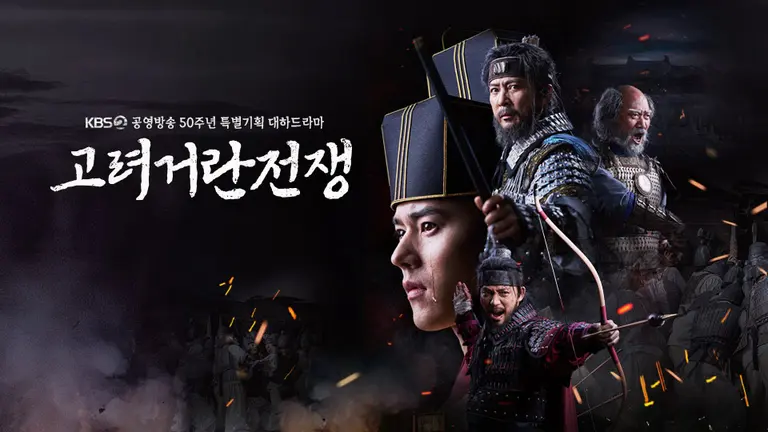
When one opens their eyes, the war has already begun. The drama 'The Goryeo-Khitan War' does not depict the process of the king and his subjects preparing for war, but rather opens by directly confronting the faces of characters who are, in fact, "already thrown into the midst of a ruined game." The deposed King Mokjong, who was placed on the throne like a puppet amidst the tyranny of Queen Cheonchu and Kim Chi-yang, and Wang Sun, who unexpectedly becomes the emperor after him, later known as King Hyeonjong. In the eyes of the young emperor, who is not yet twenty, palace politics appears as a complicated board game, or rather, a chessboard where he does not know the rules, with no one to protect him and no trustworthy foundation. Just then, news drops like a bomb that a Khitan army of 400,000 is invading.
The subjects are all terrified and seal their lips. Suggestions pour in like a waterfall to avoid war, to maintain face through a truce, and to abandon Gaegyeong and retreat south. The moment the words "To save our lives, we must abandon the people" cover the court meeting, only one person raises their voice in the opposite direction. The old scholar, Gang Gam-chan, who has only wandered the borders. He argues that "a country abandoned by its king will not be protected by anyone," insisting that they must defend Gaegyeong and fight against the Khitan. Like a captain on a sinking ship, the only one shouting, "Do not abandon the ship." Despite receiving the scorn of the majority, he stakes everything on thorough logic and conviction. At this moment, the drama precisely defines the relationship between the king and the prime minister that will follow. The terrified young emperor and the old minister, who remains silent beside him.
Even while Goryeo struggles to reach a truce with the Khitan after the first invasion and seeks peace, the internal situation is not stable. The king changes due to the coup led by Gang Jo, and a subtle tension continues between Queen Cheonchu, Kim Chi-yang's faction, the military power held by Gang Jo, and the new emperor Hyeonjong. Rather than the 'great hero's epic' often seen in historical dramas, the early part of this drama can be summed up as a slow yet persistent accumulation of the "chaotic atmosphere of a country on the brink of regime collapse." The process of deposing Mokjong, the rebellion of Gang Jo, and the downfall of Queen Cheonchu's faction pass quickly, but what remains is only the shattered trust and fear. On top of that, war descends.
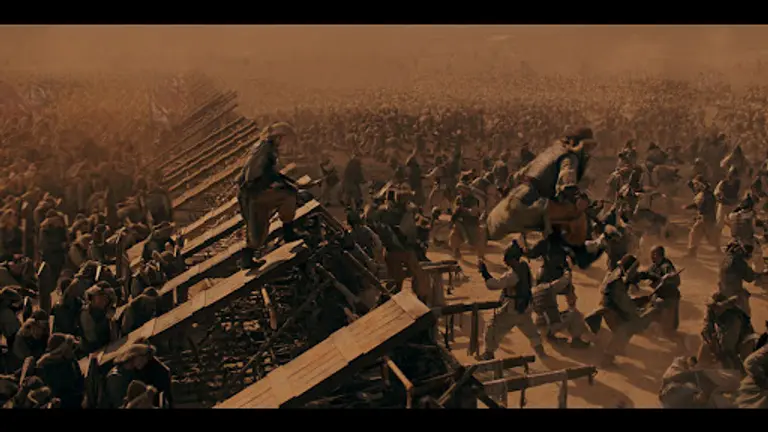
As the second invasion of the Yeoyeo War begins in earnest, the tone of the screen changes dramatically. The wave of Khitan cavalry rushing towards Gaegyeong raises dust as they charge, with burning city walls and citizens hastily fleeing. The drama repeatedly and tenaciously reminds us that war is not a glamorous stage for a few heroes, but a disaster that destroys the lives of countless nameless people. At the crossroads of whether to defend or abandon Gaegyeong, Hyeonjong ultimately chooses to retreat, leaving the people and the palace behind. This choice becomes a wound and a homework that lingers in his heart, a curse that follows him. Gang Gam-chan does not leave the side of such an emperor. While some view following a fleeing king as cowardly, he believes that 'war saves not the king, but the country,' and coldly analyzes the situation.
As the story reaches the third invasion phase, it converges towards the Battle of Gyuju. In this process, the drama summons the generals from various regions of Goryeo one by one. Generals who have fiercely confronted the Khitan at the borders, local aristocrats, scholars caught between the conciliatory and hardline factions, and those who seek to benefit even amidst the chaos of war. Gang Gam-chan gathers troops by mobilizing strategy, diplomacy, persuasion, and threats amidst this complex web of interests. He is portrayed not merely as a 'renowned general who follows passively,' but as a strategist fighting on the front lines of politics.
War is not merely a glorious history
What makes this drama interesting is that it invests tremendous time in 'the scenes of preparing for war' as much as in the battle scenes. Hyeonjong issuing troop mobilization orders, scenes of comforting citizens exhausted by famine and evacuation, and officials running day and night to secure food, horses, and arrows. The Battle of Gyuju is presented as the result of all these processes. While we already know how the war ends through history books, the drama focuses on the psychology and choices of the characters heading towards that conclusion. Thus, the pacing leading up to the Battle of Gyuju is long and heavy. Like a marathon runner dragging increasingly heavy legs from 5 km before the finish line. It is better to follow the drama to see who survives and who falls where. This work does not allow for complacency with the thought of "it's history I already know," as it builds tension tightly in each scene.
Now, let’s dissect the artistic quality of this work. 'The Goryeo-Khitan War' revives the scale of a proper war historical drama, fitting for the 50th anniversary special project of KBS public broadcasting. With a total of 32 episodes, it focuses intensively on the second and third Yeoyeo Wars fought between Goryeo and the Khitan over 26 years. Although this event has been brushed past in various historical dramas multiple times, this drama elevates the war itself to the title, persistently digging into "how the event of war transforms people and nations."
The strength of the direction comes from balancing battles, politics, and daily life. In large-scale battle scenes like the Battle of Gyuju, CGI, sets, and extras are fully mobilized to convincingly show the scale of troops, the variables of terrain, and the effectiveness of strategies. Scenes of galloping horses, formations fighting along hills and rivers, and tactics that tire the enemy by dragging out time and then ambushing them. The battle is made clear as not merely a contest of firepower but a battle of wits, akin to a long game of Go rather than chess. At the same time, outside the battlefield, it shows "people for whom war has become everyday life" as it traverses the palace, court, evacuation sites, rural areas, government offices, and private homes. Thanks to this rhythm, despite the many battle scenes, the fatigue is relatively less. Like a heavy metal concert occasionally interspersed with ballads.
The script tracks the psychology of the characters quite delicately. Hyeonjong is initially a young ruler swayed by fear and guilt. However, through retreat and evacuation, and the repeated experience of war, he physically learns "what it means to be a king." In the process, he grows into a character capable of making increasingly realistic and cold choices. Just as the Stark children in 'Game of Thrones' transform through their winter experiences, Hyeonjong is also tempered as a ruler through the harsh winter of war. Gang Gam-chan stands beside him as a steadfast "adult who speaks what needs to be said." The relationship between the two expands beyond a simple loyalty and trust relationship to that of a mentor and disciple, comrades who help each other grow. In particular, when the king tries to make a decision that he must announce himself rather than passing it off to his subjects, Gang Gam-chan quietly steps aside to ensure that the decision remains entirely the king's responsibility. Such details create the 'dignity' felt in this drama.
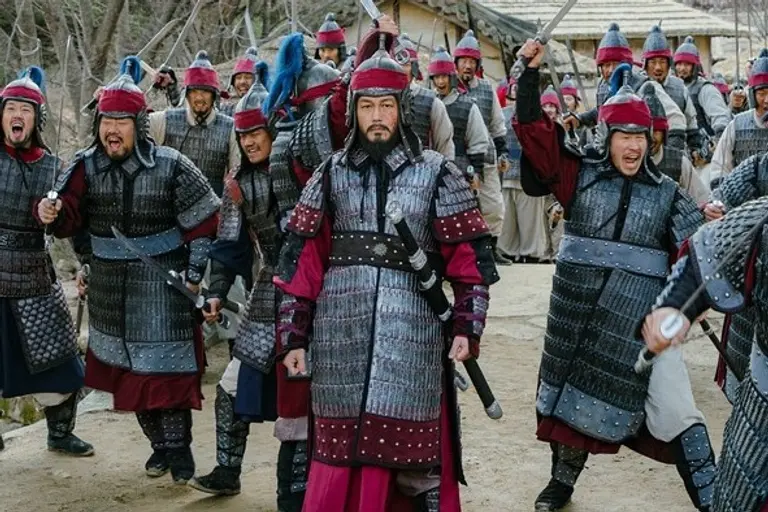
The supporting characters are also strong. Figures like Gang Jo, Queen Cheonchu, and Kim Chi-yang are not consumed as one-dimensional villains. Their respective desires for power, fears, and stubbornness to maintain the order they believe in are revealed. The characters on the Khitan side are similar. They are portrayed not merely as "invaders" but as subjects with pride and self-esteem, believing themselves to be the strongest nation. Thanks to such depictions, war appears not as a binary struggle of good and evil but as a clash of interests and perspectives.
Want to taste K-Authentic Historical Drama?
Another reason viewers have highly rated this drama is the long-awaited return of the 'taste of authentic historical drama.' The narrative, which places more weight on heavy national history and the moral dilemmas of characters rather than on glamorous romances or fantasy settings, has become an endangered species on terrestrial television recently. 'The Goryeo-Khitan War' quenches this thirst by bringing issues of war, politics, leadership, and responsibility to the forefront. As a result, it swept numerous awards at the 2023 KBS Acting Awards, restoring its reputation.
At the same time, this work maintains an attitude of not getting intoxicated by the 'narrative of victory.' While the historical outcome of Goryeo overcoming the Khitan is clear, it repeatedly reflects the corpses, ruins, and suffering of the people that piled up behind that victory. Even Gang Gam-chan, at the moment of victory, is closer to looking at the wounds left by war rather than celebrating. Like 'Saving Private Ryan' or '1917', it focuses more on the costs of war than on the victory of war. This sense of balance stimulates a calm and mature patriotism, different from 'nationalistic fervor.'
However, it is not without its drawbacks. Given the vast era and characters it deals with, the first few episodes may feel overly complicated in terms of character and power dynamics. For viewers unfamiliar with historical dramas, it may take quite some time to sort out "who is on whose side." It can be reminiscent of the confusion experienced when first watching season 1 of 'Game of Thrones' while trying to distinguish between the Starks, Lannisters, and Targaryens. Additionally, due to the limited budget for implementing large-scale battle scenes, some episodes reveal the limitations of CGI and compositing. However, for viewers who focus on character relationships and narratives, these technical limitations quickly fade from view.
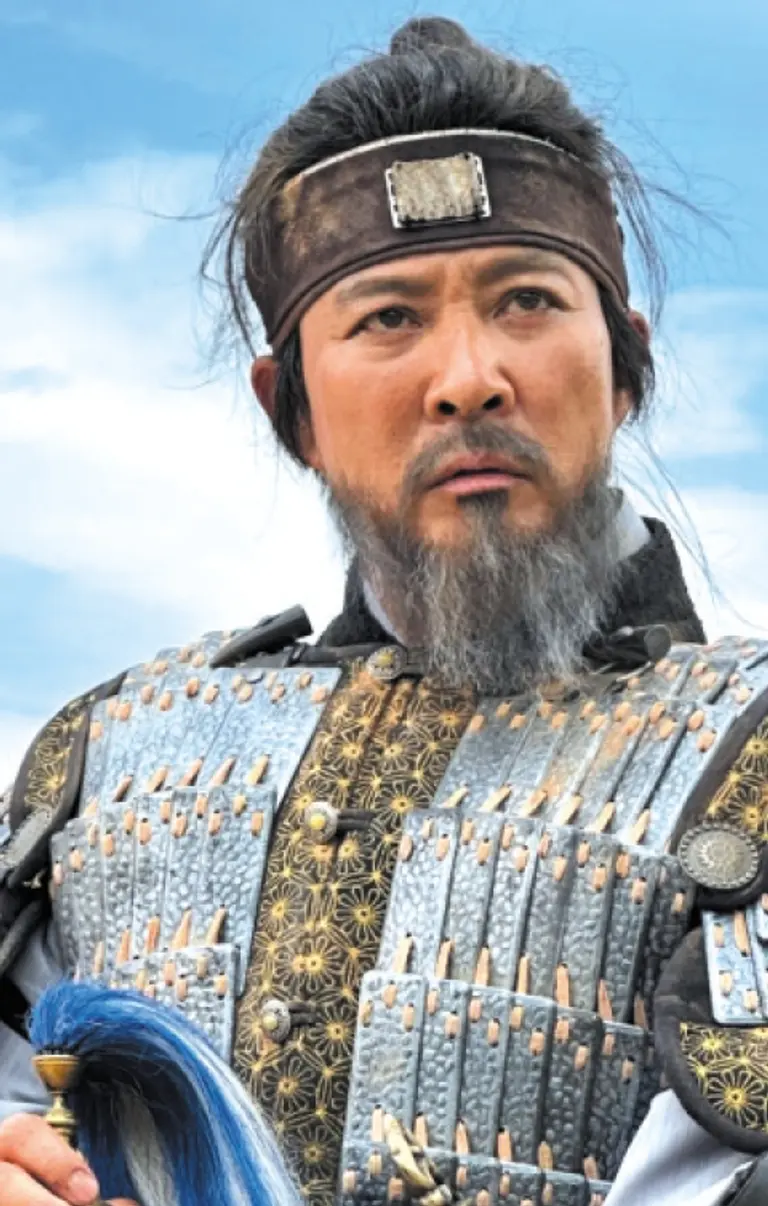
Finally, let’s consider who I would recommend this work to. First, for those who enjoyed authentic historical dramas like 'Tears of the Dragon' or 'Wang Geon of the Taeguk', 'The Goryeo-Khitan War' will feel like a welcome return. It is a story of kings and prime ministers, subjects and citizens, each struggling and fighting in their respective places, allowing one to experience once again the costly era of victories and defeats.
I would also recommend this drama to those interested in issues of leadership and responsibility. The growth of Hyeonjong, the convictions of Gang Gam-chan, and the downfall of Gang Jo and Queen Cheonchu all culminate in the question of "what choices does a person in power make?" Although set against the backdrop of war, it ultimately reads as a story about the attitudes of those who lead organizations and communities. There are many moments that evoke reflections on our current political and social realities, much like how Shakespeare's historical plays metaphorically represented the politics of the Elizabethan era.
This is also a good choice for those who found the history they learned in school too dry. The Yeoyeo War, which passed by in a single line in textbooks, comes to life as a story with concrete faces, voices, sweat, and tears. After watching 'The Goryeo-Khitan War', one might feel a slight urge to reopen the pages of Goryeo history. And if another historical drama covering a different era comes out someday, there will be a benchmark set with the thought, "Please make it like this work." In that sense, this drama is not just a war drama but a work that presents one of the answers to where Korean historical dramas should go in the future. Just as 'Band of Brothers' set a new standard for war dramas, 'The Goryeo-Khitan War' engraves a new benchmark for Korean historical dramas.