[magazine kave]=Choi Jae-hyuk Reporter
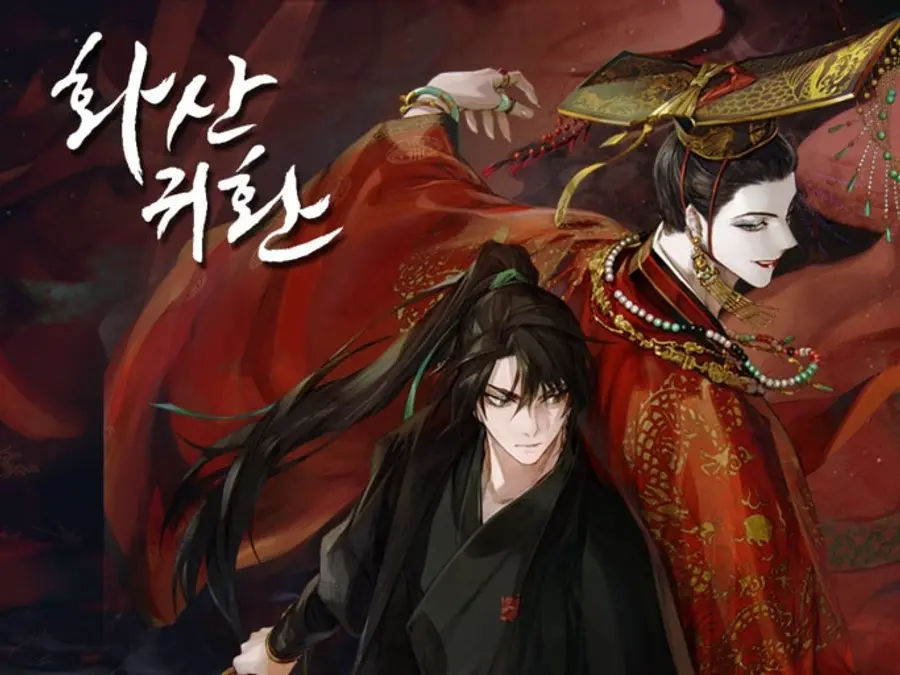
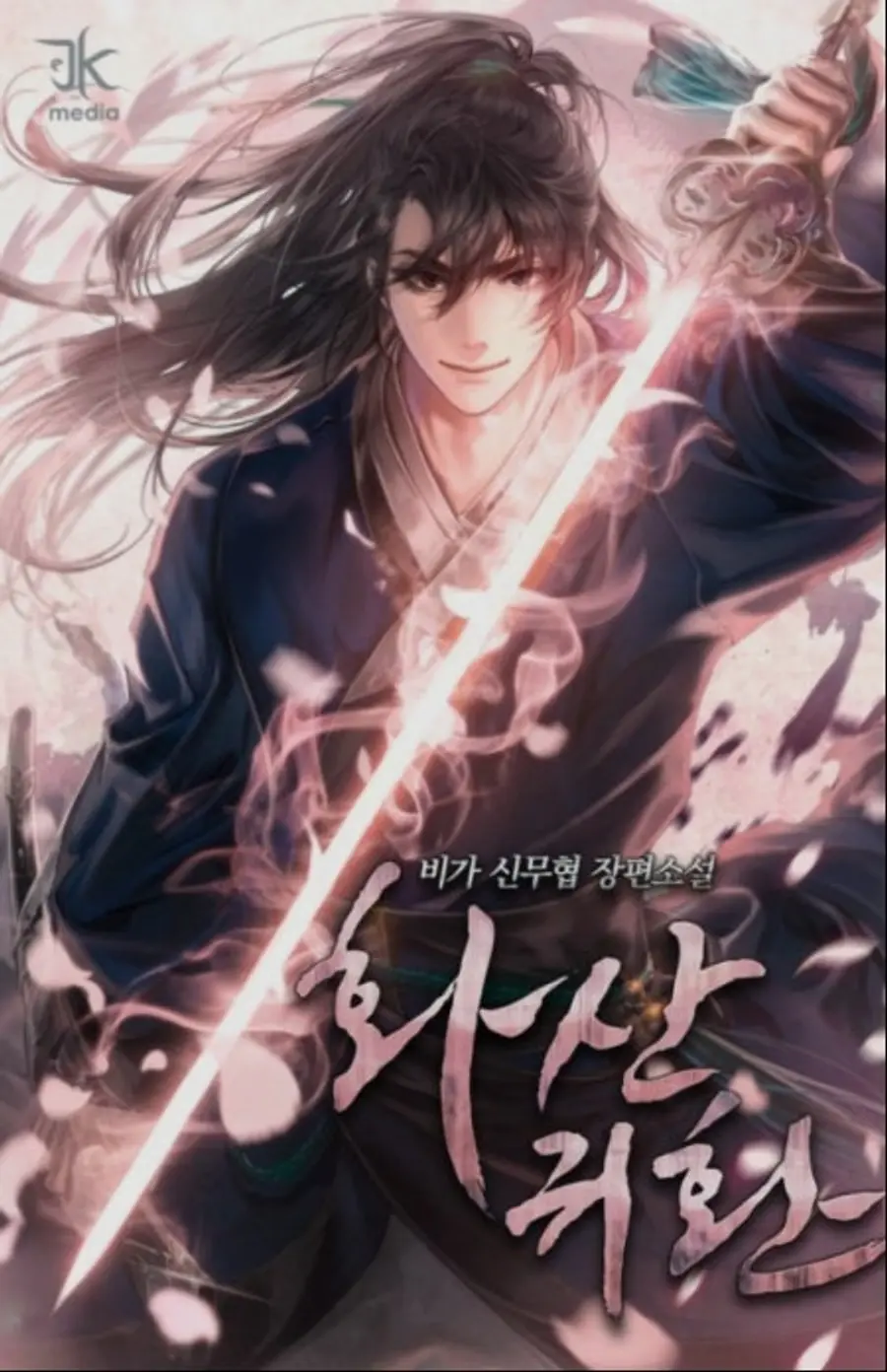
On a dawn at a mountain temple, there is a man who ended his own life while spitting out black blood. He is Cheongmyeong, the 13th disciple of the Great Volcano Sect and the world’s top swordsman. He believes he has ended his life after beheading the legendary demon, Cheonma, who plunged the world into chaos, and dying at the peak of the Ten Thousand Mountains. However, when he opens his eyes, Cheongmyeong finds himself back in the body of a nameless village child, having crossed a hundred years of time. Naver Web Novel’s ‘Return of the Volcano’ begins at this point, restarting the story behind the hero’s tale that was tied up with death. The Volcano Sect, which he once belonged to, is now a forgotten name in the world, having become a fallen sect that was expelled even from the Nine Great Sects, and Cheongmyeong stands before the fate of having to revive his ruined hometown while holding onto the memories of once being the world’s top swordsman. It’s a situation akin to a chaebol chairman returning in a time machine only to find his family in ruins.
Cheongmyeong’s reality after his return is dire. The body of a young boy named Cheondong is frail, the family is poor, and the townspeople regard the Volcano Sect as merely an 'outdated sect with only a name left.' Even among the members of the same sect, the Volcano is no longer a symbol of hope. As time has passed, the centre of the martial world has shifted to other sects, and the Volcano has become a relic of the past, clinging only to its former glory. Cheongmyeong knows the heyday of the Volcano better than anyone. As someone who helped create that heyday, the pitiful sight of the Volcano unfolding before his eyes feels like a kind of desecration and insult. The somewhat reckless declaration that 'if it’s fallen, it must be revived' thus emerges. It is not merely a matter of loyalty or nostalgia. It is a matter of the path of the sword he has upheld, a question of the minimum dignity required for a person to stand as a person. It’s like the shock of hearing that a prestigious university has been downgraded to a vocational school.
The problem lies in the gap between the image of the Volcano that Cheongmyeong remembers and the reality of the Volcano. In his previous life, he was someone who had already reached the top, a swordsman recognised by the world. But now, he is just a young child barely able to handle basic training. The elderly sect elders lack a sense of reality, and the young disciples are devoid of ambition and passion. In a mountain dojo where making a living is tough, talk of being the 'number one sect in the world' sounds like an empty joke. Cheongmyeong knows this crazy setup better than anyone. So at first, he curses this reality itself and writes evil against the world. His grumbling that 'if it’s going to fail, it should fail properly' contains a strange aspect that makes one laugh while simultaneously denying reality. It’s a kind of lament that goes, 'If it’s going to fail, it should fail cleanly; what’s the point of holding on ambiguously like this?'
The Greatest Swordsman Rebuilding a Prestigious Sect
The story then branches out into two main arcs. One is the narrative of rebuilding the 'completely fallen Volcano,' and the other is Cheongmyeong’s growth story as he reinterprets the martial world of a new era after fighting against Cheonma a hundred years ago. Cheongmyeong first addresses the internal issues. He demands an unyielding level of basic skills from his disciples, even instilling the Volcano’s sword techniques into kids who have never properly held a sword. On the surface, he appears to be a tyrant and a demanding senior, but beneath that lies a cold judgment that 'if you don’t do this much, you won’t survive in the world.' It’s a style akin to Gordon Ramsay, the 'Hell’s Kitchen' chef, who saves a failing restaurant; he may hurl insults, but he delivers results.
At the same time, he broadens his gaze to the outside of the Volcano, gradually understanding the power structures of the Nine Great Sects and the movements of newly emerging strong figures. As past memories and current information intertwine, Cheongmyeong finds himself once again in a position to read the world’s game. The landscape is different from a hundred years ago. Most of the former heroes and villains have become names in history books, and a new generation has taken control of the martial world. However, the essence of strength and the structure of desire have not changed significantly. The powerful seek greater power, while the powerless curl up to avoid being trampled. It’s a thesis that shows that while the times may change, human desires remain the same, akin to the saying 'history repeats itself' in the martial world.
Cheongmyeong understands this order better than anyone. Therefore, sometimes he makes bold claims that sound crazy, yet in actual actions, he allows not a single miscalculation. He knows what the Volcano must give up and what it must sacrifice to regain its name, how far it can go in colluding with villains, and at what point it must draw its sword, all from experience. In this process, various characters gather around Cheongmyeong. The young disciples of the Volcano, outsiders expelled from other sects, nameless merchants, and ordinary citizens. Initially, they view him as a somewhat crazy 'strange senior' without knowing his past as the world’s top swordsman. It’s like a Silicon Valley legend disguised as a startup intern.
However, as time passes, they come to realise that he is someone who has fiercely survived, and they also understand that his mad drive can change their lives. Readers naturally feel that the process of Cheongmyeong leading the Volcano is a task of rewriting the lives of many individuals through the rebuilding of a sect. As the story progresses into the latter half, it expands into a broader stage. From the moment the Volcano re-enters the competition for the position of the Nine Great Sects, Cheongmyeong’s struggle transcends merely restoring the honour of the old sect. It grows into a task of reshaping the entire martial world intertwined with politics, economics, power, and justification. The scenes revealing how the traces of Cheonma, whom he beheaded in the past, and the resulting power vacuum gave rise to new evils and fractures give the impression that this work goes beyond a simple return to martial arts. It would be best to experience how the ending unfolds and how the name of the Volcano stands at the pinnacle of the world again by reading through to the conclusion.
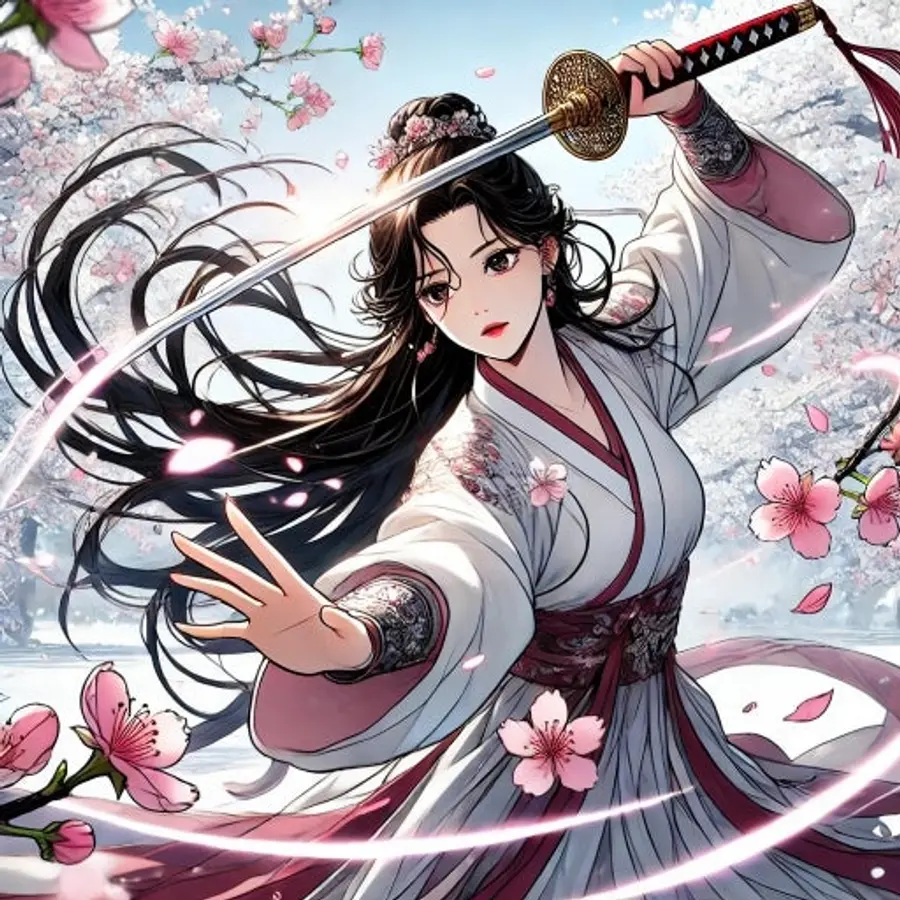
The Irony of an Old Man in a Young Body
Now, looking at the aesthetics and completeness of the work, the first advantage of 'Return of the Volcano' is its characters. Among numerous return protagonists, Cheongmyeong is particularly memorable. He is a cold strategist yet seriously narrow-minded, quick to anger over minor insults, and the type who complicates situations further once he gets riled up. However, the coexistence of that madness and timidity convincingly portrays the complex psychology of a person who has once reached the end of the world and then fallen back to the bottom. It’s a strange sense of dissonance and catharsis, akin to watching a retired legendary pro-gamer start anew as a rookie.
The author depicts Cheongmyeong not as an omniscient protagonist who knows the answers, but as someone who still makes mistakes and regrets. The only difference is the scale of those mistakes, which are at the level of sects and the world. The second notable point is the sense of humour. 'Return of the Volcano' maintains the grandeur of the martial arts genre while inserting jokes and comedy at unexpected moments. Cheongmyeong’s sharp criticisms of reality, his harsh words towards his disciples, and his biting evaluations of the sect and the Nine Great Sects often become points of laughter for readers. Sudden physical comedy in serious training scenes and everyday grumbling right after bloody fights maintain the unique 'fun of easily readable chapters' that web novels offer. It’s like how 'Kingsman' intersperses British humour within its gentleman spy action, achieving an excellent balance of tension and relaxation.
Without this humour, the narrative of rebuilding the Volcano, which spans hundreds of chapters, would have been much heavier. The world-building is also quite solid. The geography of the martial world, the history of each sect, the hierarchy and authority of the Nine Great Sects, and the economic structure driving the martial world go beyond mere background explanations and intertwine with the narrative. For example, the question of why the Volcano fell does not end with a simple answer like 'because of incompetent successors.' It depicts the process of being naturally pushed to the periphery as times change, the cycles of war and peace shift, and people’s desires flow in different directions. It carries a cold awareness of reality that insensitivity to changes in the times leads to downfall, much like how Kodak collapsed for failing to adapt to the digital age.
Thus, Cheongmyeong’s process of rebuilding the Volcano is not merely about resurrecting past glory but is closer to the task of reconstructing the sect’s identity to fit the changed times. The depiction of battles is also a strength of this work. The fights in 'Return of the Volcano' do not merely list the names and powers of techniques. The direction of the sword’s tip, the angle of the foot, the flow of momentum and energy are described in detail, allowing readers to follow the flow of battle as if watching a slow-motion replay. At the same time, the battles are always intertwined with the characters’ emotions. When Cheongmyeong recalls the past, the sword feels heavier, and when he has something to protect, he steps forward even more. It’s like the boxing scenes in 'Creed,' where each punch carries the character’s emotions and narrative.
Thanks to this emotional axis, readers find themselves thinking not 'who will win this fight?' but 'what will this person gain and lose in this fight?'
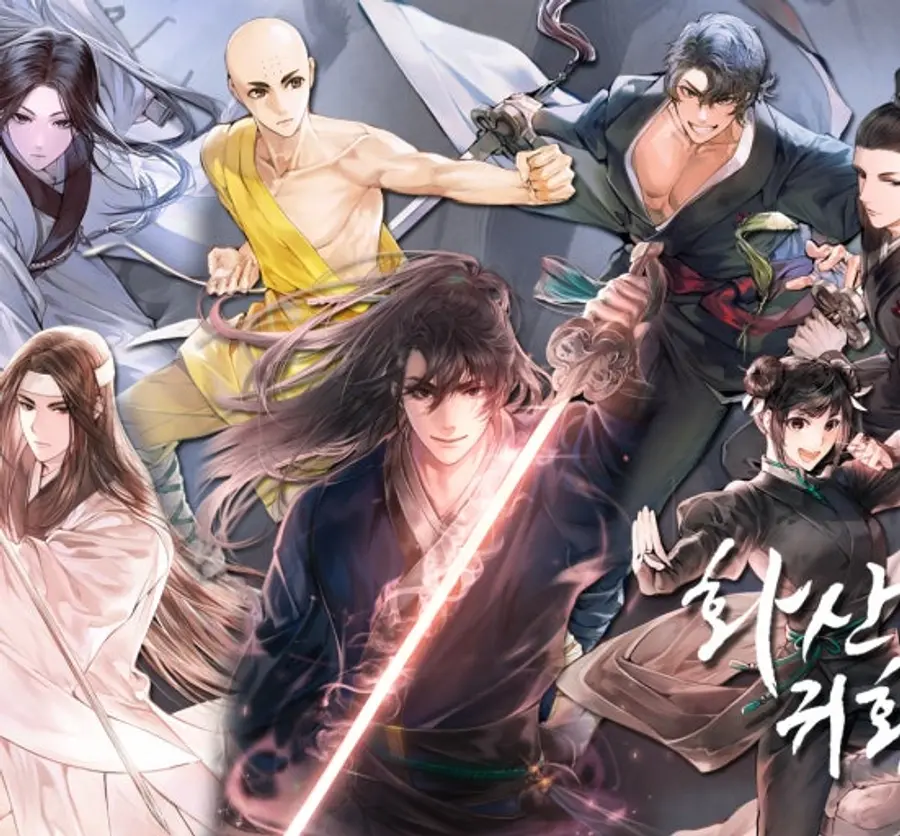
If You Want to Fall in Love with the Work Over a Long Haul
However, as clear as the advantages are, the weaknesses of this work are also evident. The first point often mentioned is the length and repetition. As various episodes unfold under the grand goal of rebuilding the Volcano, there are sections where similar patterns of conflict and resolution repeat. The conflicts with new sects, confrontations with problematic figures within those sects, and Cheongmyeong stepping in to overturn the situation and create a new balance occur repeatedly, leading to some readers feeling fatigued in the latter half. Of course, each episode has different details and emotional lines, but the similarity in the overall structure can be a divisive factor. It’s akin to the fatigue felt when the same pattern repeats in the later seasons of 'Suits.'
Another issue is the diminishing presence of supporting characters. Characters who made a strong impression in the early stages may gradually lose significance or become mere devices performing specific roles in the latter half. This fatigue arises from the vast world-building and lengthy serialization, but it also leaves a sense of regret that 'I wanted to see more of this character’s narrative.' Since the intense protagonist Cheongmyeong stands at the centre of the narrative, there are points where the supporting characters who supported his story do not receive sufficient resolution. It’s similar to how characters other than Ron and Hermione in 'Harry Potter' become increasingly faint in the later parts.
Nevertheless, the reason 'Return of the Volcano' is loved by such a wide readership is ultimately due to its universal power of being a 'story of rising again.' The process of one person’s persistence in reweaving a completely fallen sect, a ruined name, and shattered pride draws support that transcends genres. Especially, the scenes where the Volcano’s disciples, initially close to being powerless youths, gradually straighten their shoulders and change their gazes through Cheongmyeong’s harsh training and life lessons capture the moment of 'people changing' beyond the simple enjoyment of martial arts growth. It’s like the catharsis of an underdog’s comeback, akin to an unknown boxer challenging a champion in 'Rocky.'
Readers cheer for that change while simultaneously recalling their own courage to start something anew. This work is something I would first recommend to those who have hit rock bottom at least once. Whether it’s exams, daily life, or relationships, anyone who has experienced failure while trying to see something through to the end will not be able to view Cheongmyeong’s grumbling and madness towards the fallen Volcano as someone else’s story. His attitude of not giving up despite cursing the fallen sect may feel like an honest confession about 'something I want to try once more' that each of us harbours in our hearts. It resonates with the emotions of entrepreneurs wanting to revive a failed business, artists wanting to reclaim a lost dream, and anyone wishing to restore a broken relationship.
For readers encountering martial arts web novels for the first time, 'Return of the Volcano' can serve as a surprisingly good introduction. Rather than complex martial arts systems or difficult terminology, the clear goal of saving a fallen organisation and the sense of humour take centre stage. Even if one doesn’t know what the Nine Great Sects are or what the Great War of Justice is, approaching it through the frame of 'reviving a failed company' allows for sufficient immersion. Conversely, for readers who have devoured dozens of martial arts web novels, they will discover new enjoyment in the author’s skill of twisting and reinterpreting familiar clichés.
If you are looking for a work to read slowly and for a long time, I hope you follow the plum blossoms of the Volcano. It’s a long journey of hundreds of chapters, but each chapter bursts with laughter and occasionally moving moments that tug at the heartstrings. At the end of that long road, Cheongmyeong’s laughter and sighs will remain as comfort. Much like the emptiness and pride felt after completing a long drama series, 'Return of the Volcano' leaves a small Volcano Sect in the reader’s heart. And when the time comes to start something anew, that memory of the Volcano’s plum blossoms may quietly bloom again.