
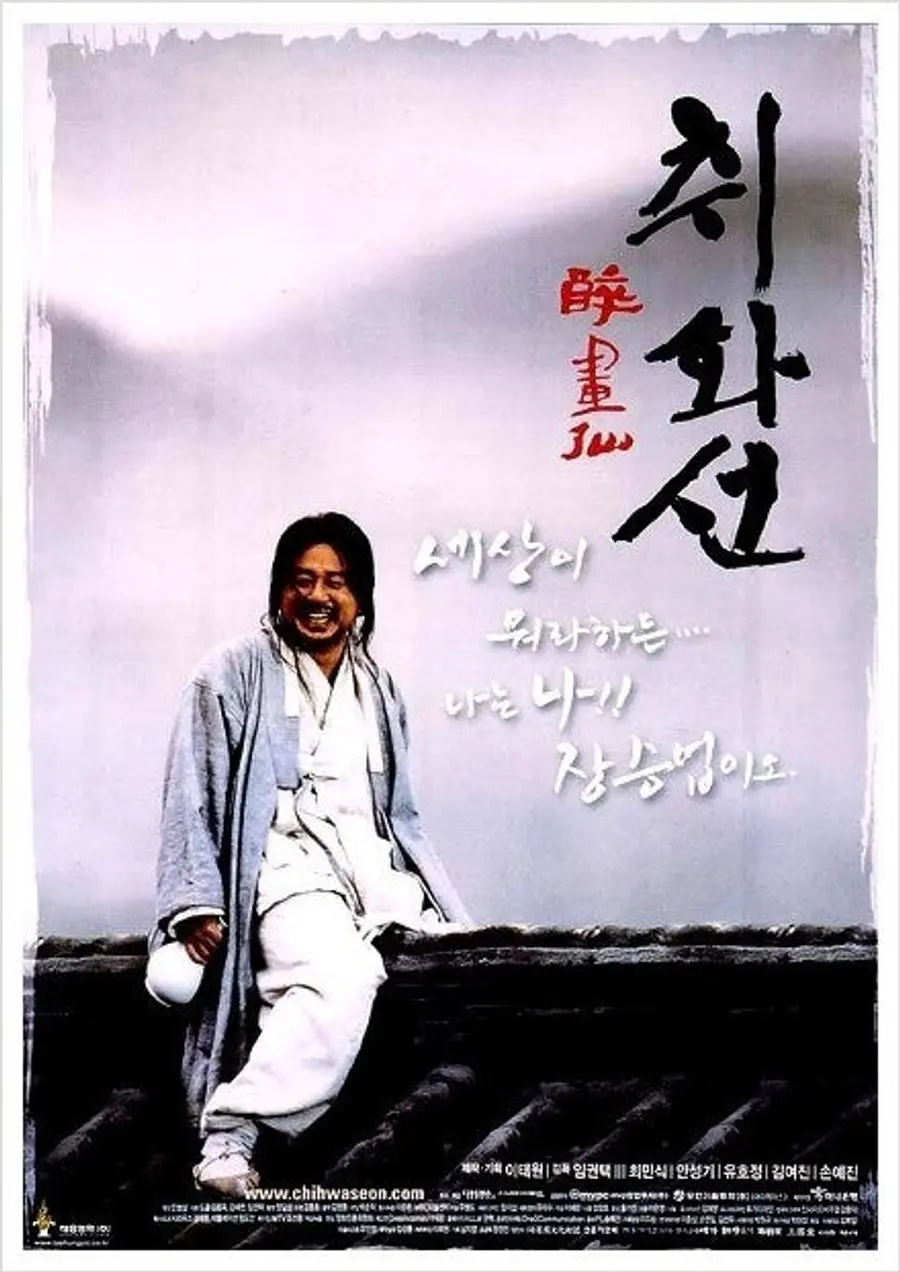
|Kave Magazine=Choi Jae-hyuk Reporter In the late Joseon period, where poverty is a daily reality, a boy is squatting in the yard of a shabby tavern. In tattered clothes, he holds a piece of charcoal instead of a rice bowl. Jang Seung-eop (Choi Min-sik) draws the face of the owner's child on paper in exchange for food. With just a few swift strokes of charcoal, the eyes come alive and the cheeks bulge out. People gasp in amazement, while the boy hides his smile, feeling shy. The film 'The Drunken Brush' compresses everything into this small scene. He is of lowly status, yet his talent mocks the gods. This bizarre combination is the prologue to the 'mad genius painter' who will soon shake an era.
Seung-eop's talent catches the eye of Kim Byeong-mun (Ahn Sung-ki), a merchant from a noble family. He is a discerning individual who recognises art, and he takes the boy home, opening up a universe of letters, paintings, ink, and paper. It’s like discovering a hidden genius character in an RPG game. On the stage set by Byeong-mun, Seung-eop explosively levels up. Without a master, he remixes the styles of old masters in his own way, traversing genres from landscapes to figures to flowers. Even while drunk, lying on the kitchen floor, or leaning against the eaves of the yard, as soon as he picks up a brush, the world resets. While others take days to complete a major work, he finishes it in a flash, like a speedrun. The screen captures the texture of the brush and paper as if viewed through a microscope, following that breath.
The genius's name quickly spreads among the court, noble families, and merchants. Seung-eop is scouted as a court painter, painting decorative works behind the throne and creating folding screens for the powerful. Wherever he picks up a brush, money and fame cling to him like a magnet. However, the world is not so easy. What is permitted for a lowly painter is merely the position of a decorative producer, and the place of true respect as an artist ultimately results in a 404 error. At the drinking table, they chatter about his works for a long time, but when it comes to seating arrangements, they treat Seung-eop like a servant and ignore him. It’s like a YouTube musician who, no matter how many views they get, cannot enter a classical concert hall.
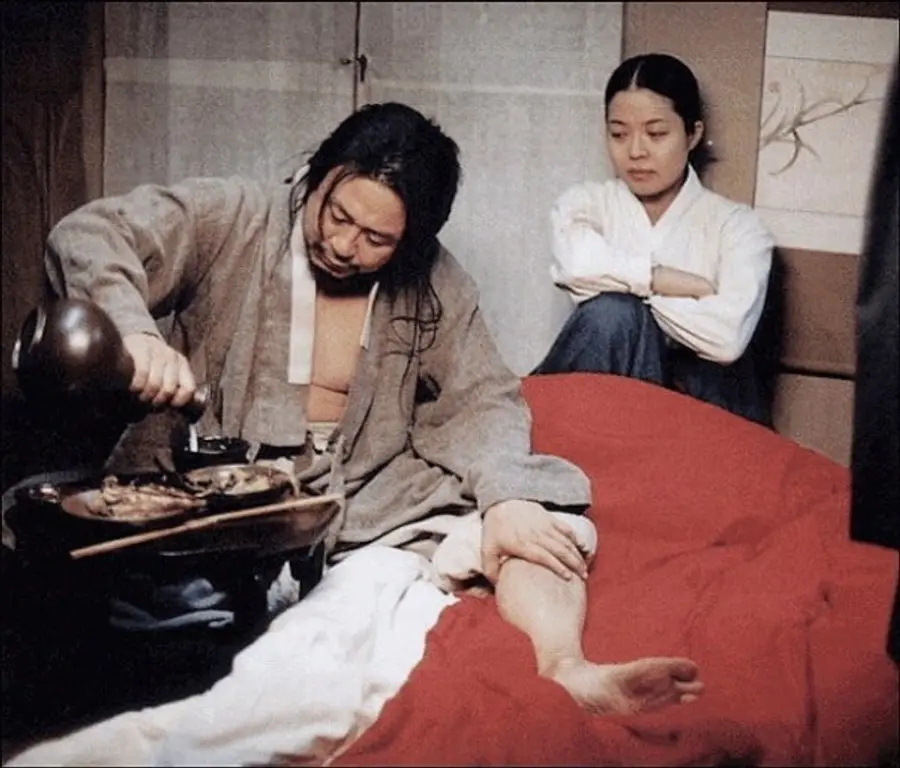
In this gap appears the gisaeng Jin-hong (Kim Yeo-jin). This woman, with a glimmering gaze between the folds of her red skirt, is the first to notice Seung-eop's talent and simultaneously takes the deepest X-ray of his wounds. Watching Seung-eop draw flowers on paper in a corner of the tavern, Jin-hong asks him why he needs to rely on alcohol to hold a brush. Instead of answering, Seung-eop downs his drink in one shot, and a relationship that is almost within reach layers between the two. Jin-hong offers Seung-eop worldly stability, but he repeatedly swipes left on that between art, wandering, alcohol, and pride. Love continues to be out of sync, and instead, the paintings remain.
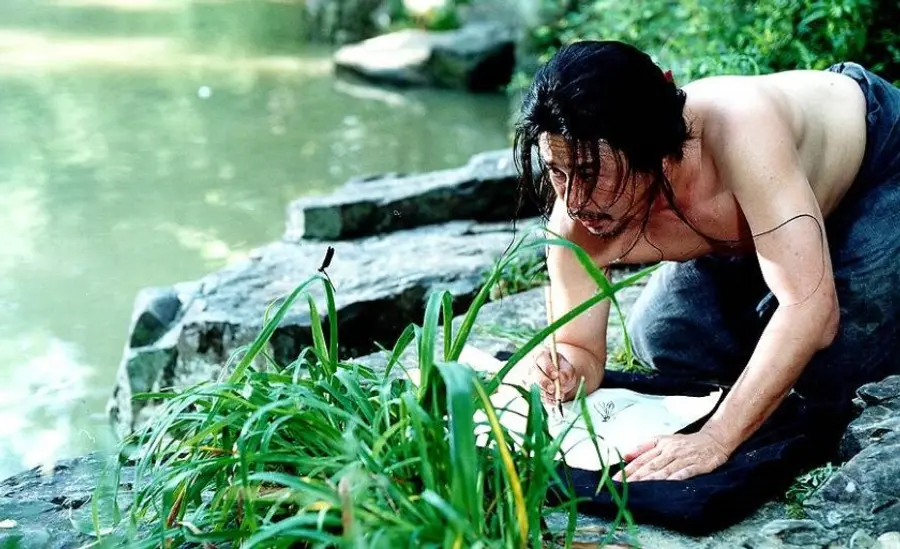
Meanwhile, the world is being sucked into a whirlpool of upheaval. Western culture and ideas knock on Joseon, while the rulers remain oblivious to the crisis, focusing solely on power struggles. The young scholars Seung-eop encounters at the drinking table engage in fierce debates about the future of the country. The proponents of enlightenment advocate for Western culture, while conservatives argue for the preservation of Confucian order. Seung-eop is not intellectual enough to join such discussions. Instead, standing by the river while drunk, he sketches the slanting moon, the breaking waves, and the reeds bent by the rough wind with his brush. For him, the upheaval of the times is not about words and logic, but rather the scenery before his eyes and the energy etched into his body, a kind of felt temperature.
The film presents snapshots of Seung-eop's life. The moment he paints a folding screen for a powerful figure, the moment he is bewildered by unfamiliar shading techniques while looking at a portrait of a Westerner, and the moment he regains his playful smile while drawing the face of a child in a poor farmer's house. And always stalking him from behind are alcohol, explosions, and regret. Seung-eop fears standing before a painting without alcohol, and after drinking, he kicks and tears apart even the works he has created. The scene of him destroying his own masterpiece is painfully difficult for the audience to watch. However, for Seung-eop, it is a form of self-censorship and self-destruction. It is a mad experiment to find a better line, a stranger harmony, and a more alive brushstroke. Just like Steve Jobs discarded the iPhone prototype dozens of times.
Thus, the film tracks the life of Jang Seung-eop while simultaneously painting a panorama of the entire era of late Joseon through that life. The splendid interiors of the palace and noble families, the shabby folding screens carried by commoners, the marketplace, the gisaeng house, the fields, and the riverside. Wherever Seung-eop stands, the background always becomes a canvas. It’s as if every scene on screen is a Google Photos library reflected in his eyes. I will not mention where Seung-eop disappears at the end to avoid spoilers. However, by the time the film ends, the audience will vaguely realise that what is important to this person is neither survival nor leaving a name. The act of holding a brush itself is his life and resistance, a kind of existential declaration.
Im Kwon-taek's Masterpiece 'The Drunken Brush'
The greatest virtue of 'The Drunken Brush' is that, while being a biopic, it does not list the life of the character like a Wikipedia entry. Director Im Kwon-taek captures a few essences that make up Jang Seung-eop's life instead of lining it up chronologically. Alcohol, brushes, wind, fire, and faces. By placing scenes around these five central axes, the film allows the audience to trace the trajectory of a human being. Thus, while the film may seem slow in tempo, each scene is a jump shot that approaches Seung-eop's inner self.
The most overwhelming element is the visuals. The camera in this film ultimately tracks the paintings while never settling for mere replication. This is evident in the landscape painting scenes. When the ink line extending from the brush creates peaks and valleys, the camera pans the actual mountain ridges as if extending the painting. Conversely, after filming the mist and reed forest by the riverside, what overlaps is the ballet of lines and dots that Seung-eop perceives. As this ping-ponging repeats, the audience experiences a moment when the boundary between painting and reality dissolves. For Seung-eop, the world is a massive sketchbook in itself, and the film is akin to the act of unfolding that sketchbook onto the IMAX screen.
The colour palette is also very intentional. Most scenes are dominated by murky colours close to ink and earthy tones. The air in the room, mixed with the smell of alcohol and opium, seeps through as that of a lowly painter in a poor Joseon. Yet suddenly, blue bursts forth vividly. The feathers of a bird caught on an old tree, the moonlight on a pond, the hem of Jin-hong's skirt, and above all, the colours on the paper where the brush has passed. Thanks to this colour contrast, Seung-eop's paintings feel like another dimension that hacks reality rather than just being props in the film.
The rhythm of the direction is a cross between slow motion and explosion. In the long dialogue scenes surrounding the drinking table, long takes are used almost like a stage play to observe the subtle expressions of the characters. As silence stretches and awkward laughter and nervous jokes are exchanged, the audience falls into the illusion of sitting at that drinking table. Then, when Seung-eop suddenly jumps up to grab a brush or kicks the folding screen, splashing water on the floor and frantically drawing lines, the film switches to turbo mode with explosive movements. As this slow-fast BPM repeats, the audience synchronises with Seung-eop's breath and heartbeat.
The acting cannot be overlooked. Choi Min-sik, playing Jang Seung-eop, truly appears as someone who pours his body into painting in this film. Instead of lightly holding the brush like a sharp pencil, he draws lines with almost the force of a knife. Even while staggering drunk, the moments when his spine straightens and his eyes light up like LEDs as he grabs the brush are particularly chilling. He completely downloads the face of a person who pours out emotions with their body, the smell of alcohol, sweat, and brush strokes. Ahn Sung-ki's Kim Byeong-mun stands on the opposite pole, balancing the film. This heavy friend, who knows how to compromise with the world while understanding Seung-eop's paintings better than anyone, is like a bridge between the artist and the era. The tension created by the two actors' opposing poles supports the entire film, much like the chemistry between Lennon and McCartney in The Beatles.
Reflects 'Our Lives' Through Various Aspects of the Character
What is interesting about 'The Drunken Brush' is its attitude of elevating greatness without mythologising the artist. Jang Seung-eop in the film is by no means a 'good person.' He is violent, irresponsible, and unable to properly care for love. Nevertheless, the audience automatically bows their heads before his brushstrokes. The way he cannot compromise with the world sometimes damages those around him, but it is precisely that discord that spawns paintings that never existed before. Director Im Kwon-taek scans this contradiction as it is. Rather than judging the artist with the yardstick of morality, he shows the process of his struggles linked to history. Just as Beethoven's deafness does not diminish the value of his Ninth Symphony.
The historical background is also a key variable. The chaos of late Joseon, the influx of Western culture, and the cracks in the class system all impact Seung-eop's brush. The film does not necessarily unravel this with lengthy narration. Instead, it loosely stitches together scenes of Byeong-mun wearing Western-style clothing, Seung-eop being shocked by unfamiliar shading techniques while looking at a portrait of a Westerner, and scholars gathering to discuss reforms. The audience decodes the era by piecing together these fragments like a puzzle. On top of that, Seung-eop's paintings serve as a kind of hub. On one side lies the tradition of old Eastern painting, and on the other, the energy of a new era, with Seung-eop mixing lines and colours in between. Thus, his landscape paintings coexist with both traditional emptiness and some uneasy glitches.
The film title 'The Drunken Brush' is also significant. The characters mean 'drunk,' 'painting,' and 'brush.' It signifies painting on a fan while drunk, and at the same time, it can be read as a metaphor for life, which is as thin and easily torn as alcohol and art. Seung-eop is a person who can only connect with the god of painting when he is drunk. However, that very alcohol can also become a virus that destructs him. The title encapsulates this duality in one shot. The fact that beauty and destruction, creation and self-destruction balance on a single line. Just like Van Gogh cut off his ear while painting sunflowers.
In terms of popularity, 'The Drunken Brush' is by no means an easy mode film. Instead of a typical three-act structure, it is closer to a composition where fragments of memory and scenes are connected. For this reason, it is also a film with high replay value. The first viewing overwhelms with Seung-eop's madness and brushstrokes, while the second reveals different expressions and choices of Byeong-mun, Jin-hong, and the supporting characters. By the third viewing, the mountains, water, wind, and sky that flowed in the background feel like part of the painting. As time goes by, more and more Easter eggs appear in the film, and such works survive as classics. Just like 'Blade Runner.'
If Your Life is Painful...
For those tired of films about the lives of artists, especially stories that mythologise pain and genius, the nuances offered by 'The Drunken Brush' will feel refreshing. This film does not deify Jang Seung-eop as a divine being, nor does it drag him down as a trash human. Instead, it makes you observe the emptiness and persistence of a person who cannot put down the brush even with hands soaked in alcohol. That gaze leaves a heavy sense of respect for the audience. Much like the feeling after listening to Miles Davis's jazz.
For those who have felt overwhelmed by the act of creating something for a while, this film offers a strange comfort. Seung-eop's life is a continuous mix of glory and failure, recognition and ridicule, love and loss. Yet he sits down in front of the paper again each time. Even if it is not perfect, even if it looks similar to the painting he tore apart yesterday, he draws lines again. In that process, the audience learns a very quiet courage. The fact that it is the act of drawing something today, not the great result, that helps one endure life. Just like Sisyphus smiling while pushing the boulder.
For audiences wanting to see a different spectrum of Korean cinema, 'The Drunken Brush' is a good pick. It confirms that a film filling two hours with murky colours, emptiness, brushstrokes, and silence is still powerful, rather than flashy genre films or fast narratives. As you gaze at the landscapes on the screen, there comes a moment when the darkness of the theatre you are sitting in feels like a blank space of a traditional ink painting. If you want to experience that at least once, it is worth slowly streaming this work, where alcohol, painting, and a human's fiery life intertwine. However, popcorn is not a must. It might be even better to enjoy it with a glass of makgeolli.