


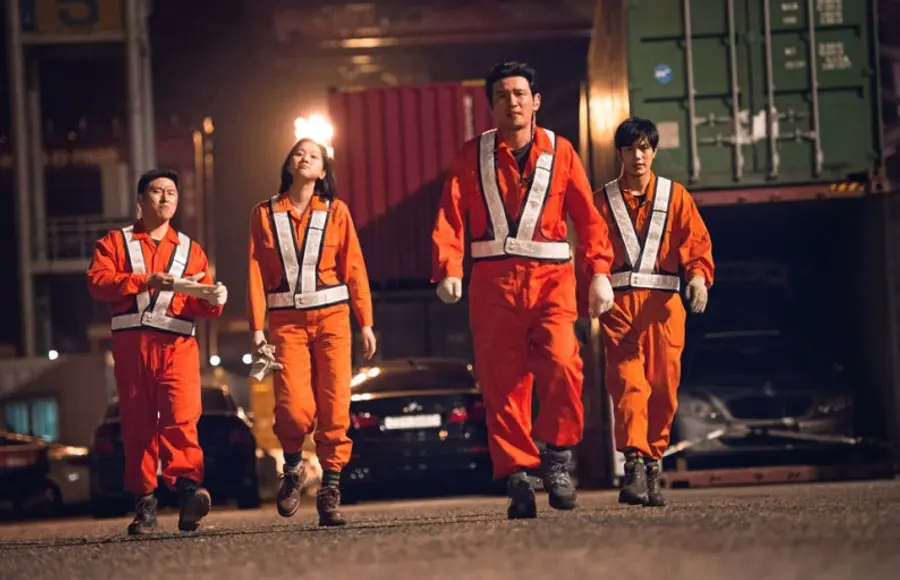
[Magazine Kave=Kim Jeong-hee Reporter] Director Ryoo Seung-wan's film 'Veteran' captures the audience's attention from the very beginning. The sequence where detective Seo Do-cheol (played by Hwang Jung-min) and his violent crimes team members leap into action to catch criminals during a used car smuggling operation is lively and exhilarating, reminiscent of a Korean reinterpretation of 'Ocean's Eleven'. It is so captivating that it makes one temporarily forget that the film deals with the frustrating realities of Korean society.

The detectives, who seem clumsy but boast a strong teamwork, exchange jokes without a break, and amidst the hand-to-hand combat and dynamic camera work, the audience naturally immerses themselves in the world of the special investigation unit. Their daily life, mixed with surveillance, eavesdropping, failures, and bravado, gives a sense of familiarity, as if observing long-time colleagues in a reality show. The irony of human warmth, which is more trustworthy than a perfect system, is compelling.
One day, Seo Do-cheol encounters a shocking incident through a delivery driver he knows, Bae (played by Jung Woong-in). The case involves Bae being embroiled in his boss's verbal abuse and assault while suffering from unpaid wages and wrongful termination. Sensing something suspicious that cannot be dismissed as a simple labor case, Do-cheol begins the investigation with the intuition characteristic of a veteran detective.
As the investigation deepens, it is revealed that behind the case lies a massive cartel involving third-generation chaebol Jo Tae-o (played by Yoo Ah-in), Shinjin Materials, and the legal and security teams protecting him. Unlike the bleeding victims at the scene, the parties responsible are depicted leisurely enjoying their lives in high-rise buildings, exposing the starkly unfair structure.
Jo Tae-o, the monster born from Korean society
Jo Tae-o is the embodiment of the 'evil deeds of third-generation chaebols' that Korean audiences have imagined. He is not a villain who became successful through crime, but a person born with privilege from the start. His attitude and gaze, which do not treat others as equal individuals, instill a chilling fear in the audience.
He enjoys violence as if it were a game and is convinced that he can cross any line using capital and power, making him a monster created by the system rather than just a simple villain. His line, "If you don't make it a problem, it won't be a problem, but since you make it a problem, it becomes one," symbolically illustrates his grotesque sense of entitlement.
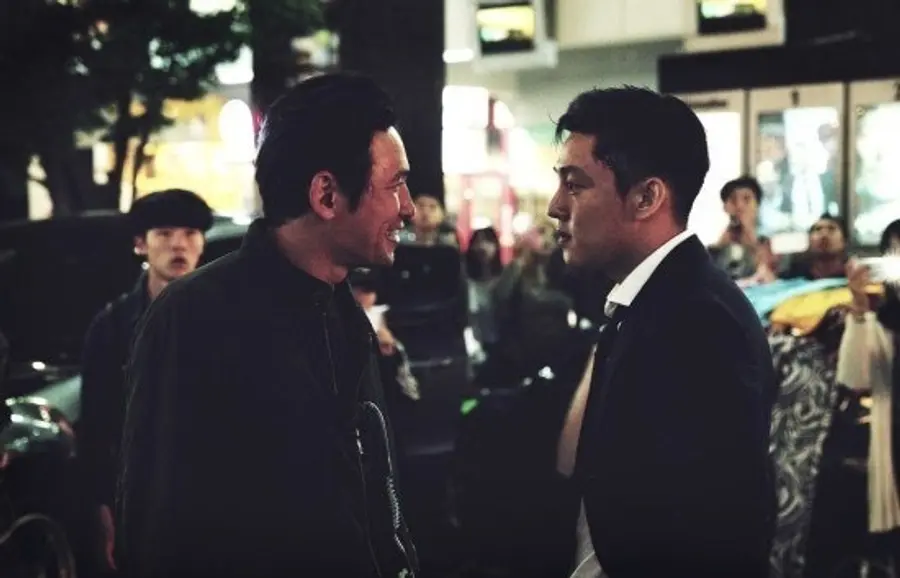
Seo Do-cheol and his team do not back down even in the face of this immense power. However, investigation records mysteriously disappear, testimonies are retracted, and higher-ups in the police are swayed by external pressures. This is the moment when the 'fortress of law' reveals itself, which is hard to penetrate with just a sense of justice. In the past, walls and moats protected castles, but in modern society, law firms and lobbyists take on that role.
Nevertheless, the special investigation unit does not stop. To find decisive evidence to prove Jo Tae-o's crimes, the team members tirelessly pursue leads. Their resilience, getting back up and smiling to prepare for the next move after failures, exemplifies the spirit of 'fall seven times, stand up eight'. The confrontation between the detective crawling up from the bottom and the third-generation chaebol reigning like an emperor escalates into an overt full-scale battle as the film progresses.
The film urgently oscillates between 'realizing justice within the bounds of the law' and 'punishing those who reign above the law'. Jo Tae-o's behavior of controlling the law and media with money and attempting to coerce even the victims evokes the 'abuse of power controversies' seen in the news, providing the audience with both déjà vu and anger. Seo Do-cheol strives to uphold the law and principles, but gradually implements justice in a rougher manner in the face of an unfair game.
As the film approaches its conclusion, it simultaneously heightens tension and exhilaration. The special investigation team methodically secures evidence of Jo Tae-o's criminal activities and prepares for the final blow. Jo Tae-o, in turn, makes bolder and more malicious choices to defend his fortress, mocking public authority.
The final showdown in the heart of Myeongdong transcends simple good versus evil, providing a sense of liberation as if witnessing the realization of justice rarely seen in reality. The film races forward, accurately striking the emotional core that the audience craved until the very end.
The alchemist of genres, Ryoo Seung-wan's sense of balance
The true value of 'Veteran' is demonstrated in its genre balance. The perfect blend of investigation drama, comedy, action, and social satire does not lean towards any one side. Director Ryoo Seung-wan, while addressing serious social issues, avoids becoming overly serious and maintains the humor without losing the message.
Humor that erupts right after serious situations and rhythmic music flowing after intense chases manipulate the audience's emotions. The complex emotional structure, where anger follows laughter and bitterness lingers after exhilaration, proves that this film is a meticulously crafted work that goes beyond simple entertainment.
Director Ryoo Seung-wan's unique action direction also stands out. The action, which emphasizes impact over flashy techniques, and the hand-to-hand combat in confined spaces, along with the car chases in the city center, flow rhythmically. Particularly impressive is the action design that reflects the characters' personalities. Seo Do-cheol's rough yet tenacious fighting and Jo Tae-o's cruel and unpredictable violence represent their characters.
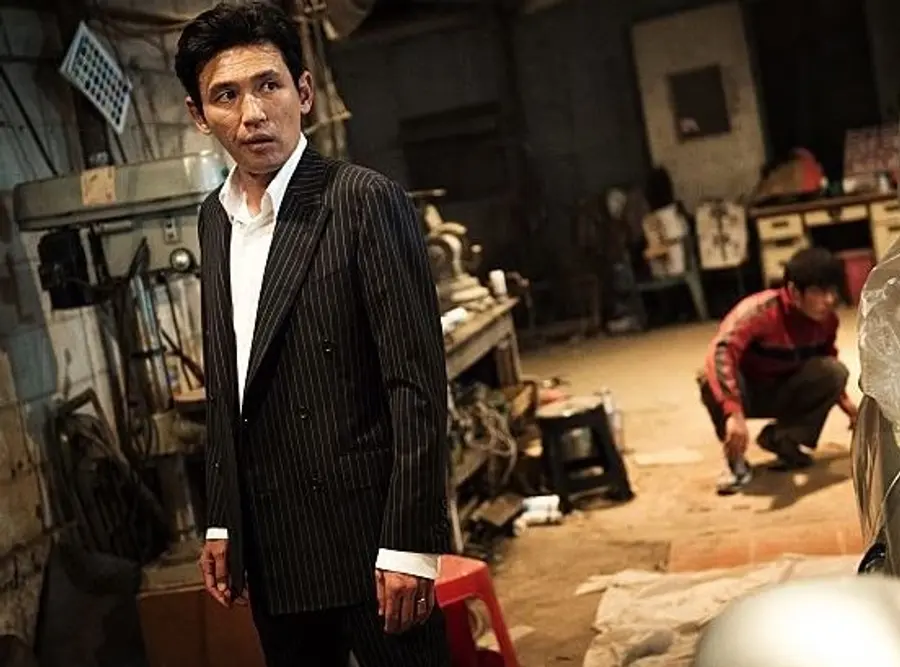
The performances of the actors elevate the film's quality to its peak. Seo Do-cheol, played by Hwang Jung-min, is not a typical model cop but a character overflowing with rough yet human charm. His line, "We may not have money, but we have pride," represents the uncompromising pride of a detective and earns the audience's support.
Jo Tae-o, played by Yoo Ah-in, remains one of the most notable villains in Korean film history. His unique expressions, speech patterns, and unpredictable actions create a discomfort that captivates the audience. The intense energy clash between the two actors is the core driving force of 'Veteran'.
13.41 Million Audiences Responding to the Era's Demands
The reason 'Veteran' achieved record-breaking box office success is that it accurately captured and alleviated the frustrations felt by the audience in reality. When the transgressions of chaebol families, which adorned the news, are reenacted on screen, the audience feels a bittersweet empathy. And they experience vicarious satisfaction from Seo Do-cheol's efforts to break down that absurdity.
The film presents a satisfying conclusion while not forgetting the weight of reality. The strange aftertaste that lingers after the film ends arises from the realization that "this is just a movie, but reality remains unchanged." This complex emotion compels the audience to watch the film repeatedly and question the justice in our society.
'Veteran' is a prime example of how Korean commercial cinema can elegantly combine action, comedy, and social critique. This work, where Ryoo Seung-wan's direction, the actors' performances, and a solid script come together, delivers timeless fun and meaning even as time passes.
Ultimately, this film is a refreshing glass of cider offered to the weary public and simultaneously a mirror that prompts us to reflect on the world we live in. It was chosen by 13.41 million viewers upon its release in 2015 and continues to be loved today because the desire for justice and liberation that the public craves remains valid even as the times change. 'Veteran' will be remembered as a cultural phenomenon that transcended mere box office success and penetrated the sentiments of the era.