
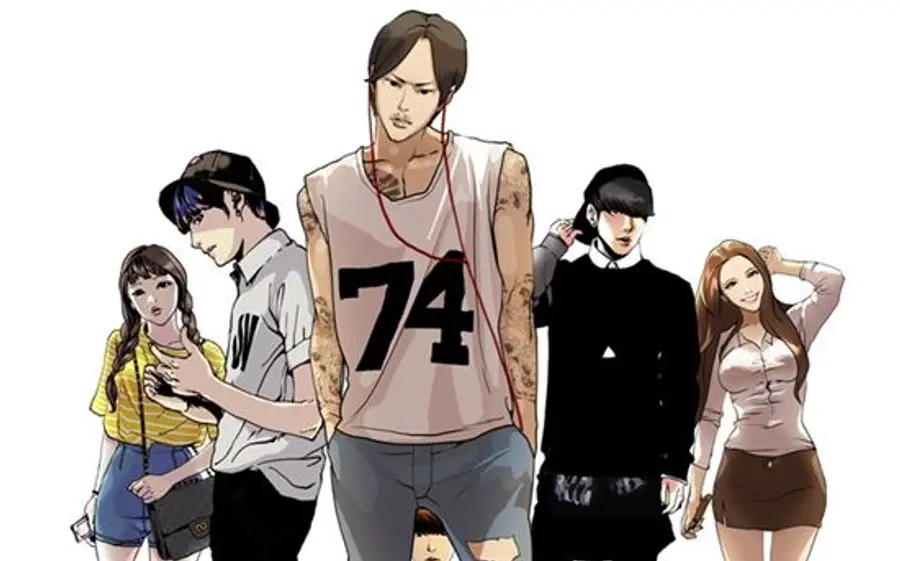
In front of the mirror, there stands a boy clutching his shabby school uniform shirt. With a fat body, twisted shoulders, a protruding belly, and an enlarged neck circumference, he is Park Hyung-seok, the protagonist of Naver Webtoon 'Appearance Supremacy'. At home, he constantly apologises to his mother, and at school, his designated seat is next to the cleaning supplies in the corner of the classroom. As soon as he steps into the hallway, insults fly, and trays are overturned in the cafeteria. A classmate introduces him as “the kid who’s a nuisance to hang out with,” and even the teachers are openly discriminatory. In this world, Park Hyung-seok is thoroughly treated as the 'ugly kid' and 'the one who deserves it'. It’s as if he is regarded as the lowest predator in the ecosystem of the school.
One day, he finally explodes. Unable to endure the relentless bullying and the situation that humiliates even his mother, he decides to transfer schools. When he pleads to move to Seoul, his mother, who works night shifts at a convenience store, eventually nods in agreement. On the night before his fresh start, Hyung-seok falls asleep on the narrow studio apartment floor, and the next day, something unbelievable happens. In the mirror, there stands “a completely different human.” Tall, handsome, muscular, and with fair skin—he embodies the typical male lead visuals found in webtoons. Yet, it turns out that it is him. If Kafka had turned Gregor Samsa into a bug in 『Metamorphosis』, then Park Tae-jun has transformed Park Hyung-seok into a K-beauty photoshoot model.
The worldview of 'Appearance Supremacy' opens at this bizarre turning point. Hyung-seok gains two bodies. His original fat body and the newly acquired handsome and perfect body. When one sleeps, the other wakes up, and either way, he is “undeniably Park Hyung-seok.” In the poor studio, the old body lies down, while the new body, dressed in a sparkling new school uniform, sits at the front row of the new school. Now, the world treats him like a completely different person. If the old school uniform, which used to hang on him, symbolised a 'loser who can’t manage himself', then at the new school, a neatly ironed shirt and slender limbs become the criteria for popularity. Although it’s the same person, just the packaging has changed, and the world reacts 180 degrees differently.
The Badge of Class Named Appearance
The first day at the new school is literally a life-changing experience. Even when bumping into someone in the hallway, he hears apologies, and in the cafeteria line, he receives smiles. Classmates rearrange their hierarchy around him, and even the teachers change their attitudes. The webtoon starkly proves how blatantly the saying “appearance is everything” operates by alternating between showing Hyung-seok’s two bodies. The gaze when walking to school in the handsome body is completely different from when going to his night job at the convenience store in the fat body. The former is a ‘handsome young man’, while the latter is a ‘nuisance to avoid’. It’s not science fiction; it’s almost a documentary that two vessels containing the same soul receive such different treatment.
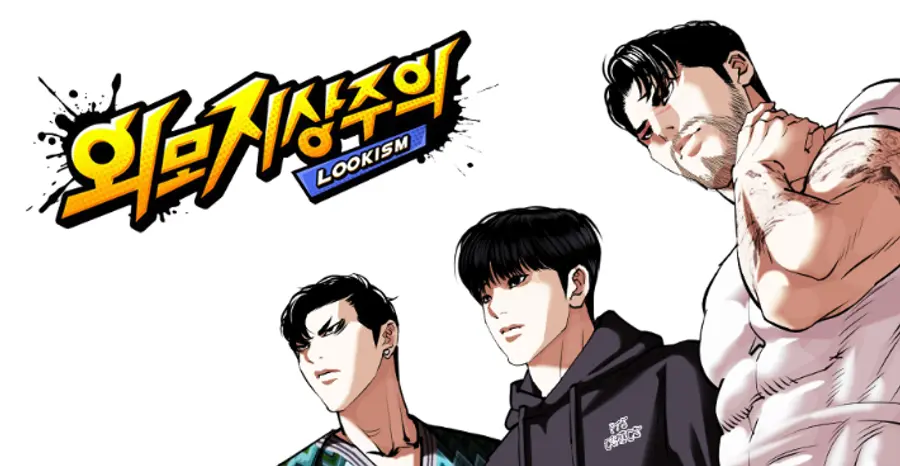
The school Hyung-seok transfers to appears to be an ordinary high school on the surface, but it is essentially a small society entangled with violence, class, and information power. Each class has its own leader, and there are invisible stairs between athletes and non-athletes, the rich and the poor, the handsome and the not-so-handsome. Hyung-seok ascends these stairs in an instant with his handsome body. In the process, he meets characters like Vasco (Lee Eun-tae), Lee Jin-seong, Hong Jae-yeol, and Park Ha-neul. Some are righteous fighters, while others appear to be delinquents but hide their complexes inside. Each character embodies clichés of school stories while possessing slightly different wounds and desires. It seems that if the North Mountain High from 'Slam Dunk' united through basketball, this school establishes its hierarchy through fists and appearances.
The webtoon expands its narrative beyond the school hierarchy struggles into a larger world. Broadcasting clubs and aspiring idols appear, along with streamers, models, the entertainment industry, gangsters, the fashion industry, professional fighting, and even global business and politics. Hyung-seok’s two bodies become the passageways between these worlds. The handsome body works as a model, appears on broadcasts, and fully enjoys the benefits of the 'Appearance Supremacy' society. Meanwhile, the original body still stands at the convenience store counter, helping to support his mother’s livelihood. In every scene where the two intersect, the question arises, “Which side truly represents the real me?” Like the question of who is real between Bruce Wayne and Batman, this double life ultimately leads to issues of identity.
The work follows Park Hyung-seok’s growth while simultaneously touching on various issues such as appearance, class, violence, domestic violence, school bullying, and social media culture. In a world where only handsome and fit boys survive, where do the ugly and poor kids get pushed? Is the violence claimed by the “gang of justice” not just another form of violence? How does the internet and broadcasting consume people? These questions are concretised in individual episodes. It’s not just a simple 'fighting high school boy comic'; it distorts the reality and desires experienced by South Korean teenagers in an exaggerated worldview.
However, 'Appearance Supremacy' is a work intertwined with numerous characters and narratives, as is typical for long-running series. The secret of Park Hyung-seok’s two bodies, the source of that ability, the identity and past of specific characters, and the relationships between various organisations and companies become increasingly complex as the story progresses. It’s better to follow the webtoon directly to see where all these threads converge and what face Hyung-seok ultimately chooses for his life. Starting from the early school story sentiment, it transforms into a world that mixes action, crime, and mystery after the mid-point, making the conclusion and core secrets too precious to summarise in a single spoiler line. Just as the 'Harry Potter' series evolved from the school fantasy of the first book to the war narrative of the seventh, this webtoon undergoes a similar scale change.
The Duality in Front of the Mirror
The greatest strength of 'Appearance Supremacy' lies in its unwavering theme, namely the proposition that ‘appearance becomes class’. It’s not merely a coming-of-age story about an ugly kid transforming into a handsome one and gaining popularity. The setting of having to live with two bodies simultaneously serves as a device to visually express complex emotions of self-hatred and self-love, self-esteem and self-deception. The core lies in the fact that while Park Hyung-seok mingles with friends in his handsome body, he simultaneously feels both humiliation and relief when he returns to his original body. The contradiction of thinking, “This isn’t really me,” while also feeling, “But without this body, I would be nothing,” resonates strongly with many readers. It’s as if it realises the imagination of “What if I had been born pretty/handsome” that everyone has dreamed of at least once, while also showing how bittersweet that imagination can be.
In terms of direction, this webtoon is close to a textbook example of vertical scroll action. In fight scenes, the screen is elongated vertically, allowing readers to grasp the protagonist’s charge, the opponent’s counterattack, the falling bodies, and the splattering blood in one breath. Close-up gazes, rain-soaked playgrounds, and stairs under flickering fluorescent lights repeatedly appear, creating the atmosphere of 'Appearance Supremacy-style fights'. The exaggerated muscles and movements, along with bold deformations in smash scenes, focus more on the impact than on realism. Thus, it reads more as a kind of fantasy created by the anger and inferiority complex of adolescence rather than a realistic fight. While it doesn’t feature 'Dragon Fist', there is certainly cartoonish exaggeration, and that exaggeration is the key to providing pleasure to the readers.
Character building is also an element that has boosted the work’s popularity. Park Hyung-seok is a typical 'loser-turned-protagonist', but he differentiates himself from other webtoon protagonists by bearing both responsibility and guilt while living with two bodies. Vasco (Lee Eun-tae) appears to be a ‘righteous fool’, but he is a character entangled with an obsession to protect the weak and trauma—much like Rock Lee from 'Naruto', he is a Korean variation of a character who strives to succeed through effort rather than talent. Lee Jin-seong exemplifies the typical adolescent male wavering between violence and love, possessiveness and inferiority. Hong Jae-yeol, Park Ha-neul, and various female characters also have distinct personalities. In particular, characters appearing as gangsters or delinquents are portrayed not merely as villains but as beings with family histories and wounds, evoking complex emotions. Sometimes, it’s hard to decide whether to hate or sympathise with these characters, making them multidimensional.
Clear Limits and Controversies... Balancing on a Knife-Edge
At the same time, this point gives rise to the work’s limitations and controversies. There are moments when the aestheticisation of violence, the consumption of female characters, and the social messages conveyed by the author feel somewhat fragmented or superficial. While scenes of beautifully swinging fists and muscular men fighting shirtless provide clear catharsis, there is also the risk of packaging violence as something 'cool'. It’s akin to moments in 'Fight Club' where even bloodied faces are depicted aesthetically. Critics also point out that female characters, aside from the main ones, are often functionally consumed or used as tools for someone’s motivation. The irony of critiquing 'Appearance Supremacy' while simultaneously reproducing the hierarchy of appearance and body is an unavoidable aspect when discussing this webtoon. The tightrope walk between critique and reproduction is a dilemma faced by many works of popular culture.
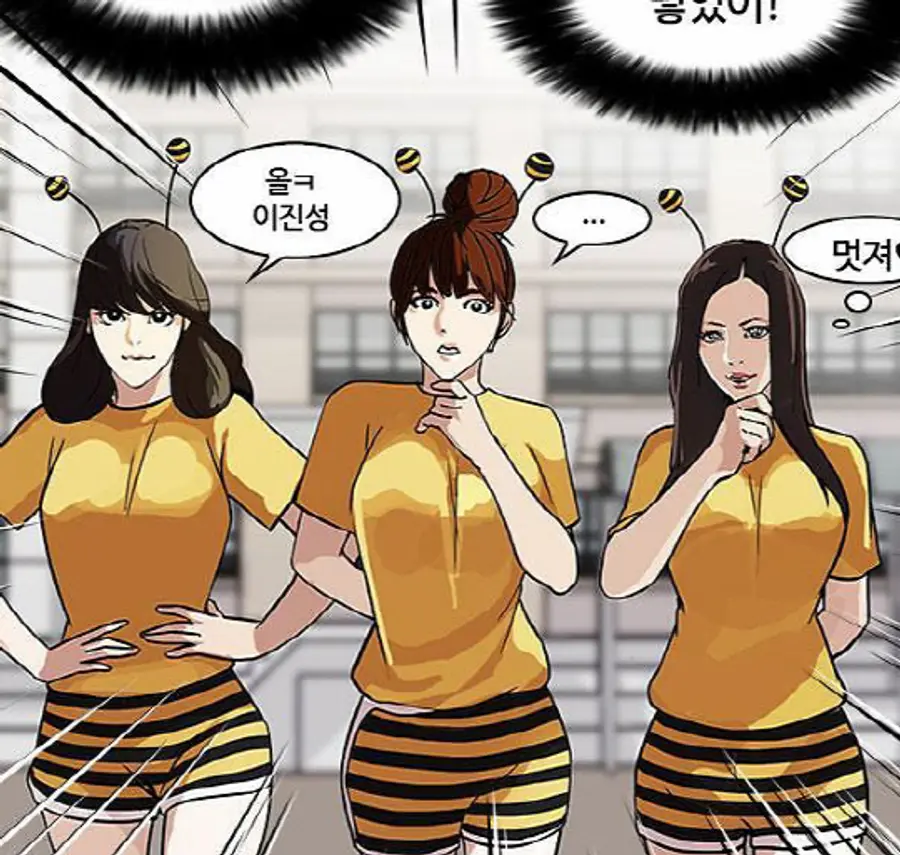
As the series progresses, there is also a sense of fatigue. While the scale grows from the early school story to mid-point organisation and fighting, and later to global business and conspiracy structures, there are evaluations that the raw sense of life from the beginning has faded. From the reader's perspective, there can be a thirst for “When will we return to Park Hyung-seok’s personal story?” The number of characters also increases, making it challenging to remember new characters at times. While it’s not to the level of needing a character encyclopedia like 'One Piece', there are moments that evoke such a feeling. This aspect is close to the fate of long-running series, and 'Appearance Supremacy' is not free from that trap either.
Nevertheless, the reason this work has been loved for so long is clear. First, it is a webtoon that knows exactly where to hit the emotional points of its readership. For anyone who has experienced being ignored for being ugly, poor, or weak, the moment they read the first chapter of Park Hyung-seok, they think, “Ah, this is my story.” The subsequent dazzling action and coming-of-age tale, along with bonds with friends, serve as a kind of compensatory fantasy. Many things that do not change in reality are depicted in this webtoon with at least the possibility of change. If Cinderella met her prince, then Park Hyung-seok has met another version of himself.
Another reason is that 'Appearance Supremacy' captures a part of the culture of young men in their teens and twenties in South Korea almost like a vivid snapshot. From fashion, speech, games and social media, to YouTube and streaming, idols and hip-hop, gym and diet culture. It quickly absorbs the details of youth culture that change with the times and integrates them into its worldview. Readers who have followed this work for a long time can even recall, “Ah, this was the trend at that time.” Just as the 'Reply' series evokes the sensibilities of a specific era, this webtoon serves as a time capsule of Korean youth culture in the mid to late 2010s.
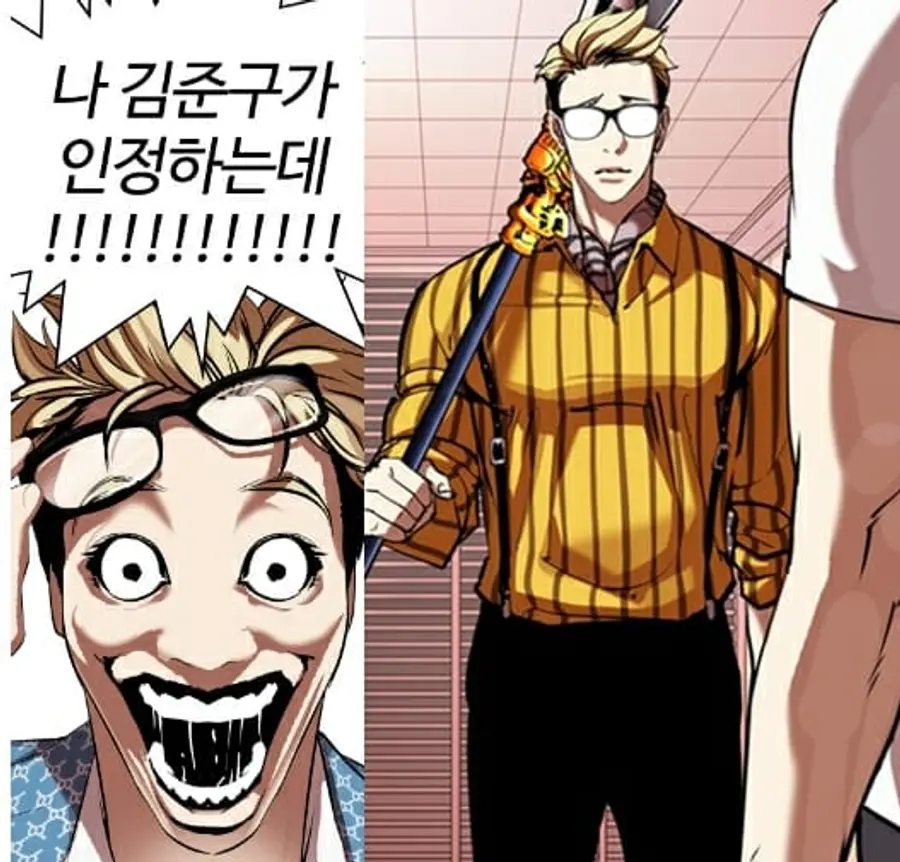
For readers who enjoy school action or fighting webtoons, this is almost a must-read. While the number of characters is large and the plot is complex, the deeper one digs, the more enjoyable elements there are. The direction of the fight scenes and the chemistry between the characters can keep one immersed for a while. If readers enjoyed webtoons like 'The Fighter', 'Helper', or 'Fighting Study', this is likely to hit the mark as well.
For those who have pondered the issues of appearance, class, and the hierarchy culture of adolescence, 'Appearance Supremacy' becomes an intriguing text. Even when viewed critically, it allows one to read how this webtoon has touched on the desires and complexes of its readers. The process of asking, “Why was it so popular?” and finding the answer within the work is quite meaningful. For media researchers or aspiring cultural critics, this is almost a must-read text.
If you enjoyed this work in your teens or twenties, reading it again now may evoke slightly different emotions. Scenes that once felt purely like 'refreshing' may now feel bittersweet or uncomfortable. This change in emotion itself can serve as a measure of what kind of adult one has become. In that sense, 'Appearance Supremacy' transcends being a mere popular webtoon; it is a massive record that compresses a generation's desires and wounds. If you are willing to follow that record to the end, this webtoon remains a worthwhile read that leaves much to ponder.
Ultimately, 'Appearance Supremacy' is a work that makes us examine the meanings our society assigns to appearance through a magnifying glass. The story of Park Hyung-seok, who lives with two faces, may be a metaphor for the double lives we all experience. Everyone navigates between their home self and outside self, their self on social media and their real self. This webtoon merely amplifies the gaps and contradictions felt in those spaces. Thus, this work is both fantasy and realism, entertainment and indictment, providing laughter while also drawing tears. On that complex emotional terrain, we still ask, “Where is the real me?” Park Hyung-seok is still in the process of finding the answer to that question.